

Alcohol and Prescription Drugs: Dangerous Interaction Effects
 Jan, 24 2026
Every year, thousands of people end up in the emergency room-not because they took too many pills, but because they had a drink with their medication. It’s not just about getting drunk. It’s about something far more dangerous: the silent, invisible clash between alcohol and the prescription drugs you’re told to take every day. This isn’t a myth. It’s a medical reality backed by data from the CDC, FDA, and top research institutions. And it’s happening right now, in homes, nursing facilities, and hospitals across the country.
How Alcohol Changes Your Medication
Alcohol doesn’t just sit there. It actively interferes with how your body handles medicine. There are two main ways this happens: through your liver and through your brain.
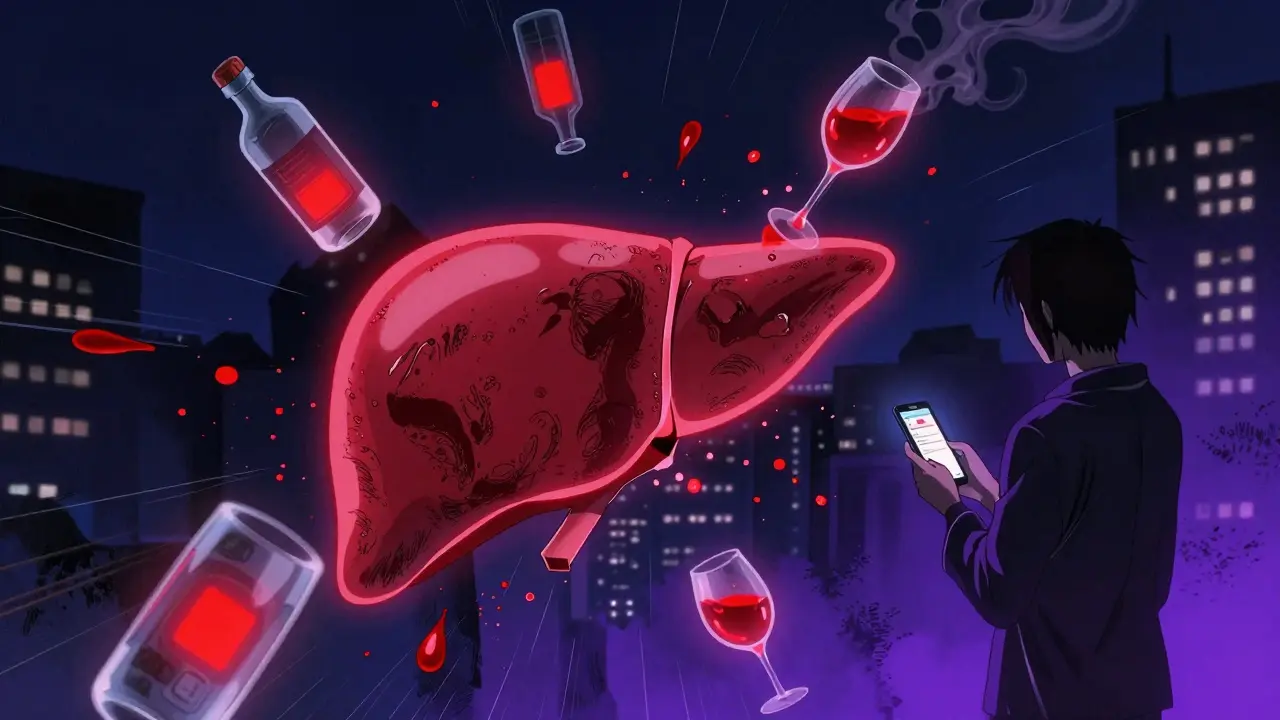
Your liver uses enzymes-especially the CYP2E1 group-to break down both alcohol and many prescription drugs. When you drink regularly, your liver starts making more of these enzymes. That means drugs like propranolol (used for high blood pressure) get broken down too fast. The result? The medication stops working. You might think your blood pressure is under control, but it’s not. Studies show chronic drinkers can lose 30-50% of their drug’s effectiveness.
On the flip side, if you drink just once-say, a glass of wine with dinner-it can slow down those same enzymes. That causes drugs like warfarin (a blood thinner) to build up in your blood. One 2018 study found alcohol can spike warfarin levels by up to 35%. That’s enough to cause dangerous bleeding, even if you’ve been on the same dose for years.
Then there’s what happens in your brain. Alcohol and certain drugs both act as depressants. When you mix them, their effects don’t just add up-they multiply. Take benzodiazepines like diazepam (Valium) or alprazolam (Xanax). Alone, they make you sleepy. Add alcohol, and that sleepiness becomes dangerous. Research from the National Institute on Alcohol Abuse and Alcoholism shows the sedative effect jumps by 400%. You might not realize it until you can’t stand up, can’t breathe properly, or pass out completely.
High-Risk Medications You Should Never Mix With Alcohol
Not all medications are created equal when it comes to alcohol. Some are okay in small doses. Others? Never. Here’s who’s at highest risk:
- Opioids (oxycodone, hydrocodone, morphine): These are the deadliest combo. Alcohol and opioids both slow your breathing. Together, they can stop it. The CDC found that alcohol-opioid interactions contributed to 2,318 overdose deaths in 2022. Even one drink can double your risk of a fatal crash if you’re on these meds.
- Benzodiazepines (diazepam, lorazepam, alprazolam): These are prescribed for anxiety, insomnia, or seizures. Mixing them with alcohol increases fall risk in older adults by 50%. In nursing homes, 78% of falls linked to these drugs happened when the patient had drunk within six hours.
- NSAIDs (ibuprofen, naproxen): These painkillers already irritate your stomach. Add alcohol, and you’re looking at a 300% higher chance of internal bleeding. Heavy drinkers (three or more drinks a day) are especially vulnerable.
- Acetaminophen (Tylenol): This common pain reliever is safe for most people-until you drink. Alcohol turns acetaminophen into a toxic chemical that destroys liver cells. One in 200 regular drinkers who take Tylenol will develop acute liver failure. That’s not rare. That’s predictable.
- Antidepressants (SSRIs like sertraline, fluoxetine): You might think it’s fine to have a glass of wine. But 35% of patients over 65 report extreme drowsiness after combining alcohol with SSRIs. That’s not just uncomfortable-it doubles the chance of a fall.
Even medications you think are safe can be risky. Isoniazid (used for tuberculosis) can cause liver damage when mixed with alcohol. Some antibiotics, though generally low-risk, still carry warnings. And don’t assume “one drink” is harmless. Blood alcohol levels as low as 0.02%-the amount from one standard drink-can be enough to trigger a dangerous reaction when combined with opioids.
Who’s Most at Risk?
It’s not just about what you take-it’s about who you are.
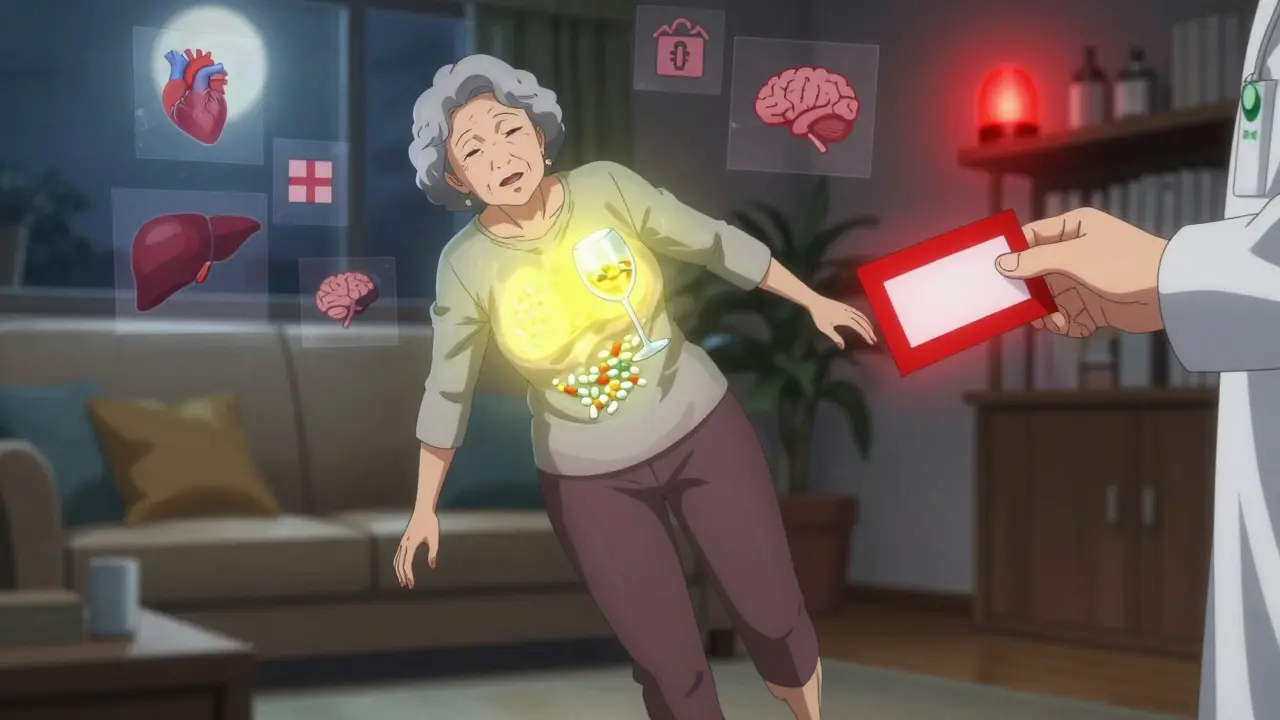
Age 65 and older: Your liver slows down. Your body holds less water. That means alcohol stays in your system longer, and drugs build up faster. Adults over 65 have 3.2 times more severe interactions than younger people. The American Geriatrics Society lists 15 alcohol-interacting drugs as potentially inappropriate for seniors. Yet, 68% of older patients say their doctor never warned them.
Women: Due to lower body water content, women absorb alcohol more quickly and break it down slower than men. That means the same drink affects them 20% more. A woman on a benzodiazepine is at higher risk of overdose than a man taking the same dose.
People with liver disease: If your liver is already damaged, even small amounts of alcohol can turn a safe drug into a poison. Those with cirrhosis have a five-fold higher risk of acetaminophen toxicity.
People taking multiple medications: The more drugs you’re on, the more chances for interaction. Nearly half of U.S. adults over 65 take at least one medication with a known alcohol interaction-and most don’t know it.
Why Doctors and Pharmacists Don’t Always Warn You
You’d think this would be common knowledge. But here’s the truth: only 38% of benzodiazepine prescriptions include a clear alcohol warning on the label, according to a 2022 FDA audit. Many doctors assume patients know. Many patients assume the doctor told them.
On Reddit, users share stories like: “Prescribed oxycodone after wisdom teeth surgery. No warning about alcohol. Had two beers. Couldn’t breathe for 20 minutes.” That’s not an isolated case. Healthgrades data shows 68% of patients prescribed benzodiazepines were never told to avoid alcohol.
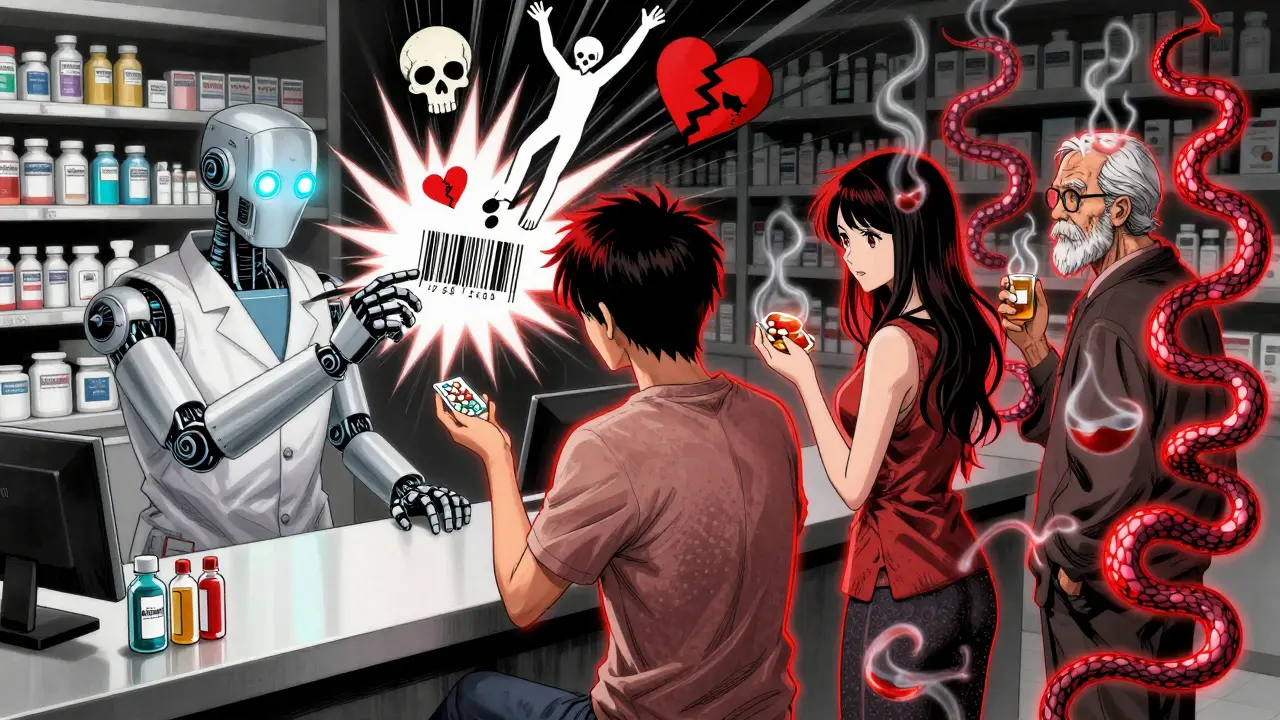
Pharmacists, on the other hand, are often the last line of defense. One patient wrote on Google Reviews: “My Walgreens pharmacist refused to fill my lorazepam prescription when I admitted to regular drinking. Probably saved my life.” That’s not luck-that’s training. But only 73% of U.S. hospitals use real-time systems that flag these interactions. In private practices? Just 32% do.
Even doctors aren’t always up to speed. A 2023 JAMA Internal Medicine study found that 43% of primary care physicians couldn’t correctly identify all high-risk medication classes.
What You Can Do to Stay Safe
You don’t need to be a medical expert to protect yourself. Here’s how:
- Check the label. Look for “Do not consume alcohol” or “May cause drowsiness” warnings. If it’s not there, assume it’s risky.
- Ask your pharmacist. They’re trained to catch these interactions. Use the 4-question screening tool: “Are you drinking alcohol? How much? How often? Are you taking any other meds?”
- Use a free app. The NIAAA’s “Alcohol Medication Check” app lets you scan your prescription barcode and instantly see if alcohol is dangerous with that drug. It covers over 2,300 medications.
- Use visual risk guides. Some pharmacies now use red/yellow/green codes on labels. Red = dangerous. Yellow = proceed with caution. Green = low risk. These improve patient understanding by 47% compared to text-only warnings.
- When in doubt, skip it. If you’re unsure, don’t drink. It’s not worth the risk.
And if you’re over 65, take extra care. Even one drink a day can be risky with certain meds. The American Geriatrics Society doesn’t just say “avoid alcohol.” They say: “Complete abstinence is recommended.”
The Bigger Picture
This isn’t just about individual choices. It’s a systemic failure. The global market for drug interaction software is projected to hit $2.84 billion by 2030. Why? Because hospitals and pharmacies are finally realizing how deadly this problem is. The FDA now requires clearer warning labels. The CDC has a 2023-2025 plan to cut overdose deaths by 50% through mandatory provider education.
But technology alone won’t fix this. The real challenge? Patient adherence. A 2023 study found only 28% of high-risk patients completely stop drinking, even after being warned. People think, “I’ve had one drink with this before, nothing happened.” But interactions aren’t always immediate. Sometimes, the damage builds silently-over weeks, over months-until your liver fails or your breathing stops.
And now, a new threat is emerging: alcohol, prescription drugs, and cannabis-all together. One in seven Americans now uses all three. Experts warn this triple interaction could become the next public health crisis.
You don’t need to be an expert to save your life. You just need to ask. Check your labels. Talk to your pharmacist. And when in doubt-skip the drink. One less drink could mean one more tomorrow.
Can I have one drink with my prescription medication?
It depends on the medication. For high-risk drugs like opioids, benzodiazepines, or blood thinners, even one drink can be dangerous. For others, like some antibiotics, it may be low risk-but only if you’re healthy and don’t drink regularly. The safest rule is: if your doctor or pharmacist didn’t say it’s okay, assume it’s not.
Why don’t my doctors always warn me about alcohol?
Many doctors assume patients already know, or they don’t have time to discuss every possible interaction. Some don’t even know the full list of high-risk combinations. A 2023 study found 43% of primary care physicians couldn’t correctly identify all dangerous drug-alcohol pairs. That’s why you need to ask-and why pharmacists are often your best resource.
Is it safe to drink alcohol while taking antidepressants?
Not really. While SSRIs don’t cause fatal interactions like opioids do, alcohol can make drowsiness, dizziness, and impaired coordination much worse. In people over 65, this doubles the risk of falling. Many patients report feeling “unusually tired” or “out of it” after combining alcohol with antidepressants-even with just one drink.
What should I do if I’ve already mixed alcohol with my medication?
If you feel dizzy, confused, have trouble breathing, or feel extremely sleepy, seek medical help immediately. Even if you feel fine, call your pharmacist or doctor. They can assess your risk based on the specific drug, how much you drank, and your health history. Don’t wait for symptoms to get worse.
Are over-the-counter meds safe with alcohol?
No, not always. Acetaminophen (Tylenol) is the most dangerous-mixing it with alcohol can cause liver failure. NSAIDs like ibuprofen increase stomach bleeding risk. Even sleep aids like diphenhydramine (Benadryl) can make you dangerously drowsy. Always read the label, even for OTC drugs.
How can I tell if a medication is high-risk with alcohol?
Look for these red flags: sedatives, painkillers, blood thinners, antidepressants, and liver-metabolized drugs. Check the label for alcohol warnings. Use the NIAAA’s free app. Or ask your pharmacist directly. They have access to clinical databases that flag interactions in real time.
Final Thought: Your Body Isn’t a Lab
Medications are designed to work in controlled conditions. Alcohol? It’s unpredictable. It changes how your body absorbs, breaks down, and responds to every drug you take. What’s safe one day might be deadly the next. There’s no safe level of alcohol when you’re on high-risk meds. And if you’re not sure? Don’t guess. Ask. Check. Wait.
Robin Van Emous
January 24, 2026 AT 21:25I’ve seen this happen to my uncle-he took his blood pressure med, had a beer after dinner, and passed out in the kitchen. No one told him it could do that. He’s fine now, but it scared the hell out of us. Why isn’t this on every prescription bottle? It’s not like it’s a secret.
Ashley Porter
January 25, 2026 AT 01:08Pharmacokinetic interference via CYP450 modulation is grossly under-communicated in primary care. The liver’s phase I metabolism is the primary bottleneck, and alcohol’s competitive inhibition of CYP2E1 and induction of CYP3A4 creates a bidirectional pharmacodynamic minefield. Most clinicians don’t even know the difference between acute and chronic ethanol exposure effects on drug clearance. It’s systemic negligence.
Peter Sharplin
January 26, 2026 AT 11:06As someone who works in ER, I see this every weekend. Not the overdoses-those are obvious. It’s the quiet ones. The 72-year-old woman on warfarin who had two glasses of wine and ends up with a subdural hematoma. Or the guy on oxycodone who says, ‘I just had one beer, I didn’t think it’d do anything.’
Here’s the thing: it’s not about being perfect. It’s about awareness. If you’re on anything that makes you drowsy, or affects your liver, or changes your heart rate-skip the drink. Even one.
And if your doctor didn’t warn you? Ask. Politely. But ask. They’re not mind readers. I’ve had patients cry because they didn’t know. No one should have to learn this the hard way.
Kipper Pickens
January 27, 2026 AT 02:55Alcohol’s bioavailability modulation via hepatic enzyme induction/inhibition is a well-documented pharmacological phenomenon, yet the public health messaging remains tragically fragmented. The FDA’s 2022 audit showing only 38% of benzodiazepine labels include alcohol warnings is a failure of regulatory enforcement, not patient ignorance. We’re treating symptoms, not the infrastructure.
Joanna Domżalska
January 28, 2026 AT 02:31So let me get this straight-we’re scaring people away from one beer because of some statistical risk? I’ve had wine with my antidepressants for ten years. I’m fine. My liver’s fine. My brain’s fine. You’re acting like alcohol is poison and pills are magic. Maybe the real problem is people who don’t know how to drink responsibly? Not every interaction is a death sentence.
Josh josh
January 28, 2026 AT 06:15Mohammed Rizvi
January 28, 2026 AT 14:46You know what’s wild? In India, we don’t have half the warnings you do. But we also don’t have 80% of our population on five different prescriptions. Maybe the real issue isn’t alcohol-it’s how overmedicated we’ve become. I’ve seen grandmas take six pills a day and still drink chai like it’s water. They’re fine. Maybe the problem isn’t the drink. Maybe it’s the damn list.
Curtis Younker
January 29, 2026 AT 22:48Listen-I get it. You’re scared. I was too. I was on gabapentin after surgery and I thought, ‘It’s just one glass, I’ll be fine.’ Spoiler: I couldn’t stand up. I fell into my coffee table. Broke my collarbone. My wife called 911. I was lucky.
But here’s the good news: you can change this. You don’t have to be perfect. Just be aware. Download that NIAAA app. Ask your pharmacist. Write it on your calendar: ‘No alcohol with meds.’
And if you’re reading this and you’re still drinking with your prescriptions? I’m not judging. I’ve been there. But I’m asking you-please, for your family, for your future self-just stop for a week. See how you feel. You might be surprised. Your body will thank you. And honestly? You deserve to feel alive, not just… not dead.
Allie Lehto
January 31, 2026 AT 07:55People think it’s ‘just alcohol’ like it’s harmless fun. But you’re poisoning your liver, your brain, your future. If you can’t stop drinking for a few hours while on meds, maybe you have a bigger problem than you admit. I’m not saying you’re bad-I’m saying you’re at risk. And if you don’t care enough to change, who will? 😔
Henry Jenkins
February 2, 2026 AT 04:38I appreciate the data, but I have to ask: if this is such a widespread, deadly issue, why are we still relying on patients to self-report alcohol use? Why isn’t every EHR system automatically flagging interactions when a script is written? Why don’t pharmacies have mandatory alerts before dispensing? We’ve got AI that can recommend movies-why can’t it tell me if my blood thinner and my whiskey are going to kill me?
The problem isn’t patient ignorance. The problem is that the system is designed to fail. We’re putting the burden on people who are already overwhelmed, confused, and often elderly. The real fix isn’t another warning label. It’s mandatory, real-time, automated clinical decision support-built into every prescription workflow. Until then, we’re just rearranging deck chairs on the Titanic.