

Antibiotics for Bacterial Infections: Classes and How They Work
 Dec, 6 2025
Antibiotics save millions of lives every year. But if you’ve ever been told, "It’s just a virus, antibiotics won’t help," you might wonder: how do antibiotics actually work? And why do some work for one infection but not another? The answer isn’t just about names like amoxicillin or azithromycin-it’s about the biology of bacteria and how each class of antibiotic attacks them in a specific, targeted way.
What Antibiotics Actually Do
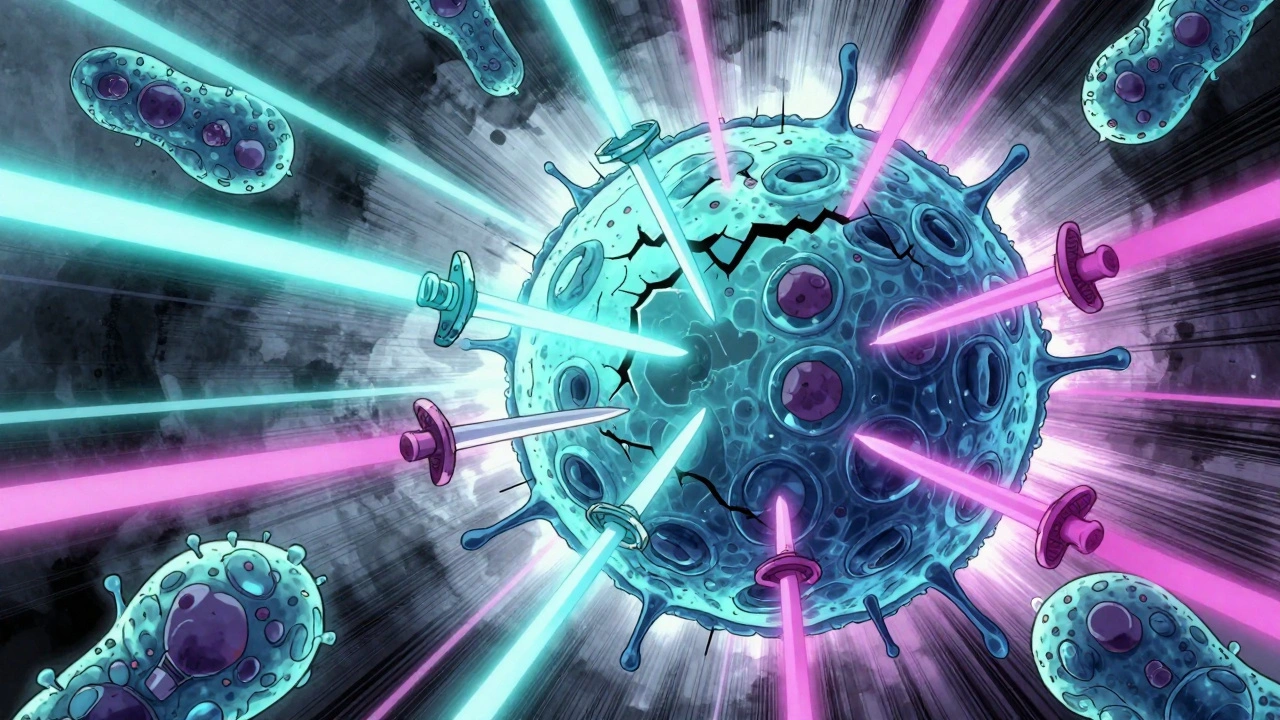
Antibiotics don’t cure infections by boosting your immune system. They don’t kill viruses. They target bacteria-specifically, the parts of bacterial cells that human cells don’t have. That’s why they’re so precise. Some antibiotics kill bacteria outright (bactericidal), while others stop them from multiplying (bacteriostatic). Either way, your immune system finishes the job once the bacteria are weakened or held in place.The first antibiotic, penicillin, was discovered in 1928. By the 1940s, it was being used to treat soldiers with infected wounds during World War II. Today, over 100 different antibiotics are in use. But resistance is growing. Some drugs that worked perfectly 20 years ago no longer do. That’s why understanding how each class works matters more than ever.
Class 1: Beta-Lactams - Attacking the Bacterial Wall
This is the most common group of antibiotics. It includes penicillins (like amoxicillin), cephalosporins (like cefalexin and ceftriaxone), and carbapenems (like meropenem). They all share a core structure called the beta-lactam ring.Bacteria build a strong outer wall made of peptidoglycan. This wall keeps them from bursting due to internal pressure. Beta-lactams mimic a building block in that wall-D-alanyl-D-alanine-and bind to proteins called penicillin-binding proteins (PBPs). When they do, the bacteria can’t finish building their wall. The result? The cell becomes weak and bursts from its own internal pressure. It’s like cutting the support beams of a house while it’s being built.
Cephalosporins are grouped into four generations. First-gen (like cefazolin) are best for skin and soft tissue infections caused by common Gram-positive bacteria. Second-gen (like cefuroxime) add coverage for some Gram-negative bugs like E. coli. Third-gen (like ceftriaxone) are used for serious infections like meningitis or pneumonia-they cross into the brain and lungs well. Fourth-gen (like cefepime) are broad-spectrum and used in hospitals for resistant infections.
But here’s the catch: many bacteria make enzymes called beta-lactamases that chop up the beta-lactam ring. That’s why doctors often pair amoxicillin with clavulanate (Augmentin)-clavulanate blocks the enzyme so the antibiotic can work.
Class 2: Protein Synthesis Inhibitors - Silencing the Bacterial Factory
Bacteria make proteins the same way we do: using ribosomes. But bacterial ribosomes are slightly different from ours. That’s the target.Macrolides (erythromycin, azithromycin) bind to the 50S part of the ribosome. They stop the ribosome from moving along the mRNA strand, so no new proteins get made. Azithromycin is often used for pneumonia and sinus infections because it stays in tissues for days after a single dose.
Tetracyclines (doxycycline, minocycline) bind to the 30S ribosomal subunit. They block the tRNA from docking, so amino acids can’t be added to the protein chain. Doxycycline is a go-to for Lyme disease, acne, and some tick-borne illnesses. But it can make your skin more sensitive to sunlight-and it’s not given to kids under 8 because it stains developing teeth.
Aminoglycosides (gentamicin, tobramycin) are powerful but risky. They bind to the 30S subunit and cause the ribosome to misread the genetic code. The result? Faulty proteins pile up inside the bacteria, killing them. But these drugs are toxic to the kidneys and ears. They’re usually given in hospitals for severe infections like sepsis, and only for short periods.
Linezolid is a newer agent in this group-an oxazolidinone. It stops protein synthesis at the very start, before the ribosome even forms. It’s one of the few antibiotics effective against MRSA (methicillin-resistant Staphylococcus aureus) when other drugs fail. It’s also one of the first entirely synthetic antibiotic classes ever developed.
Class 3: Fluoroquinolones - Breaking the DNA
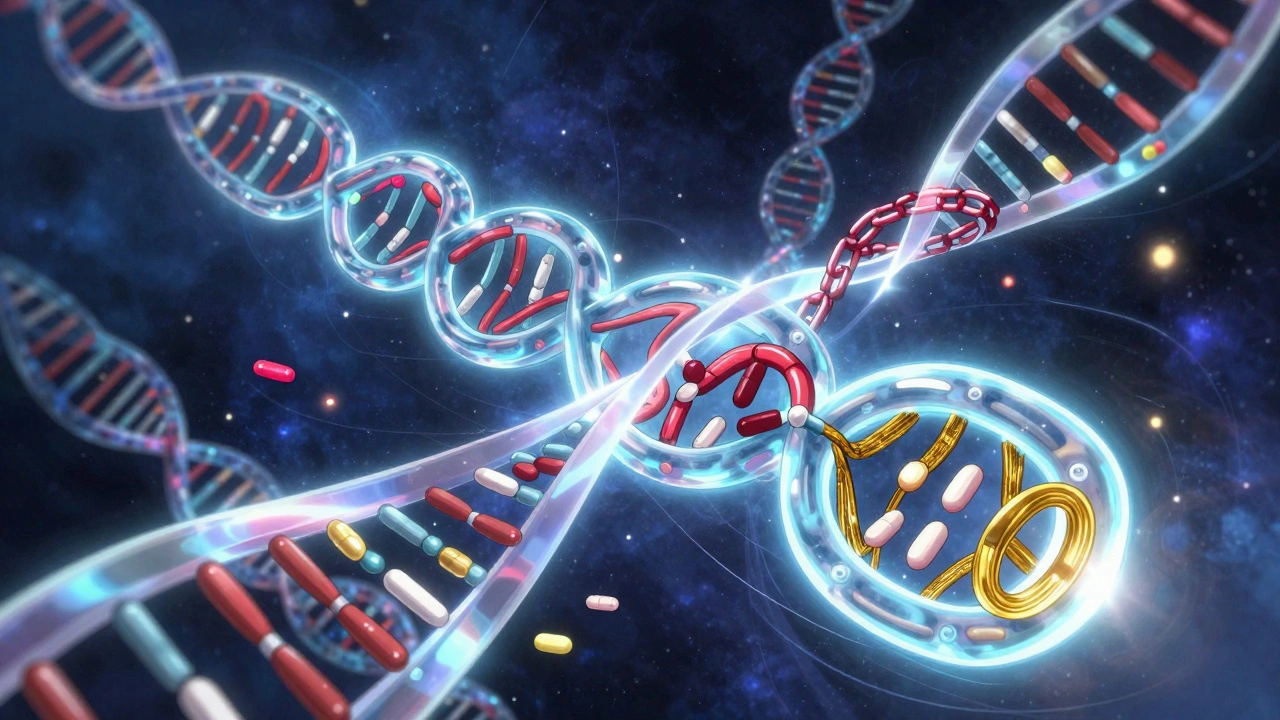
Fluoroquinolones (ciprofloxacin, levofloxacin, moxifloxacin) are broad-spectrum and penetrate deep into tissues-bones, lungs, even inside cells. That makes them useful for urinary tract infections, pneumonia, and even anthrax.They work by blocking two enzymes bacteria need to copy their DNA: DNA gyrase and topoisomerase IV. Without these, the DNA can’t unwind or separate. The bacteria can’t replicate or repair themselves. They die.
But these drugs come with serious risks. The FDA added black box warnings in 2016 and updated them in 2022: they can cause tendon rupture, nerve damage, and even long-term disability. Because of this, they’re no longer first-line for simple infections like sinusitis or bronchitis. They’re reserved for cases where no safer option works.
Class 4: Other Key Players
Not all antibiotics fit neatly into the big four. Some have unique tricks.Sulfonamides (like sulfamethoxazole) block folate production. Bacteria need folate to make DNA and proteins. Humans get folate from food, but bacteria have to make it themselves. Sulfonamides mimic the chemical structure bacteria use to make folate, jamming the process. They’re rarely used alone now because resistance is high, but they’re still part of the combo drug Bactrim, used for urinary infections and Pneumocystis pneumonia in immunocompromised patients.
Metronidazole is the go-to for anaerobic bacteria-those that live without oxygen. It’s used for abdominal infections, dental abscesses, and C. diff. It works by entering the bacterial cell and breaking down into toxic fragments that shred DNA. But if you drink alcohol while taking it, you’ll get severe nausea, vomiting, and flushing. It’s a reaction that affects 60-70% of people.
Vancomycin is a glycopeptide antibiotic used for serious Gram-positive infections, especially MRSA. It binds directly to the D-alanyl-D-alanine building block, blocking cell wall formation. It’s given intravenously and can damage kidneys. It’s a last-resort drug, but one we still rely on.
Cefiderocol, approved in 2019, is a newer wonder drug. It’s a cephalosporin that tricks bacteria into pulling it inside by mimicking iron-a nutrient they desperately need. Once inside, it attacks the cell wall. It works against superbugs resistant to almost everything else, including carbapenems.
Why Choosing the Right Antibiotic Matters
Not all antibiotics work on all bacteria. Gram-positive bacteria (like Staphylococcus) have thick cell walls. Gram-negative bacteria (like E. coli) have a thinner wall but an extra outer membrane that blocks many drugs. That’s why a drug that works for strep throat won’t help with a urinary tract infection.Doctors don’t just guess. They use guidelines, lab tests, and local resistance patterns. In the U.S., the CDC’s Antibiotic Resistance Laboratory Network tracks which bugs are resistant where. In Europe, narrow-spectrum penicillins are still first-line for strep throat in 85% of cases. In the U.S., that number is closer to 45%. That difference matters-broader drugs kill more good bacteria, increasing the risk of C. diff, which is 17 times more likely after broad-spectrum antibiotic use.
Even the timing matters. Antibiotics like aminoglycosides need oxygen to enter bacterial cells, so they don’t work on anaerobic infections. That’s why metronidazole is used for abscesses in the mouth or gut-where oxygen is scarce.
The Bigger Picture: Resistance and the Future
We’ve been overusing and misusing antibiotics for decades. In outpatient settings, 30% of antibiotic prescriptions are unnecessary-often for viral colds or flu. Procalcitonin tests, which measure a protein that rises only in bacterial infections, can cut unnecessary use by 23% in pneumonia cases.Resistance is no longer a future threat-it’s here. The WHO reports that over 50% of E. coli strains in 72 countries are now resistant to fluoroquinolones. Vancomycin-resistant enterococci (VRE) and carbapenem-resistant Enterobacteriaceae (CRE) are rising in hospitals. We’re running out of options.
New antibiotics are hard to develop. It costs over $1.5 billion to bring one to market. But the return? Only $17 million per year on average. That’s why pharmaceutical companies have largely walked away. Only 16 new antibiotics in development target WHO priority pathogens. The UK’s "Netflix model"-paying a flat fee for access to new antibiotics regardless of how many are used-is one promising idea. It could preserve these drugs as last-resort tools instead of burning them through overuse.
Phage therapy-using viruses that infect bacteria-is now in Phase III trials for ear infections caused by Pseudomonas. It’s not a magic bullet, but it’s a new direction.
What You Can Do
You can’t fix antibiotic resistance alone, but you can help:- Never take antibiotics without a prescription.
- Don’t save leftover pills for next time.
- Don’t pressure your doctor for antibiotics if you have a cold or flu.
- Finish the full course-even if you feel better.
- Ask if a narrow-spectrum antibiotic will work instead of a broad one.
Antibiotics are one of medicine’s greatest tools. But they’re not magic. They’re precise, powerful, and fragile. Understanding how they work isn’t just for doctors-it’s for anyone who wants to stay healthy in a world where superbugs are on the rise.
Can antibiotics treat viral infections like the flu or cold?
No. Antibiotics only work on bacteria. Colds, flu, most sore throats, and bronchitis are caused by viruses. Taking antibiotics for these won’t help you feel better faster, and it increases your risk of side effects and antibiotic resistance. The CDC estimates that 30% of outpatient antibiotic prescriptions in the U.S. are unnecessary, mostly for viral infections.
Why do some antibiotics cause diarrhea or C. diff infections?
Antibiotics don’t just kill bad bacteria-they wipe out good ones too. Your gut relies on trillions of helpful microbes to stay balanced. When broad-spectrum antibiotics kill off too many of them, harmful bacteria like Clostridioides difficile can take over. Studies show people on broad-spectrum antibiotics are 17 times more likely to get C. diff than those on narrow-spectrum ones. This is why doctors are now choosing targeted drugs whenever possible.
Are natural remedies like honey or garlic as effective as antibiotics?
Honey and garlic have some antimicrobial properties, but they are not substitutes for prescribed antibiotics in serious bacterial infections. Honey can help soothe a sore throat or minor wounds, and garlic contains allicin, which shows activity in lab studies. But these effects are weak and inconsistent compared to antibiotics designed to kill specific bacteria at precise concentrations. For pneumonia, sepsis, or meningitis, natural remedies won’t work-and delaying real treatment can be deadly.
Why are some antibiotics only given in the hospital?
Some antibiotics, like vancomycin or aminoglycosides, are toxic if not monitored closely. They can damage kidneys or hearing. Others, like cefiderocol or linezolid, are expensive and reserved for life-threatening infections resistant to other drugs. Hospitals have the labs, specialists, and monitoring tools to use them safely. They’re not for routine use-they’re the backup plan when everything else fails.
How do doctors know which antibiotic to prescribe?
Doctors start with guidelines based on the likely bug and where the infection is. For example, strep throat is usually treated with penicillin because it’s effective and narrow-spectrum. For a urinary tract infection, they might choose nitrofurantoin or trimethoprim-sulfamethoxazole. If the infection doesn’t improve, they’ll order cultures to identify the exact bacteria and test which drugs it’s sensitive to. In serious cases, they start broad-spectrum antibiotics immediately and narrow them down once test results come back.
Antibiotics are powerful, but they’re not perfect. Their effectiveness depends on how we use them. Every time you take one unnecessarily, you’re helping bacteria evolve. Every time you finish your course, you’re helping preserve their power-for yourself and for everyone else.
Louis Llaine
December 6, 2025 AT 15:23Nancy Carlsen
December 7, 2025 AT 23:04Ted Rosenwasser
December 9, 2025 AT 18:46Ashley Farmer
December 11, 2025 AT 12:27Jennifer Anderson
December 13, 2025 AT 05:25Kurt Russell
December 14, 2025 AT 01:34Kyle Flores
December 15, 2025 AT 19:52Ryan Sullivan
December 17, 2025 AT 02:04Wesley Phillips
December 19, 2025 AT 02:03Olivia Hand
December 19, 2025 AT 14:35Desmond Khoo
December 20, 2025 AT 11:45Jane Quitain
December 20, 2025 AT 18:05Kyle Oksten
December 21, 2025 AT 14:30Sam Mathew Cheriyan
December 21, 2025 AT 22:22