

Anticoagulants in Seniors: When Fall Risk Shouldn’t Stop Stroke Prevention
 Jan, 30 2026
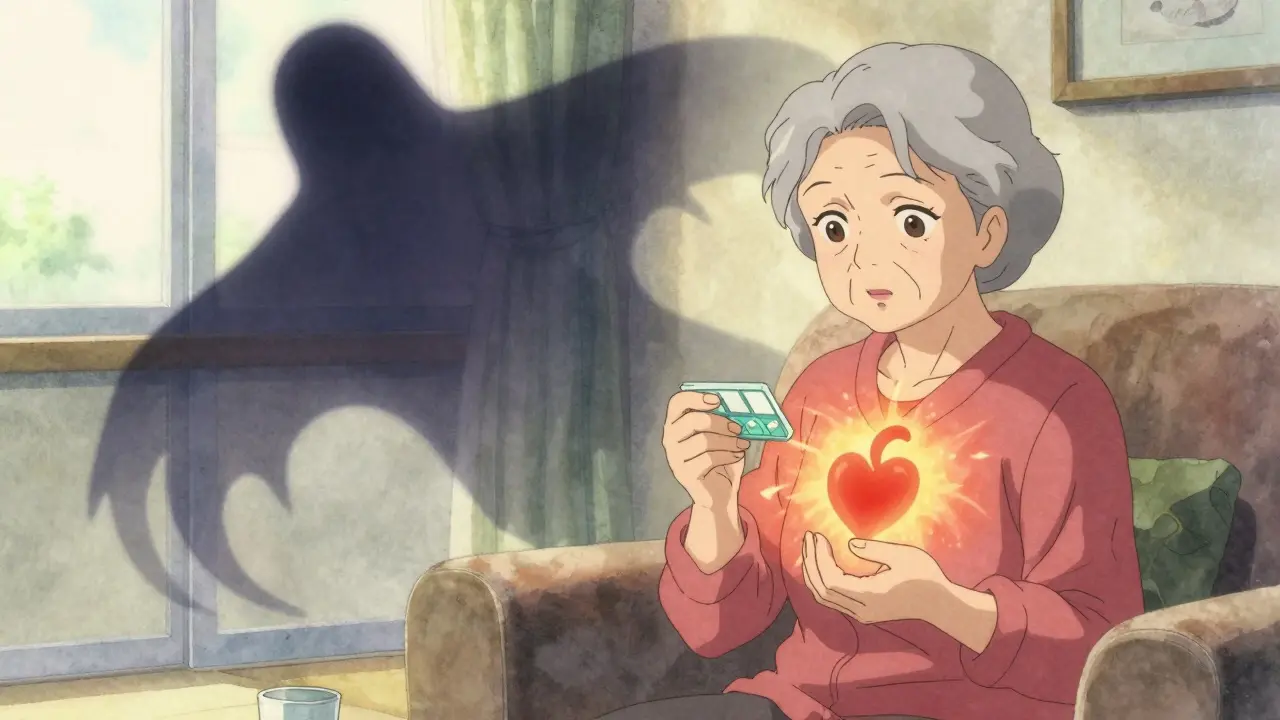
When your parent or grandparent has atrial fibrillation, the doctor says they need a blood thinner. But then someone says, “But they fall all the time-won’t that make them bleed to death?” It’s a terrifying thought. And it’s why so many elderly patients are denied the one thing that could save their life: anticoagulants.
Why Anticoagulants Are Critical for Seniors with Atrial Fibrillation
Atrial fibrillation (AFib) isn’t just an irregular heartbeat. In seniors, it’s a silent killer. About 9% of people over 65 have it. And for every year they go without treatment, their chance of having a stroke climbs. At 70, it’s nearly 10%. At 85? It’s over 23%. That’s more than one in five people having a stroke each year-just from AFib alone. Warfarin, the old-school blood thinner, cuts stroke risk by two-thirds. But newer drugs-dabigatran, rivaroxaban, apixaban, edoxaban-are just as good, often better. Apixaban, for example, reduces stroke risk by 21% compared to warfarin, while also cutting major bleeding by 31% in people over 75. These aren’t small wins. These are life-saving differences. The real problem? Many doctors still think age or a few falls means anticoagulants are too risky. That’s not what the science says.The Fall Risk Myth: Why Falling Doesn’t Mean Stopping Blood Thinners
Let’s be honest. Falls are scary. Elderly people break hips. They bleed inside their skulls. And yes-anticoagulants make bleeding worse. But here’s what no one tells you: stroke kills faster than falls ever do. A 2007 study called BAFTA looked at 81-year-olds on average. Half got warfarin. Half got aspirin. The aspirin group had nearly twice as many strokes. The warfarin group didn’t bleed more. Not significantly. Later studies-RE-LY, ARISTOTLE, ROCKET-AF-confirmed it. Even in people over 90, anticoagulants saved more lives than they took. The oldest patients got the most benefit. Why? Because their stroke risk was highest. Their bleeding risk was higher too-but not high enough to cancel out the benefit. The American College of Cardiology, American Heart Association, and Heart Rhythm Society all say the same thing: Age alone is not a reason to avoid anticoagulants. Neither are falls. Yet, in real life? Only 48% of seniors over 85 get anticoagulants, even when guidelines say they should. Why? Fear. Clinicians worry. Families panic. Patients stop taking them on their own after a tumble.What the Data Really Shows: Bleeding vs. Stroke
Here’s the math that changes everything: - For every 100 octogenarians on anticoagulants for one year:- 24 strokes are prevented
- 3 major bleeds occur
- Net benefit: 21 lives saved or spared from disability That’s not close. That’s overwhelming. Yes, a fall on anticoagulants can lead to a brain bleed. But without anticoagulants, a stroke is more likely-and far more likely to be fatal or permanently disabling. One study found that 90% of fall-related deaths involved people over 85 or on anticoagulants. But here’s the flip side: most of those deaths happened because they didn’t have anticoagulants when they should have. The real danger isn’t the drug. It’s the decision to avoid it.
DOACs vs. Warfarin: Which Is Better for Seniors?
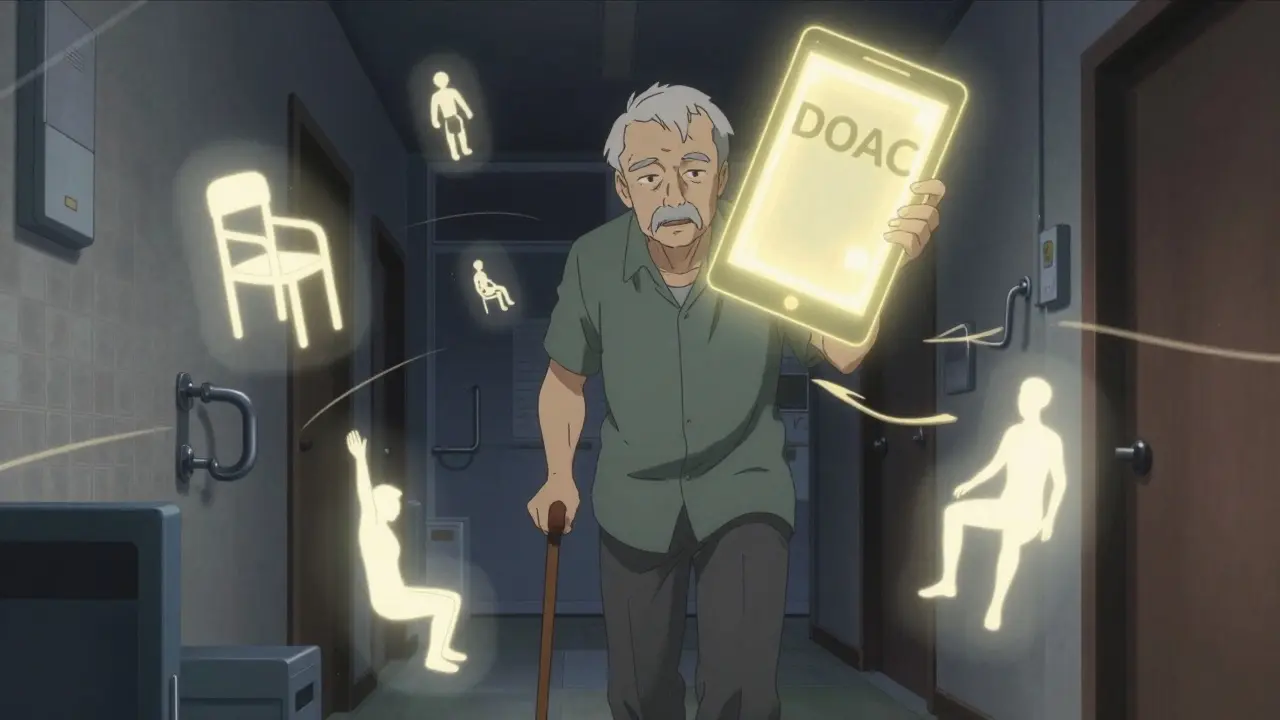
Warfarin works. But it’s messy. You need blood tests every few weeks. Your diet matters. Alcohol matters. It interacts with half the medications seniors take. DOACs (direct oral anticoagulants) are simpler:- Apixaban (Eliquis): 5mg twice daily. Lower bleeding risk than warfarin. Best for seniors with kidney issues.
- Rivaroxaban (Xarelto): 20mg once daily. 34% lower risk of brain bleeds than warfarin.
- Dabigatran (Pradaxa): 150mg twice daily. Very effective, but needs kidney monitoring.
- Edoxaban (Savaysa): 60mg once daily. Lower bleeding risk overall.
How to Stay Safe: Fall Prevention Isn’t Optional
You don’t stop the blood thinner because someone falls. You fix the falls. Here’s what actually works:- Exercise: The Otago Exercise Program cuts falls by 35%. It’s simple-balance training, leg strengthening, done at home.
- Remove hazards: Rugs, loose cords, poor lighting. Install grab bars in the bathroom. Use a shower chair.
- Review all meds: Benzodiazepines, sleep aids, opioids, even some blood pressure drugs can make you dizzy. Ask the pharmacist to do a full review.
- Check vision and hearing: Poor sight or hearing increases fall risk. Update glasses. Get hearing aids if needed.
- Use a cane or walker: If they’ve fallen before, don’t wait. Get help walking.
What to Do If Your Doctor Says No
If your senior parent has AFib, a CHA₂DS₂-VASc score of 2 or higher, and their doctor refuses anticoagulants because of falls-ask for a second opinion. Ask for a referral to a cardiologist or geriatrician. You can say: “I’ve read that stroke risk is 23% per year at age 85. I want to know why we’re not using a drug that prevents 24 strokes for every 3 major bleeds.” The American Geriatrics Society says stopping anticoagulants due to fall risk is “inappropriate.” That’s not a suggestion. That’s a professional standard.Final Reality Check: The Cost of Inaction
A stroke in an 85-year-old isn’t like a stroke in a 50-year-old. Recovery is rare. Independence is gone. Caregivers burn out. Nursing homes become inevitable. Anticoagulants aren’t perfect. They carry risk. But avoiding them because of fear? That’s a bigger risk. The data doesn’t lie. The guidelines don’t lie. The lives saved don’t lie. Your loved one isn’t too old. They’re not too frail. They’re not too risky. They’re just someone who needs a little help to stay safe-and a blood thinner to stay alive.Should seniors stop anticoagulants after a fall?
No. A single fall or even a few falls is not a reason to stop anticoagulants. The risk of stroke in someone with atrial fibrillation far outweighs the risk of bleeding from a fall. Instead of stopping the medication, focus on preventing future falls with exercise, home safety changes, and medication reviews. Guidelines from the American Heart Association and American College of Cardiology clearly state that fall history should not override stroke prevention.
Are DOACs safer than warfarin for elderly patients?
Yes, for most seniors. DOACs like apixaban and rivaroxaban have lower risks of brain bleeds and don’t require frequent blood tests. Apixaban reduces major bleeding by 31% compared to warfarin in patients over 75. They’re also less affected by diet and other medications. However, they rely on kidney function, so regular creatinine checks are needed. Warfarin may still be used if kidney function is poor or if cost is a barrier, but DOACs are generally preferred for elderly patients.
What if my parent has poor kidney function?
Kidney function matters. DOACs are cleared through the kidneys, so if creatinine clearance drops below 30 mL/min, some may need dose reduction or switching. Apixaban is the safest choice in moderate kidney decline-it’s the least dependent on kidney function. Dabigatran should be avoided if kidney function is severely reduced. Always get a blood test for creatinine clearance before starting or changing anticoagulants. Your doctor can adjust the dose or choose an alternative based on results.
Can anticoagulants be reversed if there’s a bleed?
Yes, and that’s changed the game. For dabigatran, there’s idarucizumab. For rivaroxaban and apixaban, andexanet alfa can reverse the effect within minutes. These aren’t perfect, but they give emergency teams a real tool to stop bleeding fast. Warfarin can be reversed with vitamin K and fresh frozen plasma, but it takes hours. Reversal agents make DOACs safer in emergencies, especially for seniors who are more likely to fall.
Why are so many seniors not getting anticoagulants if they’re so effective?
Mainly because of fear-both from doctors and families. Many clinicians overestimate bleeding risk and underestimate stroke risk in the elderly. A 2021 survey found 68% of primary care doctors would withhold anticoagulants from an 85-year-old with two falls, even if their stroke risk was very high. This mismatch between guidelines and practice leads to underuse. Only 48% of seniors over 85 with AFib get anticoagulants, despite clear evidence they should. Education and better communication are needed to close this gap.
Bob Cohen
January 31, 2026 AT 21:04Look, I get it-falls are scary. But I watched my grandma go from ‘I’m fine!’ to ‘Why is my brain full of clots?’ in six months because they took her off Eliquis after a slip in the bathroom. She didn’t die from the fall. She died from the stroke they *could’ve* stopped.
Doctors still treat seniors like fragile china. We don’t stop driving because you might get a fender bender. We don’t stop walking because you might trip. So why stop lifesaving meds? The math is clear. The fear is outdated.
Ishmael brown
February 2, 2026 AT 04:57🚨 BIG LIE ALERT 🚨
They say DOACs are ‘safer’-but have you seen the price tag? $500/month. Medicare won’t cover it unless you’re on 17 different pills and have a pet rock named ‘Bleedie.’
And don’t get me started on ‘reversal agents.’ That’s not medicine. That’s a $50,000 emergency button. Who’s paying for that? The taxpayer? Your kid’s student loan? 😭
Aditya Gupta
February 2, 2026 AT 23:09Bro, falls = fixable. Stroke = permanent. Period.
My dad took apixaban after 3 falls. We got him a walker, removed rugs, did Otago exercises daily. No more falls. Still on meds. Alive. Happy. Playing with grandkids.
Don’t let fear steal your time. Fix the environment, not the medicine. 💪
Nancy Nino
February 3, 2026 AT 11:27It is, quite frankly, an egregious oversight in geriatric care that anticoagulation is withheld on the basis of fall risk alone. The clinical evidence is not merely supportive-it is unequivocal. The American College of Cardiology, the American Heart Association, and the Heart Rhythm Society have all issued consensus statements to this effect. To ignore them is not merely negligent-it is ethically indefensible.
One wonders if this stems from implicit ageism disguised as ‘prudence.’
June Richards
February 5, 2026 AT 07:59LOL. So now we’re supposed to trust Big Pharma’s ‘new and improved’ blood thinners? 😂
Warfarin’s been around since WWII. DOACs? They’re basically lab rats with price tags. And don’t even get me started on how they’re *designed* to be un-reversible unless you pay $50k for the antidote. Who’s really benefiting here?
Also-my aunt stopped hers after a fall. She’s fine. Still breathing. Coincidence? I think not. 🤔
Jaden Green
February 7, 2026 AT 02:02Let’s be honest: the entire narrative around DOACs is a meticulously constructed marketing campaign orchestrated by pharmaceutical conglomerates who saw an aging demographic and said, ‘Ah, yes-let’s monetize their fear of stroke.’
Warfarin, despite its ‘inconveniences,’ is a proven, transparent, and cheap tool. DOACs? They’re proprietary, expensive, and their long-term renal effects are still being studied. We’re treating seniors like guinea pigs in a profit-driven clinical trial dressed up as ‘evidence-based medicine.’
And let’s not forget: the reversal agents? Available in only 12% of rural ERs. So if your 87-year-old mother falls in Nebraska? Good luck. She’s bleeding out while they wait for the ‘magic pill’ to be shipped from Boston.
This isn’t medicine. It’s capitalism with a stethoscope.
Lu Gao
February 7, 2026 AT 11:50Okay but… the data literally says stroke risk is 23% per year at 85. Bleeding risk? 3%.
That’s not even a debate. It’s arithmetic. 🤷♀️
Also, if you’re scared of falls, fix the house. Not the meds. A cane costs $20. A grab bar costs $40. A brain bleed from a stroke? Costs $200k and your parent’s dignity.
Just… please stop pretending fear is a medical decision. 😅
Angel Fitzpatrick
February 9, 2026 AT 09:33They don’t want you to know this-but the ‘fall risk’ myth is just the tip of the iceberg.
Behind closed doors, insurance companies are pushing DOACs because they’re more profitable. Hospitals get reimbursed more for ‘complex anticoagulation management.’ The FDA? They’re packed with former pharma execs.
And the ‘reversal agents’? They’re not for saving lives. They’re for covering up the fact that these drugs are *designed* to be non-reversible unless you pay for the ‘upgrade.’
It’s not medicine. It’s a surveillance state for seniors. They track your kidney levels, your falls, your meds-and if you don’t comply? You’re labeled ‘non-compliant.’ And then they take your freedom.
Wake up. This isn’t about health. It’s about control.
Nidhi Rajpara
February 11, 2026 AT 09:30I am a nurse in Delhi, and I have seen many elderly patients with AFib. In India, warfarin is still most common because DOACs are too expensive. But even here, we see families stopping meds after falls-because they are scared. I always tell them: stroke is silent killer. Fall is temporary. Please, do not stop medicine. Check home, check vision, check meds. But do not stop anticoagulant.
Life is precious. ❤️
Chris & Kara Cutler
February 12, 2026 AT 10:17My mom’s on Eliquis. We did the Otago program. Got her a cane. Removed every rug. Now she walks like a boss. No falls in 8 months.
She’s 83. Still cooks. Still dances. Still argues with us about politics.
Medicine + safety = magic combo. 💃🩺
Donna Macaranas
February 13, 2026 AT 12:17I think this post says everything that needs to be said. I just wish more doctors read it.
My uncle stopped his blood thinner after a fall. He had a stroke two weeks later. Didn’t recognize me. Couldn’t talk. We had to move him into a nursing home.
It broke my heart. Not because of the fall. Because of the decision.
Just… please, if you’re reading this-don’t let fear make the call. Let science do it.
Rachel Liew
February 15, 2026 AT 04:24i just want to say thank you for writing this. my grandma was denied anticoagulants for years because she ‘fell a lot.’ we finally got a cardiologist to step in-she’s on apixaban now, and she’s laughing again. we fixed her bathroom, got her a walker, checked her meds. she’s not ‘safe’ because she’s not on meds. she’s safe because we did everything right.
you’re not being reckless. you’re being smart.
❤️
Jamie Allan Brown
February 15, 2026 AT 14:35As a GP in Scotland, I’ve seen this pattern too often. A patient with CHA₂DS₂-VASc 5, history of two falls, and the reflex is to ‘hold the anticoagulant.’
But here’s the thing: the falls weren’t caused by the drug. They were caused by poor lighting, weak muscles, and polypharmacy. Fix those, and you don’t need to stop the medicine.
I now use HAS-BLED not as a reason to deny, but as a checklist: ‘What can we fix?’
It’s not about risk. It’s about responsibility.
And yes-apixaban is my go-to for over-75s. Lower bleeding. Fewer interactions. Less hassle.
Let’s stop confusing fear with clinical judgment.