

Antiviral Medications: Treatment Options for Viral Infections
 Jan, 19 2026
When you get a viral infection-whether it’s the flu, COVID-19, or hepatitis C-your body fights back. But sometimes, it needs help. That’s where antiviral medications come in. Unlike antibiotics that kill bacteria, antivirals don’t destroy viruses. They slow them down. And in many cases, that’s enough to stop a mild illness from turning into something life-threatening.
How Antivirals Work (And Why They’re Not Like Antibiotics)
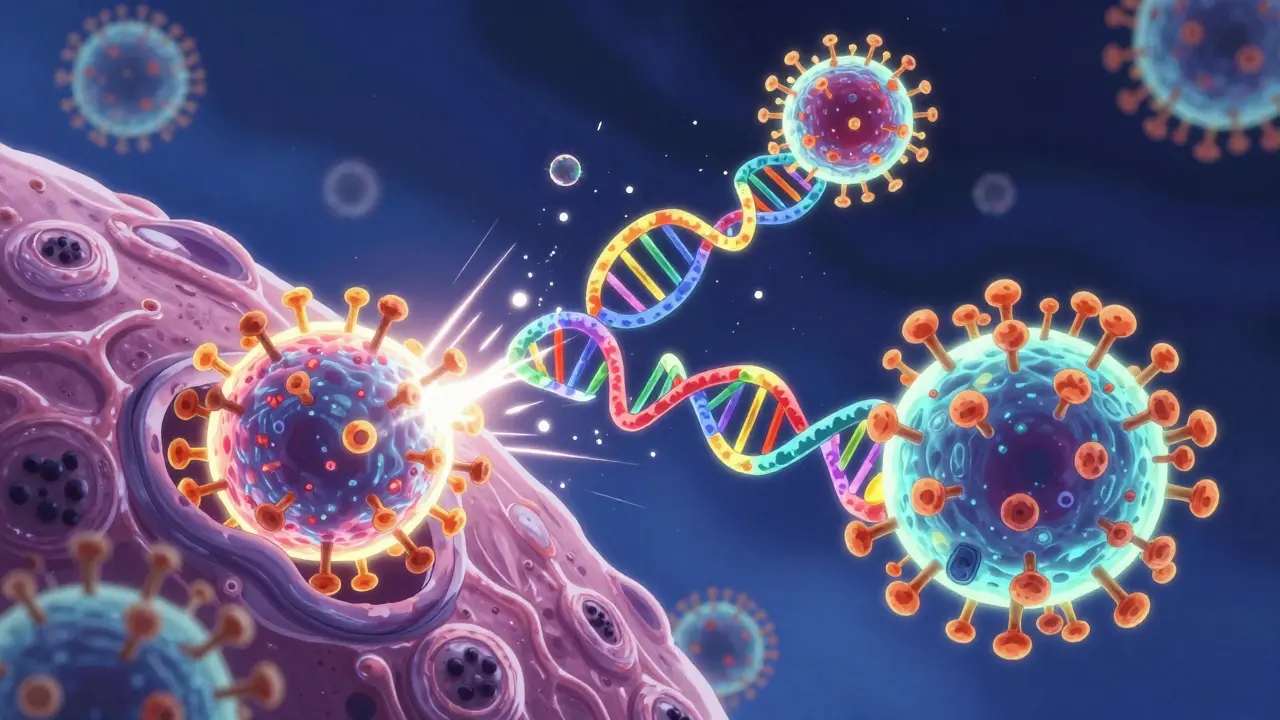
Antivirals are designed to interfere with how viruses copy themselves. Viruses can’t reproduce on their own-they hijack your cells and use them as factories to make more viruses. Antivirals step in at different points: some block the virus from entering cells, others stop it from copying its genetic material, and some prevent new virus particles from assembling.
Think of it like stopping a factory assembly line. If you cut power to the conveyor belt, the parts don’t move. If you remove a key tool, the workers can’t finish the product. That’s what antivirals do. They’re targeted. One drug for flu won’t work for HIV. That’s why they’re not broad-spectrum like some antibiotics.
The first real antiviral, idoxuridine, was approved in 1963 to treat herpes. Since then, we’ve built up a toolkit of around 100 approved drugs. And the number is growing fast. The global market for antivirals hit $55.7 billion in 2022 and is expected to cross $86 billion by 2028.
Key Antiviral Classes and What They Treat
Not all antivirals are the same. They’re grouped by how they work and which virus they target. Here are the most important ones you’ll encounter:
- Nucleoside reverse transcriptase inhibitors (NRTIs) - Used for HIV. Drugs like tenofovir and lamivudine block the enzyme HIV needs to copy its RNA into DNA. These have been the backbone of HIV treatment since the 1990s.
- Protease inhibitors - Also for HIV. Lopinavir/ritonavir stops the virus from cutting its proteins into usable pieces, so new virus particles can’t form.
- Neuraminidase inhibitors - For influenza. Oseltamivir (Tamiflu), zanamivir (Relenza), and peramivir (Rapivab) stop the flu virus from escaping infected cells to spread to others. They work best if taken within 48 hours of symptoms starting.
- Direct-acting antivirals (DAAs) - For hepatitis C. These are game-changers. Drugs like sofosbuvir, ledipasvir, and glecaprevir/pibrentasvir (Mavyret) cure over 95% of hepatitis C cases in just 8-12 weeks. Before DAAs, treatment took up to a year and came with brutal side effects like fever and depression.
- Oral COVID-19 antivirals - Paxlovid (nirmatrelvir/ritonavir) and molnupiravir (Lagevrio). Paxlovid cuts hospitalization risk by 89% in high-risk patients if taken early. Molnupiravir is less effective (about 30% reduction) and is only used when Paxlovid can’t be given.
- Monoclonal antibodies - These are lab-made proteins that mimic your immune system’s ability to fight viruses. Used during the pandemic for early COVID-19, but many lost effectiveness as the virus mutated.
When Timing Matters More Than the Drug
Antivirals aren’t magic pills you can take anytime. They work best when you start them early. For flu, that means within two days of feeling sick. For COVID-19, it’s within five days of symptoms. After that, the virus has already spread too far for the drug to make much difference.
That’s why getting tested quickly matters. If you’re over 50, have diabetes, heart disease, or a weakened immune system, and you test positive for COVID-19, your doctor should offer Paxlovid right away. Delaying by even a day can reduce its effectiveness.
For hepatitis C, timing isn’t as urgent-you’re not in danger of immediate hospitalization-but starting treatment sooner means less liver damage over time. The goal is to cure the infection before cirrhosis or liver cancer develops.

Side Effects and Real-World Problems
Most antivirals are well tolerated, but they’re not side-effect-free.
Paxlovid has a notorious issue: “Paxlovid mouth.” About 60% of users report a strong metallic or bitter taste. It’s not dangerous, but it’s annoying enough that some people stop taking it. One study from UC San Francisco found this taste distortion lasted days after finishing the course.
Then there’s the drug interaction problem. Paxlovid contains ritonavir, which messes with how your liver processes many common medications. It can’t be taken with statins like atorvastatin, certain blood thinners, sedatives like midazolam, or even some heart medications. Up to 30% of older adults with multiple health conditions are ruled out for Paxlovid because of this.
For flu, zanamivir (Relenza) can trigger breathing problems in people with asthma or COPD. That’s why oseltamivir (Tamiflu) is usually the first choice for those patients.
And cost? It’s still a barrier. Even with insurance, some patients struggle to get antivirals because pharmacies run out, or doctors don’t know how to prescribe them. A 2022 Kaiser Family Foundation survey found 34% of eligible U.S. patients couldn’t access Paxlovid due to these kinds of hurdles.
What’s New and What’s Coming
The field is moving fast. In 2021, the FDA approved Cabenuva, the first long-acting HIV treatment you get as a monthly injection instead of daily pills. That’s huge for people who struggle with adherence.
For influenza, baloxavir marboxil (Xofluza) is now approved not just for treatment, but also for preventing flu after exposure-useful for households with someone sick.
The biggest hope lies in broad-spectrum antivirals. Right now, we need a new drug for every new virus. But researchers are working on agents that could work against multiple viruses-like coronaviruses, flu, and even unknown future threats. CRISPR-based therapies are being tested in early trials to cut HIV out of human DNA entirely. Excision BioTherapeutics started Phase 1/2 trials for EBT-101 in 2022.
But as Dr. Vincent Racaniello from Columbia University points out, most current antivirals are too narrow. We need drugs that can handle the next pandemic, not just the last one.

Global Access and the Equity Gap
Here’s the hard truth: antivirals are life-saving, but not equally available. In high-income countries like the U.S. or Australia, high-risk patients often get Paxlovid within hours of diagnosis. In low-income countries, less than 5% of eligible patients receive it, according to the WHO.
Why? Supply chains, cost, lack of trained staff, and weak health systems. A drug that costs $500 in the U.S. might be unavailable in a rural clinic in sub-Saharan Africa. The World Health Organization’s Essential Medicines List includes key antivirals like oseltamivir and remdesivir-but listing them doesn’t make them accessible.
Efforts are underway. Organizations like the Medicines Patent Pool are working to license generic versions so low-income countries can produce or import cheaper versions. But progress is slow.
What You Should Know If You’re Prescribed an Antiviral
If your doctor offers you an antiviral, here’s what to ask:
- Is this for my specific virus? Don’t assume one antiviral works for everything.
- When do I need to start? Timing is everything. Don’t wait.
- What medications am I already taking? Bring your full list-supplements included. Ritonavir in Paxlovid interacts with over 30 common drugs.
- What are the side effects? Know what’s normal (like bad taste) vs. what needs attention (rash, trouble breathing).
- What if I can’t get this drug? Ask about alternatives. Molnupiravir, remdesivir, or even supportive care might be options.
For hepatitis C, the message is simple: get tested. If you’re over 18, a one-time screening is recommended. If you test positive, treatment is short, effective, and often covered by insurance. Cure rates are above 95%.
For flu, get the vaccine every year. Antivirals are a backup, not a replacement.
Bottom Line: Antivirals Are Powerful-But Only If Used Right
Antiviral medications have changed the game. HIV is no longer a death sentence. Hepatitis C can be cured. Flu and COVID-19 can be managed at home without hospitalization. But they only work if you act fast, take them correctly, and have access to them.
The future holds more promise-broad-spectrum drugs, long-acting shots, even gene therapies. But right now, the best antiviral is the one you take on time, with the right information, and with the support of your healthcare team.
Can antiviral medications cure viral infections?
Yes, for some viruses. Hepatitis C can be cured in over 95% of cases with direct-acting antivirals. HIV cannot be cured yet, but antivirals can suppress it to undetectable levels, allowing people to live long, healthy lives. For flu and COVID-19, antivirals don’t cure the infection but reduce severity, shorten illness, and lower the risk of hospitalization.
Why can’t I just take an antiviral for every cold or flu?
Most colds are caused by rhinoviruses, and there are no approved antivirals for them. Antivirals are only developed for viruses that cause serious illness or have high transmission risk. Plus, they’re expensive and can have side effects, so they’re reserved for cases where the benefit clearly outweighs the risk.
Is Paxlovid better than molnupiravir for COVID-19?
Yes, for most people. Paxlovid reduces hospitalization by 89% in high-risk patients when taken early. Molnupiravir reduces it by about 30%. Paxlovid is preferred unless you have drug interactions or can’t take it. Molnupiravir is only used as a backup because it’s less effective and has potential safety concerns around genetic damage in lab studies (though no evidence in humans).
Do antivirals prevent you from spreading the virus?
They can reduce transmission, but not eliminate it. For example, Paxlovid lowers viral load, which likely reduces how much you spread. But you should still isolate and wear a mask around others, especially in the first few days. Antivirals are not a substitute for infection control measures.
Can I buy antivirals over the counter?
No. All antivirals for serious viral infections like flu, COVID-19, and hepatitis C require a prescription. This is because they need to be matched to the right virus, given at the right time, and monitored for interactions. Don’t try to get them without medical guidance.
What happens if I miss a dose of my antiviral?
If you miss a dose, take it as soon as you remember-unless it’s almost time for the next one. Don’t double up. For drugs like Paxlovid, which are taken twice daily for five days, missing a dose can reduce effectiveness. If you miss more than one, contact your doctor. For hepatitis C DAAs, missing doses increases the risk of the virus becoming resistant.
Ben McKibbin
January 20, 2026 AT 02:47Antivirals are one of those medical triumphs that fly under the radar-nobody cheers when you don’t end up in the ICU, but that’s exactly what they do. The fact that hepatitis C is now curable in under three months with a pill? That’s science fiction becoming real. And yet, we still treat them like they’re optional, not essential. We need to treat antivirals like vaccines: accessible, prioritized, and destigmatized.
michelle Brownsea
January 20, 2026 AT 20:40Ugh. Another ‘antivirals are magic’ article. Where’s the data on long-term side effects? We’re just throwing pills at every virus without understanding the consequences. And don’t get me started on Paxlovid-bitter mouth? That’s the *least* of your problems. What about the gut microbiome disruption? The immune system fatigue? Nobody talks about that. It’s all ‘take it or die’ propaganda.
Rod Wheatley
January 22, 2026 AT 14:58Just wanted to say-this is one of the clearest, most helpful summaries I’ve read on antivirals. Seriously. I’m a nurse, and even I learned a few things. The breakdown of DAAs for Hep C? Game-changer. And the timing note? Crucial. I’ve seen too many patients wait three days and then wonder why it didn’t work. Please, if you’re eligible-don’t wait. Call your doctor the moment you test positive. It’s not hype. It’s science.
Also, Paxlovid mouth? Oh, I know it. It’s like licking a battery. But hey, if it keeps you out of the hospital, I’ll take the metallic taste any day. My patients joke about it, but they’re alive because of it.
Roisin Kelly
January 22, 2026 AT 15:43So… you’re telling me the government is pushing these pills but won’t make them free? And the taste is so bad people quit? And they interact with EVERYTHING? Sounds like a pharmaceutical scam to me. They just want us hooked on pills while the real cure-better nutrition, sunlight, and sleep-is ignored. Wake up, sheeple.
lokesh prasanth
January 22, 2026 AT 20:22Alex Carletti Gouvea
January 23, 2026 AT 01:53Look, I’m all for science-but when the same people who told us masks were useless now want us to take a $500 pill with a 60% chance of tasting like a trash can? I’m skeptical. We’ve been lied to too many times. Who benefits? Pharma. Who pays? Us. And meanwhile, the real issue-overcrowded hospitals and underpaid nurses-isn’t getting fixed. This feels like a distraction.
Gerard Jordan
January 24, 2026 AT 07:37Just wanted to say THANK YOU for writing this. 🙏 I’m from a rural town in Texas, and my grandma got Paxlovid last winter-she’s 78 with diabetes. She said the taste was awful, but she took it. And she’s still here. 🥹 We don’t talk about this enough. Antivirals aren’t perfect, but they’re miracles in a pill. Let’s not let politics or fear stop people from getting them.
P.S. If you’re reading this and you’re over 50-ask your doctor about it. No shame. No hesitation. Just ask.
Malvina Tomja
January 24, 2026 AT 14:27Let’s be brutally honest: antivirals are a Band-Aid on a bullet wound. We’re treating symptoms, not causes. Why aren’t we investing in public health infrastructure? Why are we still relying on reactive pharmaceuticals instead of proactive prevention? This isn’t medicine-it’s triage capitalism. And yes, I’m calling it out.
Uju Megafu
January 25, 2026 AT 07:35Oh, so now you’re an expert on antivirals? Who authorized you? Did you even read the clinical trial data? Or are you just repeating what Big Pharma told you to say? Let me guess-you also think vaccines are safe, right? 🤡
And don’t even get me started on ‘Paxlovid mouth.’ That’s not a side effect-that’s a warning sign. Your body is screaming at you. And you’re just swallowing it? Pathetic.
Ashok Sakra
January 26, 2026 AT 22:22Bro, why u take pill for cold? Just drink hot water, eat garlic, pray. I did this in India, no problem. U guys too soft. No need for all this science. God will help.
Samuel Mendoza
January 28, 2026 AT 15:05Actually, the real breakthrough is that we’re still using 1960s-style drug approval systems for 21st-century viruses. We need decentralized, real-time data sharing-not FDA paperwork. And monoclonal antibodies? They’re obsolete. CRISPR is the future. But you won’t hear that from the mainstream. Too disruptive.
Andrew Rinaldi
January 29, 2026 AT 19:13What struck me most isn’t the science-it’s the humanity behind it. The woman in Nigeria who can’t get a single dose of Paxlovid while her neighbor in Chicago gets it within hours. That’s not a medical failure. That’s a moral one. We’ve built incredible tools-but we’ve built them for the privileged. The real question isn’t ‘How do antivirals work?’ It’s ‘Who gets to live?’
This article is a map. But the map is useless if the roads are blocked.