

Boxed Warning Changes: How FDA Label Updates Track Drug Risks Over Time
 Jan, 26 2026
Boxed Warning Timeline Calculator
Estimate when a boxed warning might appear for a drug based on historical FDA data. The median time between drug approval and first boxed warning is 11 years, with 71% of serious risks identified more than 5 years after approval.
Enter the year your drug was approved and click 'Calculate Timeline' to see when a boxed warning might appear.
When a prescription drug comes with a boxed warning, it’s not just a caution-it’s a red flag. This isn’t a small footnote or a vague disclaimer. It’s the strongest safety alert the FDA can require, printed in bold, black-bordered text at the very top of a drug’s prescribing information. If you’re a doctor, pharmacist, or even a patient who reads the fine print, this warning is meant to stop you in your tracks. And over time, these warnings don’t stay the same. They change. They get updated. Sometimes they’re removed. Tracking those changes isn’t optional-it’s critical for safety.
What Exactly Is a Boxed Warning?
A boxed warning, also called a black box warning (BBW), is a formal FDA requirement that highlights life-threatening risks tied to a medication. It’s not just a suggestion. It’s the law. The FDA introduced this format in 1979, and since then, it’s become the gold standard for communicating serious dangers. The warning appears right after the drug’s indications and before any other safety sections like contraindications or precautions. That placement isn’t random-it’s intentional. The FDA wants prescribers to see it first.
The rules are strict: the text must be bulleted, the header must be in bold uppercase letters, and the entire section must be surrounded by a thick black border. No fancy fonts. No hidden text. Just clear, unmissable language. These aren’t warnings for minor side effects like headaches or nausea. These are for risks that can lead to death, permanent disability, or severe organ damage. Think: suicidal behavior, heart failure, liver failure, or sudden death.
Why Do Boxed Warnings Change?
Drug companies don’t test every possible risk before a drug hits the market. Clinical trials involve thousands of patients-not millions. Rare side effects, long-term consequences, or interactions with other medications often only show up after the drug is used by a broader population. That’s where post-marketing surveillance comes in.
When new safety data emerges-like a spike in heart attacks among users, or a pattern of tendon ruptures in young athletes-the FDA reviews it. If the evidence is strong enough, they require a label update. Between 2008 and 2015, the FDA issued 111 boxed warning changes. Of those, 32 were brand-new warnings, 35 were major updates, and 44 were minor tweaks. The most common triggers? Death (51% of cases) and cardiovascular risk (27%). But the single most frequent specific concern across all drugs? Addiction.
Some warnings stick around for years. Others get removed. Take Chantix (varenicline), the smoking cessation drug. In 2009, it got a boxed warning about suicidal thoughts and behavior. By 2016, after more data showed the risk was lower than initially feared, the FDA removed it. That’s rare. Most changes add more detail, not less.
How Long Does It Take for a Warning to Appear?
Here’s the uncomfortable truth: boxed warnings often come too late. The median time between a drug’s approval and its first boxed warning is now 11 years. That’s up from 7 years in the 1990s. In some cases, it’s taken over 20 years. For example, the diabetes drug Avandia (rosiglitazone) got its cardiovascular risk warning in 2007-10 years after it was approved. By then, millions of prescriptions had been filled.
Why the delay? Clinical trials aren’t designed to catch rare or long-term side effects. Real-world use is messy. Patients take multiple drugs. They have other health conditions. Data collection is fragmented. The FDA relies on reports from doctors, hospitals, and patients through systems like MedWatch. But many of these reports are incomplete or never filed at all.
Experts like Dr. Thomas Moore and Dr. Donald Light have called this lag a systemic failure. One study found that 71% of serious drug risks were identified more than five years after approval. By then, thousands of people may have already been harmed.
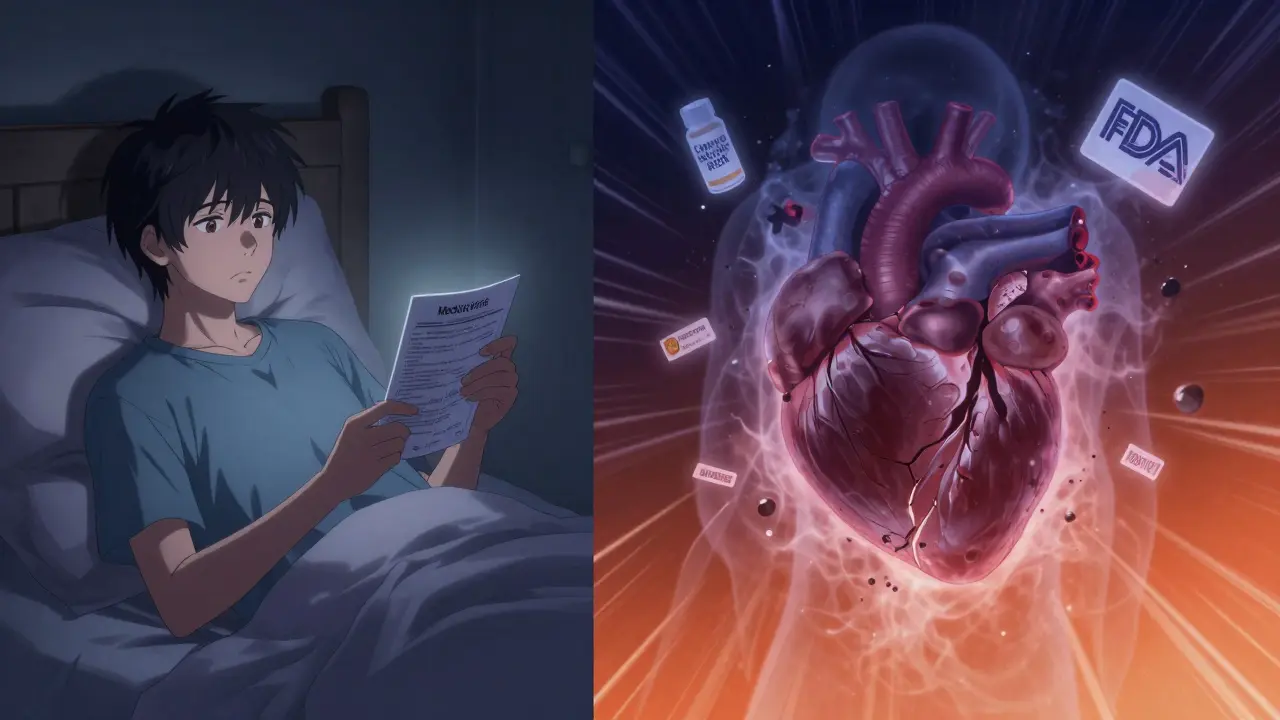
The FDA’s Tracking System: SrLC Database
Before 2016, finding out about a boxed warning change was like searching for a needle in a haystack. You had to dig through old MedWatch reports, drug approval documents, and scattered FDA announcements. That changed in January 2016, when the FDA launched the Drug Safety-related Labeling Changes (SrLC) database.
Now, every labeling update since 2016 is tracked here. You can search by drug name, active ingredient, or even the specific section changed-like BOXED WARNING or CONTRAINDICATIONS. It’s searchable, sortable, and updated weekly. As of December 2023, the database had recorded 1,842 safety labeling changes, including 147 new or updated boxed warnings.
But it’s not perfect. Pharmacists report it takes 3 to 5 hours to learn how to use it well. And for warnings issued before 2016, you still have to cross-reference MedWatch archives and Drugs@FDA. That fragmentation makes it easy to miss something.
Who’s Actually Paying Attention?
According to a 2017 FDA survey, 87% of healthcare providers say they check for boxed warnings when prescribing a new drug. But 63% admit they don’t regularly check for updates to existing warnings. That’s a problem. A warning you saw two years ago might have changed. A drug you’ve been prescribing safely might now carry a new risk.
Real-world behavior shows the impact. After the fluoroquinolone antibiotics got a boxed warning for tendon rupture in 2008, 68% of doctors on the physician forum Sermo said they changed how they prescribed them. For Chantix, clinics reported a 40% drop in prescriptions after the psychiatric warning went live. When it was removed, prescriptions climbed back up.
But not all changes are met with consensus. Many endocrinologists still argue the Avandia warning was too aggressive, limiting access to a drug that helped some patients control blood sugar when others failed. A 2023 Medscape poll found that 52% of physicians believe some boxed warnings are overly cautious-and lead to underuse of effective medications.

What’s Being Done to Fix the System?
The FDA knows the system has flaws. In 2023, they announced a plan to modernize the boxed warning format by 2026. Pilot tests are already underway, exploring better visual designs-like color-coded risk levels or icons-to help prescribers quickly understand severity.
They’re also investing in better data. The Sentinel Initiative, launched in 2008 with $150 million in funding, uses electronic health records and insurance claims to detect safety signals faster. It’s already cutting detection time by 2.3 years on average. A new $25 million partnership with the OHDSI consortium aims to reduce the average time from risk discovery to label change-from 11 years down to under 5.
Meanwhile, hospitals and specialty pharmacies are taking matters into their own hands. Many now run monthly reviews of the SrLC database. Automated alert systems notify clinicians of updates-but 41% of them say these systems generate too many false alarms. Still, institutions with formal monitoring programs saw 27% fewer medication-related adverse events.
What You Should Do
If you’re a clinician: Make checking for boxed warning updates part of your routine. Don’t rely on memory. Bookmark the SrLC database. Set up alerts if your EHR supports it. Talk to your pharmacy team. Ask: "Has this warning changed?"
If you’re a patient: Don’t ignore the warning. Ask your doctor what it means for you specifically. Ask if there are safer alternatives. And if you’re on a drug with a boxed warning, make sure you’re getting a Medication Guide. Studies show that when patients read these guides, their understanding of the risk jumps from 42% to 78%.
If you’re a caregiver or family member: Pay attention to changes. A drug your loved one has been taking for years might now carry a new risk. A warning that was removed might mean the drug is safer now. Don’t assume the label hasn’t changed.
What’s Next?
The future of boxed warnings is moving toward precision. Instead of one-size-fits-all black boxes, we may see tiered alerts-like traffic lights: red for life-threatening, yellow for serious, green for minor. We may see warnings tied to genetic risk factors or real-time monitoring data. The goal isn’t to scare people away from needed drugs-it’s to help people use them safely.
For now, the boxed warning remains the most powerful tool the FDA has to communicate danger. But its power depends on one thing: people actually seeing it, understanding it, and acting on it.
What does a boxed warning mean for patients?
A boxed warning means the drug carries a serious, potentially life-threatening risk. It doesn’t mean you can’t take it-it means you need to understand the risk and how to manage it. Talk to your doctor about whether the benefits outweigh the risks for your situation. Never stop taking a medication without medical advice.
How often are boxed warnings updated?
There’s no fixed schedule. Updates happen whenever new safety data emerges-sometimes months after a drug is approved, sometimes years later. Between 2016 and 2023, the FDA issued 147 new or revised boxed warnings. The pace has been steady, with about 15-20 changes per year.
Can a boxed warning be removed?
Yes, but it’s rare. The FDA removes a boxed warning only when new evidence shows the risk is lower than originally thought, or when monitoring and mitigation strategies have proven effective. Chantix’s psychiatric warning was removed in 2016 after follow-up studies showed the risk was not as high as initial reports suggested.
Where can I find the most current boxed warning for a drug?
The FDA’s Drug Safety-related Labeling Changes (SrLC) database is the most reliable source for updates since January 2016. For older changes, check MedWatch archives. You can also view the full prescribing information on Drugs@FDA. Always use official sources-avoid third-party websites that may not be updated.
Do all drugs have boxed warnings?
No. Only about 40% of prescription drugs in the U.S. carry one. They’re most common in high-risk categories: antipsychotics (87%), anticoagulants (78%), and diabetes medications (63%). Many common drugs-like antibiotics or blood pressure pills-never get a boxed warning because their risks are well understood and manageable.
Why don’t pharmacies always give out Medication Guides?
The FDA requires Medication Guides for certain drugs, but enforcement at the pharmacy level is inconsistent. Only 35% of pharmacies consistently provide them. Some say it’s due to time constraints, lack of training, or confusion over which drugs require them. If you’re prescribed a drug with a boxed warning, always ask for the guide-it’s your right.
Betty Bomber
January 26, 2026 AT 17:06Still, I’m glad they make it impossible to ignore.
Mohammed Rizvi
January 27, 2026 AT 03:55Also, 11 years to update a warning? That’s not a delay-it’s a crime scene.
Allie Lehto
January 27, 2026 AT 08:21also i think the government is lying about the 'rare' side effects because big pharma owns them. i read this one post on a blog that said the FDA gets 70% of its funding from drug companies??? i dont know if its true but it feels true??
also why do i have to read a 10 page guide just to take a pill?? i just want to feel better. not get a phd in pharmacology.
Dan Nichols
January 28, 2026 AT 04:57Renia Pyles
January 28, 2026 AT 13:26Rakesh Kakkad
January 28, 2026 AT 21:29Nicholas Miter
January 29, 2026 AT 13:52Also, I think we need better training for docs. Not everyone remembers what they learned in med school.
Suresh Kumar Govindan
January 29, 2026 AT 17:56George Rahn
January 30, 2026 AT 12:36Ashley Karanja
January 30, 2026 AT 13:29Still, the UX of the SrLC database is a disaster. If you’re not a data scientist, you’re lost. We need a plain-language dashboard for clinicians, not a SQL query interface.
Karen Droege
January 31, 2026 AT 16:32Shweta Deshpande
February 1, 2026 AT 01:33Aishah Bango
February 2, 2026 AT 03:44