

Child Medication Switches: What Parents Need to Know About Generic Substitutions
 Jan, 26 2026
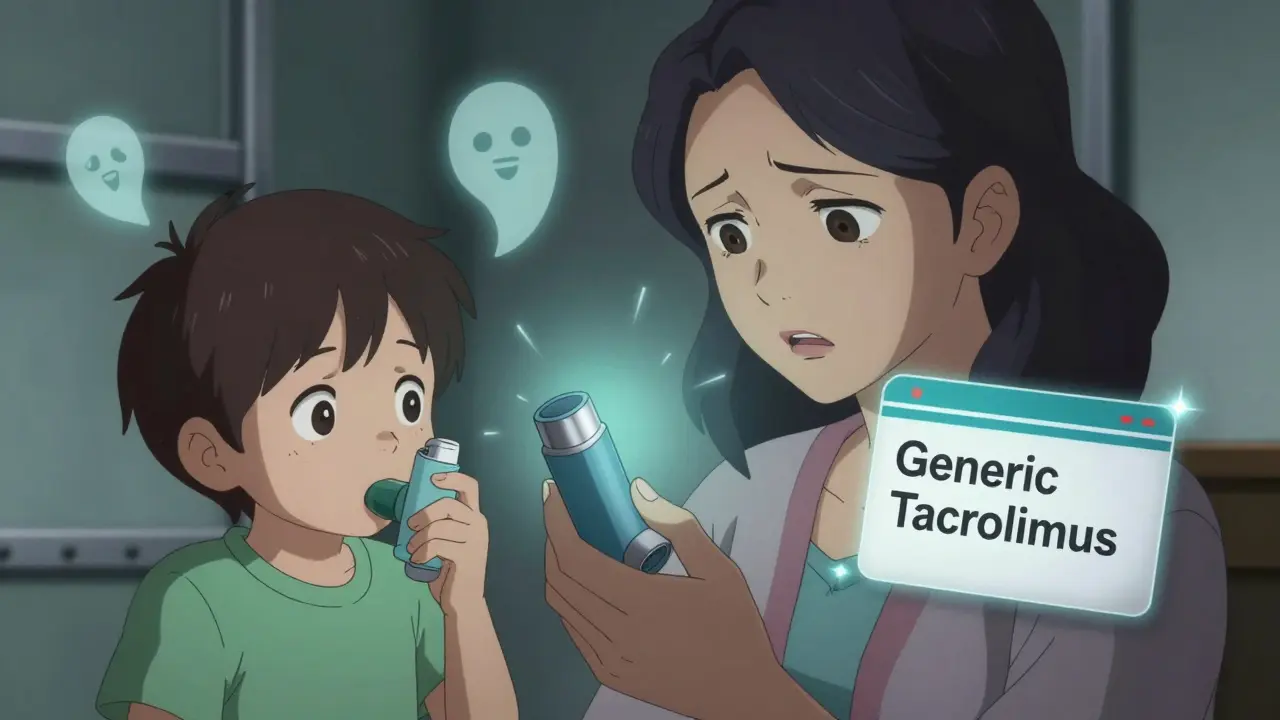
When your child’s asthma inhaler suddenly looks different - maybe it’s a different color, shape, or even smells a little off - it’s easy to assume it’s the same medicine. But in many cases, it’s not. It’s a generic version, swapped by the pharmacy or insurer without your knowledge. For adults, this might be a minor inconvenience. For kids, especially those on chronic medications, it can be a serious health risk.
Why Generic Switches Are Riskier for Kids
Generic drugs are cheaper because they don’t need to repeat expensive clinical trials. The FDA says they’re just as good as brand-name drugs because they contain the same active ingredient and fall within an 80-125% bioequivalence range. That sounds fine - until you realize those numbers were designed for adults. Children aren’t small adults. Their bodies process drugs differently. A 3-month-old baby metabolizes omeprazole through enzymes that aren’t fully developed yet. A 5-year-old with epilepsy might need precise blood levels of phenytoin to prevent seizures. Even a 10% drop in concentration can mean the difference between control and crisis. Studies show real harm. In one 2015 study of pediatric heart transplant patients, switching from brand-name Prograf to generic tacrolimus led to a 14% average drop in blood levels. That’s not a rounding error - it’s a spike in rejection risk. Another study found children with asthma had 15-20% lower adherence after switching to a generic inhaler, not because they refused to take it, but because the device felt different. Kids (and parents) get confused. They stop using it correctly.Therapeutic Areas Where Switching Is Dangerous
Not all medications are created equal when it comes to switching. The FDA lists certain drug classes as high-risk for children:- AEDs (anti-epileptic drugs) - Even tiny changes in blood levels can trigger seizures.
- Immunosuppressants - Like tacrolimus or cyclosporine after transplant. Too little = rejection. Too much = organ damage.
- Cardiac drugs - Such as digoxin or warfarin. Narrow therapeutic window means small changes = big consequences.
- Psychiatric medications - Antidepressants and stimulants can cause mood swings, aggression, or withdrawal if dosing shifts even slightly.
- Oncology drugs - Chemotherapy regimens are finely tuned. Substitutions can compromise treatment.
Inactive Ingredients Can Cause Problems Too
You might think, “It’s the same active ingredient, so what’s the difference?” But generics can have different fillers, dyes, flavors, or preservatives. For most people, that’s fine. For kids with allergies or sensitivities, it’s not. One case from Nationwide Children’s Hospital involved a child who developed a rash every time they switched to a new generic version of their seizure medication. The culprit? A dye in the tablet that wasn’t in the brand version. The child had never reacted before - only after the switch. Pediatricians see this more than you’d think. Kids with eczema, food allergies, or rare metabolic disorders are especially vulnerable. Even a small change in flavor can make a child refuse to take their medicine. If your child has been on the same brand for years and suddenly refuses the new version, don’t brush it off. It might not be a tantrum - it might be a reaction.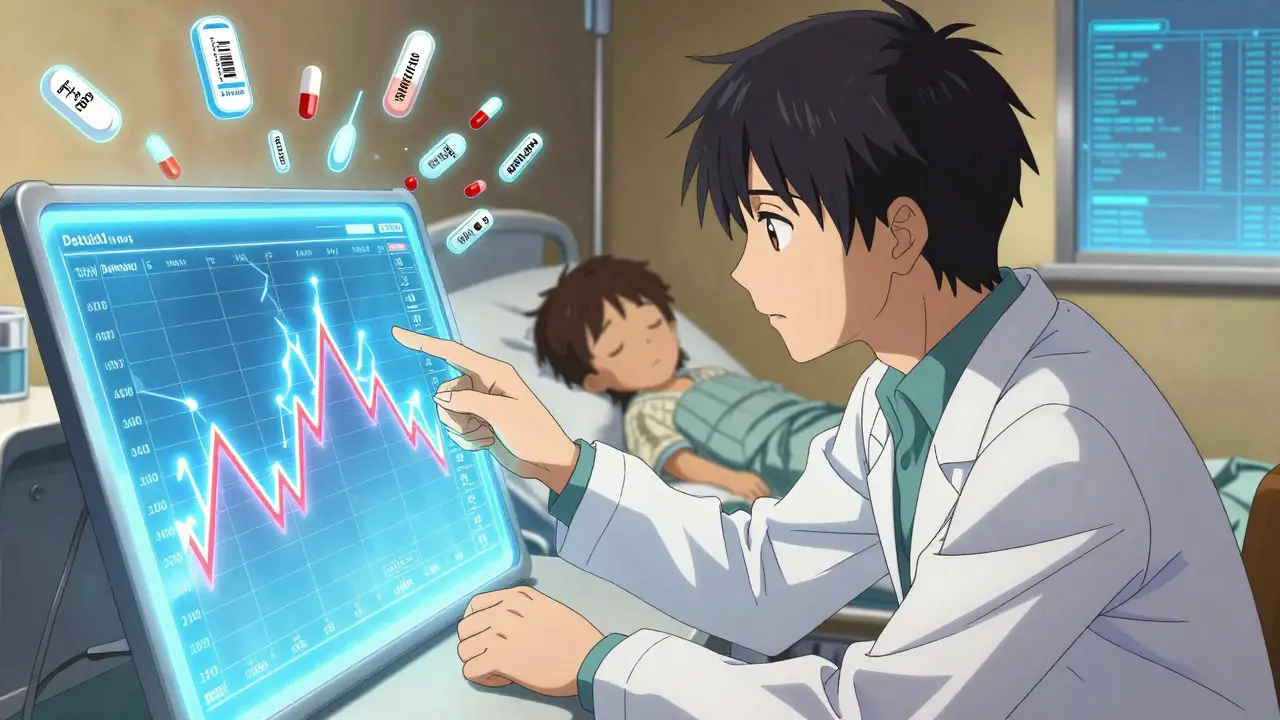
Insurance and Formulary Switches Are the Real Culprit
Most switches aren’t your doctor’s idea. They’re driven by insurance companies trying to save money. This is called non-medical formulary switching (NMFS). It’s when a health plan changes which drugs they cover - not because a better option exists, but because the generic is cheaper. In 2021, UnitedHealthcare changed its formulary for 4.2 million children. Over 20% of kids on long-term medications were forced to switch. Some families had to switch twice in one year - because the “cheaper” brand-name drug lost its discount and the insurer switched again. This isn’t rare. A 2020 study found that 19 states require pharmacists to substitute generics automatically. Seven states and Washington, D.C., require consent from the patient or caregiver. The rest? It’s a gray zone. You might not even know you’ve been switched until you pick up the prescription.What You Can Do as a Parent
You don’t have to accept this as normal. Here’s what works:- Ask before the switch. When your doctor writes a prescription, say: “Is this the brand or generic? If it’s generic, can we stick with the one my child is already using?”
- Check the label. Look at the name on the bottle. If it’s not the brand you know, ask the pharmacist: “Is this a generic? What’s the manufacturer?”
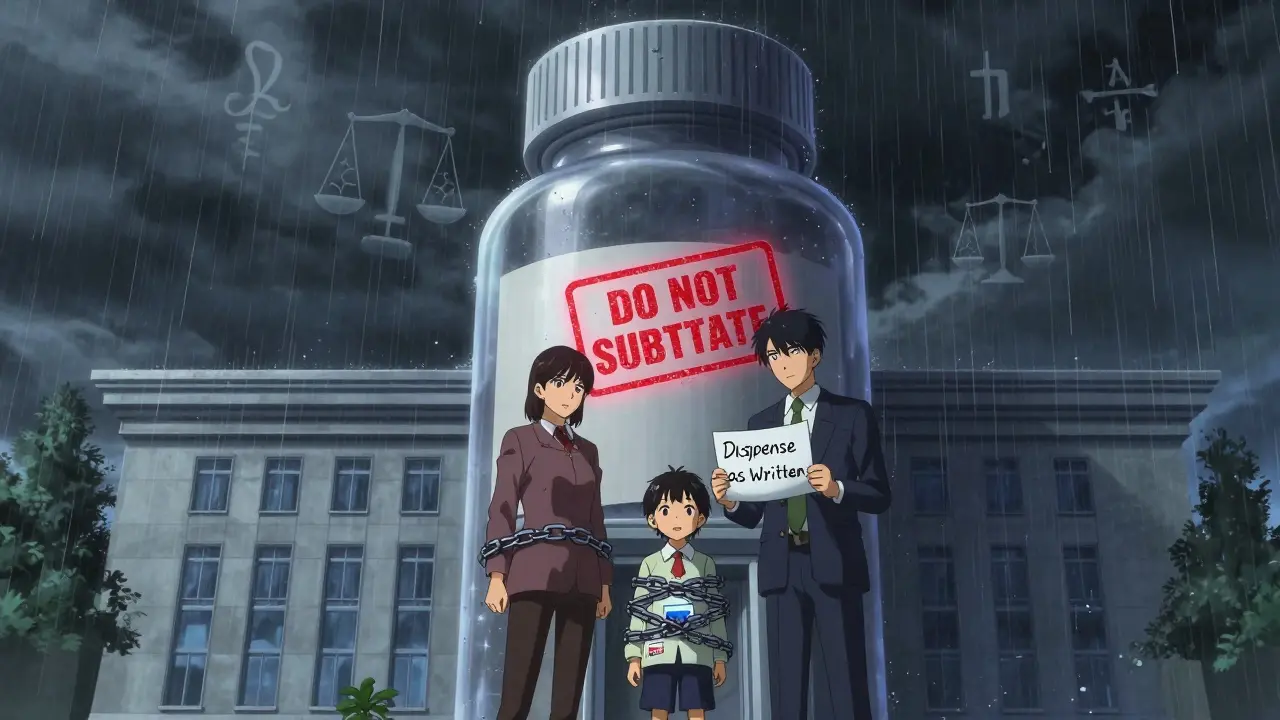
- Request a non-formulary exception. If your child’s medication is on a high-risk list, ask your doctor to write “Dispense as Written” or “Do Not Substitute” on the prescription. This legally blocks automatic substitution in most states.
- Know your state’s rules. Some states require pharmacies to notify you before switching. Others don’t. Call your state’s board of pharmacy or search “pediatric generic substitution rules [your state].”
- Watch for changes in behavior or symptoms. Did your child’s seizures get worse? Did they start vomiting after starting the new inhaler? Did they refuse to take it? Document it. Bring it to your doctor. This is evidence - not just a complaint.
Kirstin Santiago
January 27, 2026 AT 22:12My daughter’s asthma inhaler switched last year and we didn’t notice until she started wheezing after school. I thought it was just allergies until I checked the label - different manufacturer, same active ingredient, but the puff felt totally off. Took three weeks and three doctor visits to get the original back. Don’t assume it’s fine. Always check the bottle.
Parents, if you’re not already doing it, start reading the tiny print on the prescription label. It’s not just bureaucracy - it’s your kid’s safety.
April Williams
January 28, 2026 AT 04:09Of course the system is rigged. Insurance companies don’t care if your child has a seizure because they saved $2.37 per pill. These are the same people who deny mental health coverage but charge $800 for a 10-minute ER visit. They’re not just greedy - they’re criminally negligent. Someone needs to sue these corporations into oblivion.
And don’t give me that ‘generic is fine’ nonsense. If it was their kid, they’d be screaming louder than you.
astrid cook
January 29, 2026 AT 21:51I can’t believe people are still surprised by this. We’ve known since the 90s that pediatric bioequivalence is a joke. The FDA’s standards were written for middle-aged men with high cholesterol. Kids aren’t little adults. They’re not even little versions of the same system. Their livers, kidneys, blood-brain barriers - they’re all developing. You can’t just slap a generic label on a drug and call it a day.
And yet here we are. Parents are left playing Russian roulette with their child’s neurology because someone in a cubicle decided to cut costs. This isn’t healthcare. It’s corporate gambling.
Anjula Jyala
January 30, 2026 AT 23:43Nonmedical formulary switching NMFS is a systemic failure in pediatric pharmacovigilance. Bioequivalence thresholds 80125 are derived from adult PKPD models which lack developmental pharmacokinetic parameters. Pediatric populations exhibit ontogeny of CYP450 enzymes and altered protein binding. Without pediatric-specific bioequivalence studies the assumption of therapeutic interchangeability is scientifically invalid.
States without consent mandates are violating the principle of informed consent under pediatric ethics. This is not policy. This is negligence.
Kathy McDaniel
February 1, 2026 AT 23:00My son’s seizure med switched last year and I thought he was just being moody. Turns out the new generic had a different dye and he broke out in hives every time. We didn’t connect it until his pediatrician asked if anything changed. Now I check every bottle like it’s a bomb. It’s crazy that we have to be detectives just to keep our kids safe. But hey - at least we’re trying.
Don’t stress yourself out too much. Just ask. Always ask. And write it down.
Paul Taylor
February 2, 2026 AT 04:22Look I get the fear but you’re overreacting a bit. Yes some kids react to fillers or flavor changes but that’s not the same as saying generics are dangerous. The FDA doesn’t approve junk. The active ingredient is the same. If your kid’s asthma inhaler feels different it’s probably the propellant or the mouthpiece design not the medicine itself.
My nephew’s on generic Prograf and he’s been stable for three years. His labs are perfect. His transplant team says it’s fine. You can’t generalize from a few bad cases. Most kids do just fine.
But yeah - if your kid has a known allergy to tartrazine or something then sure ask for the brand. But don’t go full panic mode because the pill looks different. That’s how misinformation spreads.
Also - if you’re not using a pill organizer or a med log you’re already behind. This isn’t rocket science. Just track it. Write down when you get a new bottle. Note the color. Note the shape. Note the name on the label. Do that and you’re 90% ahead of most parents.
Desaundrea Morton-Pusey
February 2, 2026 AT 13:27Typical liberal healthcare nonsense. Why are we even letting Big Pharma get away with this? It’s not the generics - it’s the whole system. We’re paying for drugs made in China while our own kids get sick. This is what happens when you let corporations run medicine. We need nationalized healthcare. No more insurance middlemen. No more formularies. Just doctors and patients.
And if you’re not protesting this at your state capitol you’re part of the problem.
Murphy Game
February 4, 2026 AT 12:23They’ve been doing this for decades. The FDA, the insurers, the pharmacy chains - they’re all in cahoots. The 80-125% bioequivalence range? That’s not science. That’s a loophole. They know kids are vulnerable. They know the data is thin. But they don’t care because they’re making billions.
And don’t think this is just about asthma or seizures. It’s the same with ADHD meds. Same with chemo. Same with insulin. They’re testing on our kids to save a buck. And when something goes wrong? They say ‘it’s rare.’
It’s not rare. It’s hidden. The ER visits get buried. The school absences get chalked up to ‘behavior.’ The seizures? ‘Oh maybe he didn’t sleep well.’
Wake up. This is a coordinated attack on pediatric health. And the people who profit from it? They’re sitting in boardrooms drinking champagne while you’re Googling ‘why is my child vomiting after the new pill?’
John O'Brien
February 6, 2026 AT 08:33Bro I just got my son’s new inhaler and the damn thing didn’t even puff right. I thought I was doing something wrong until I checked the label - different company. Same name. Different feel. I called the pharmacy and they were like ‘oh yeah that’s the generic now’ like it’s no big deal.
I went nuclear. Called the doc. Got the original back. Made them put ‘do not substitute’ on the script. Now I keep a printed copy of the brand name in my wallet. I don’t care if it’s a pain. My kid’s lungs aren’t a cost center.
Do this. Right now. Don’t wait for a crisis. Just ask. Say it loud. Write it down. You’re not being dramatic. You’re being a parent.