

Chronic Bronchitis: Managing Cough, Sputum, and Quitting Smoking for Better Lung Health
 Jan, 15 2026
What Chronic Bronchitis Really Feels Like
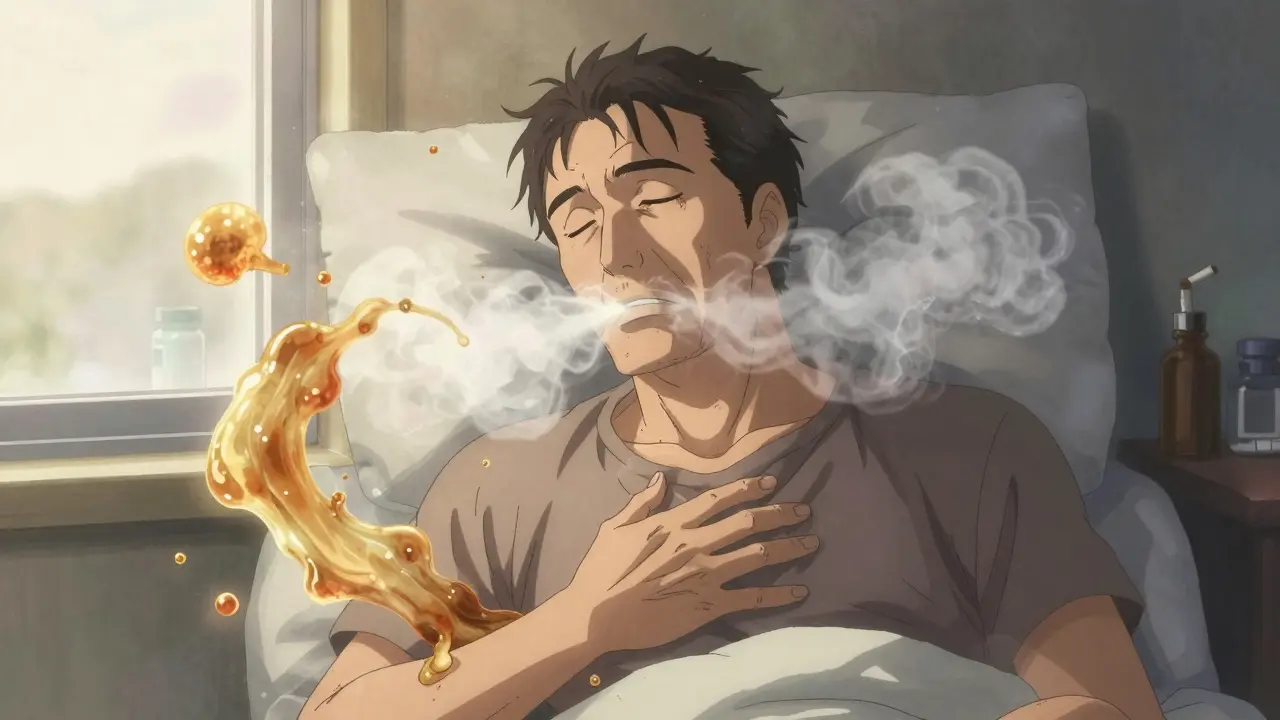
You wake up every morning with a heavy chest. Your cough isn’t just a nuisance-it’s a deep, rattling sound that brings up thick mucus. It’s been like this for over a year. Then another. And another. Doctors call it chronic bronchitis. It’s not a cold that goes away. It’s not allergies. It’s your airways stuck in constant inflammation, producing too much mucus, making every breath feel like you’re breathing through a straw. You’re not alone. About 10 million Americans live with this condition, and for most, it started with cigarettes.
Chronic bronchitis is one of the two main forms of COPD, the fourth leading cause of death in the U.S. It’s defined by a daily cough that brings up mucus for at least three months a year, for two years straight. That’s not just a bad winter. That’s your lungs screaming for help. And the worst part? There’s no cure. But there is control.
Why Smoking Is the Main Culprit-And Why Quitting Changes Everything
Nine out of ten people with chronic bronchitis have smoked-or still do. Smoking doesn’t just irritate your lungs. It destroys the tiny hair-like structures called cilia that normally sweep mucus out of your airways. Without them, mucus builds up. Your body tries to clear it by coughing. That’s the cough you can’t shake.
Here’s the hard truth: 42% of people who keep smoking will develop chronic bronchitis over 30 years. For those who quit? That number drops to 26%. And if you’ve never smoked? It’s still 22%. That means even secondhand smoke or air pollution can contribute. But nothing comes close to the damage of cigarettes.
Quitting isn’t just a good idea-it’s the single most effective thing you can do. People who stop smoking slow their lung decline by 60% compared to those who keep going. That’s not a guess. It’s from a 2023 editorial in the American Journal of Respiratory and Critical Care Medicine. Your lungs don’t heal overnight, but they stop getting worse. And over time, your cough may ease. Your breathing may improve. You might even find yourself walking farther without stopping.
The Symptoms You Can’t Ignore
It’s not just the cough. Chronic bronchitis brings a whole set of signs that sneak up on you:
- Constant mucus production-clear, white, yellow, or green. You might need to spit it out several times a day.
- Shortness of breath during simple tasks-like walking to the mailbox or climbing stairs.
- Chest tightness or pain, especially when you cough hard.
- Wheezing-a whistling sound when you breathe out.
- Fatigue so deep it feels like your body’s running on empty.
One study found 82% of people with chronic bronchitis get winded during activity. 73% feel exhausted most days. These aren’t normal signs of aging. They’re red flags. And if you’ve got these symptoms, your risk of lung infections jumps 3.2 times higher. A simple cold can turn into pneumonia or a hospital trip.
What Doctors Actually Recommend-Beyond Just Inhalers
Medications help, but they’re not magic. Bronchodilators open your airways. Inhaled steroids reduce swelling. Antibiotics treat infections. But here’s what most people don’t know: not all treatments work for everyone.
The Global Initiative for Chronic Obstructive Lung Disease (GOLD) recommends mucolytics like N-acetylcysteine to thin mucus. Studies show they reduce flare-ups by about one episode every three years. But the American College of Chest Physicians says the evidence isn’t strong enough for routine use. That’s why your doctor needs to tailor your plan.
Inhaled steroids? They help with breathing-but they raise your risk of osteoporosis by 23%, high blood pressure by 18%, and diabetes by 15%. That’s why they’re not for everyone. One patient on PatientsLikeMe developed two broken spine bones from long-term steroid use, even with calcium supplements. It’s a trade-off.
And don’t forget vaccines. Annual flu shots cut your risk of a bad flare-up by 42%. Pneumococcal shots every five to seven years give you 68% protection against pneumonia. These are low-effort, high-reward moves.

Pulmonary Rehabilitation: The Secret Weapon Most People Skip
If you’ve never heard of pulmonary rehab, you’re not alone. But it’s one of the most powerful tools you have.
Pulmonary rehab isn’t just exercise. It’s a 6- to 12-week program that teaches you how to breathe better, how to move without getting winded, how to eat for energy, and how to manage your stress. In one American Lung Association study, people who completed rehab walked 78 meters farther in six minutes. Hospital visits dropped by 37%.
And the results are real. In a survey of 1,250 patients, 78% said their daily life improved after rehab. One 58-year-old former smoker said, “After six months, I could walk to the end of my street without stopping. I hadn’t done that in three years.”
Here’s the catch: only 1 in 4 people with COPD get referred to rehab. If your doctor hasn’t mentioned it, ask. It’s covered by Medicare and most insurance plans. And it works best when paired with quitting smoking.
Smoking Cessation: How to Actually Quit (And Stay Quit)
Trying to quit on your own? Only 7% succeed. But with the right support? That number jumps to 45%.
Successful programs combine three things: medication, counseling, and accountability.
- Varenicline (Chantix) reduces cravings and blocks nicotine’s effects. It’s been shown to double quit rates.
- Nicotine patches or gum help manage withdrawal without smoking.
- Behavioral counseling helps you identify triggers-stress, coffee, after meals-and replace smoking with healthier habits.
One 2022 study found that patients who got structured support from their doctor had a 68% success rate at quitting. Those who tried alone? Only 22% made it.
And don’t think it’s too late. Even if you’ve smoked for 40 years, quitting at 60 still adds years to your life. Your lungs start repairing within weeks. Your cough lessens. Your energy rises. You breathe easier. It’s not a miracle-but it’s the closest thing you’ve got.
What Doesn’t Work (And What to Avoid)
There’s a lot of noise out there. Don’t waste time or money on:
- Herbal remedies that promise to “cleanse” your lungs. There’s no evidence they help.
- Buying expensive oxygen machines without a doctor’s order. Oxygen therapy is only for those with very low blood oxygen-below 88%. Using it unnecessarily can be dangerous.
- Skipping inhaler training. Most people use their inhalers wrong. Studies show it takes nearly five sessions with a respiratory therapist to get it right. If you’re not sure, ask for a demo.
Also, avoid places with heavy smoke, dust, or chemical fumes. Even if you quit smoking, other irritants can trigger flare-ups. Use air purifiers at home. Wear a mask in polluted areas. These small steps add up.

The Future Is Here-And It’s Digital
In 2023, the FDA approved a new drug called ensifentrine. It’s the first of its kind, and it improved breathing and reduced flare-ups in clinical trials. Researchers are also studying gene variants that affect mucus production-meaning someday, treatment could be personalized based on your biology.
But the biggest game-changer? Digital tools. AI-powered inhalers now track when you use them and send reminders to your phone. Tele-rehab programs let you do breathing exercises at home with virtual coaches. Early data shows these tools boost adherence by 35% and cut hospital visits by nearly a third.
These aren’t sci-fi. They’re available now. Ask your doctor if any digital programs are covered by your insurance.
Living Well With Chronic Bronchitis
This isn’t a death sentence. It’s a call to change how you live. The goal isn’t to cure it-it’s to keep it from controlling you.
Quit smoking. Get pulmonary rehab. Take your vaccines. Use your inhalers right. Avoid triggers. Move every day-even if it’s just walking around the block. Eat foods that give you energy. Sleep well. Manage stress. These aren’t just tips. They’re the foundation of a longer, better life.
And if you’re reading this because you or someone you love is struggling with this condition-you’re already on the right path. Knowledge is power. And with the right support, you can breathe easier than you think.
Is chronic bronchitis the same as COPD?
Chronic bronchitis is one type of COPD, along with emphysema. Both involve blocked airflow and breathing trouble, but chronic bronchitis is defined by a daily cough with mucus for at least three months a year, for two years straight. Many people have both conditions at once.
Can you get chronic bronchitis if you never smoked?
Yes. While smoking causes over 90% of cases, long-term exposure to air pollution, dust, chemical fumes, or secondhand smoke can also lead to chronic bronchitis. A rare genetic condition called alpha-1 antitrypsin deficiency accounts for about 2% of cases. But even non-smokers with chronic bronchitis often have a history of heavy environmental exposure.
How long does it take to see improvement after quitting smoking?
Within two weeks, your circulation and lung function begin to improve. After three months, your cough and shortness of breath often start to ease. By one year, your risk of heart disease drops in half. And after five years, your risk of lung cancer drops significantly. But the biggest win? Slowing disease progression by 60% compared to continuing to smoke.
Do I need oxygen therapy?
Only if your blood oxygen level falls below 88% during rest or activity. Your doctor will test this with a simple pulse oximeter or blood test. Oxygen therapy isn’t for everyone-it’s only recommended for those with severe low oxygen. But for those who need it, using it 15+ hours a day can increase survival by 21% over five years.
Is pulmonary rehab worth the effort?
Absolutely. People who complete pulmonary rehab walk farther, feel less tired, and go to the hospital less often. One study showed a 37% drop in hospital visits. It’s not a quick fix, but it’s one of the most effective treatments available. Medicare and most insurers cover it. Ask your doctor for a referral.
Next Steps: What to Do Today
- If you smoke-call your doctor about a quit program. Don’t wait. The sooner you stop, the better your lungs will recover.
- Ask if you’re a candidate for pulmonary rehabilitation. If you’re unsure, request a lung function test.
- Get your flu shot and pneumococcal vaccine if you haven’t already.
- Review your inhaler technique with a nurse or respiratory therapist. Most people use them wrong.
- Start walking 10 minutes a day. Build up slowly. Movement helps your lungs work better.
Chronic bronchitis doesn’t have to define you. With the right steps, you can still live fully-breathe easier, move freely, and take back control.
Crystel Ann
January 16, 2026 AT 13:45ellen adamina
January 16, 2026 AT 17:46Mike Berrange
January 16, 2026 AT 18:40Amy Ehinger
January 18, 2026 AT 12:50Nat Young
January 19, 2026 AT 22:55Niki Van den Bossche
January 21, 2026 AT 22:25Jaspreet Kaur Chana
January 22, 2026 AT 02:59Haley Graves
January 22, 2026 AT 21:29Sohan Jindal
January 23, 2026 AT 15:05Frank Geurts
January 24, 2026 AT 04:06Annie Choi
January 24, 2026 AT 22:13Crystel Ann
January 26, 2026 AT 10:32