

Chronic Spontaneous Urticaria: Second-Line Treatments You Need to Know
 Feb, 8 2026
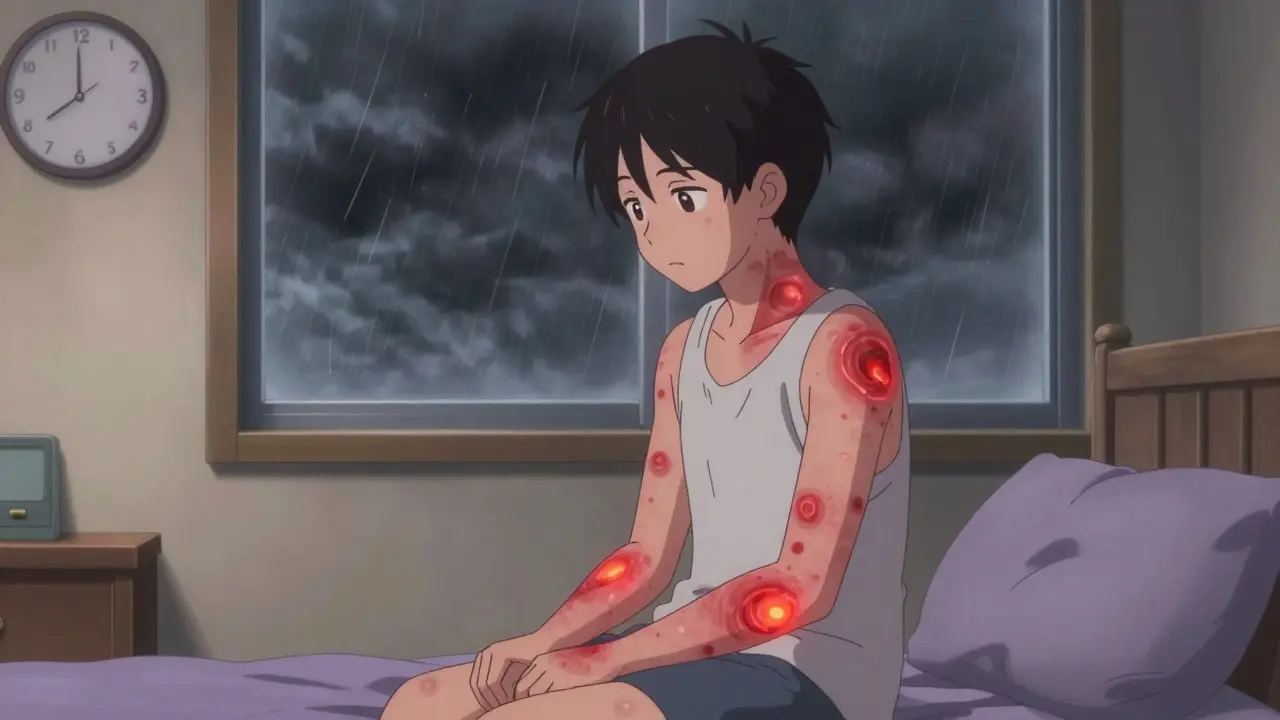
When second-generation antihistamines don’t work for chronic spontaneous urticaria (CSU), patients are left with persistent hives, swelling, and a quality of life that feels like it’s crumbling. About 60% of CSU patients don’t get enough relief from standard antihistamine doses - even when those doses are doubled or quadrupled. That’s where second-line treatments come in. These aren’t just backup options. They’re often the difference between daily discomfort and real control.
What Is Chronic Spontaneous Urticaria?
Chronic spontaneous urticaria means hives and/or swelling (angioedema) that last longer than six weeks with no clear trigger - no food, no stress, no insect bite. It’s not allergies in the classic sense. In fact, about 40-50% of cases are tied to autoimmune activity, where the body attacks its own mast cells, releasing histamine and causing flare-ups. This isn’t rare. It affects 0.5% to 1% of the population. And for nearly half of those people, their Dermatology Life Quality Index score hits above 10, meaning their daily life - sleep, work, relationships - is severely damaged.
Why First-Line Treatment Often Fails
Second-generation H1 antihistamines like cetirizine, loratadine, and fexofenadine are the first step. They’re safe, widely available, and non-drowsy. But here’s the hard truth: only about 40% of patients get partial or complete relief with standard doses. Even when doctors increase the dose to two, three, or four times the normal amount, only about 10-15% more patients respond. That leaves the majority stuck. And pushing antihistamines too high can cause drowsiness, dry mouth, or even liver issues - without guaranteeing results.
Omalizumab: The Current Gold Standard
Omalizumab is the only FDA- and EMA-approved second-line treatment for CSU. It’s a monoclonal antibody that binds to IgE, the antibody that triggers mast cells to release histamine. Given as a monthly subcutaneous injection, it’s been used since 2014. In clinical trials, about 30-70% of patients saw symptom reduction. But here’s what most patients and even some doctors don’t realize: 70% of people still don’t get complete control. And for those with IgG-mediated autoimmune urticaria - which makes up about 30% of CSU cases - omalizumab often doesn’t work at all.
Why? Because omalizumab targets IgE. If your hives are driven by IgG autoantibodies, it doesn’t touch the root cause. That’s a major gap. Still, it’s the most studied, safest, and most widely used option. It’s not a cure. But for many, it’s the first real break from daily flare-ups.

Emerging Second-Line Options: What’s on the Horizon
The treatment landscape is changing fast. Three new drugs are reshaping what’s possible.
Dupilumab
Dupilumab blocks IL-4 and IL-13 - two key inflammation signals. It’s already approved for eczema and asthma. In phase 3 trials for CSU, 30-31% of patients achieved complete symptom control at 24 weeks. That’s comparable to omalizumab’s best results. The big advantage? It’s given as a subcutaneous injection every two weeks. It’s not yet approved for CSU, but with strong data, approval is expected soon. It may work better than omalizumab for patients with mixed inflammatory pathways.
Remibrutinib
This is the first oral Bruton tyrosine kinase (BTK) inhibitor designed for CSU. Unlike omalizumab, it doesn’t just block IgE. It shuts down both mast cells and basophils - and even reduces the production of autoantibodies. In two phase 3 trials (REMIX-1 and REMIX-2), 28-32% of patients had complete symptom relief at 24 weeks. The biggest win? It’s a daily pill. No needles. No clinic visits. For someone juggling work, kids, or travel, that’s huge. It’s expected to be approved in 2026.
Barzolvolimab
An even newer option, barzolvolimab, showed 38-51% complete response rates in phase 2 trials - the highest so far. It’s still early, but if phase 3 confirms these numbers, it could become a top contender. It’s also an injectable, but its higher response rate makes it worth watching.
Why Fenebrutinib Failed - And What It Teaches Us
In 2023, the fenebrutinib CSU trial was stopped because a subset of patients developed elevated liver enzymes. It wasn’t a rare side effect - it happened often enough to outweigh the benefits. This wasn’t a fluke. It’s a reminder that new drugs must balance power with safety. The next generation of CSU treatments won’t just need to work - they need to be predictable in their side effects.
Cyclosporine: The Unofficial Third-Line Option
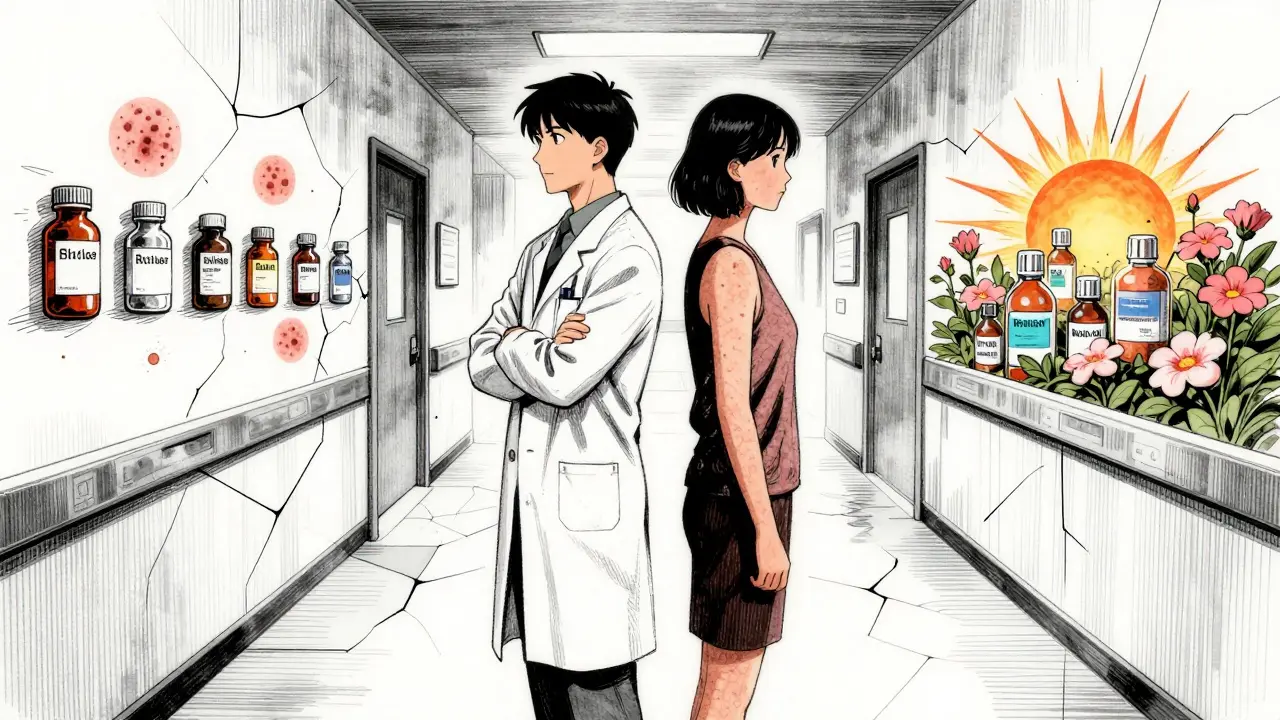
Cyclosporine isn’t a second-line treatment - it’s third-line. But for patients who fail omalizumab, especially those with autoimmune CSU, it can be a game-changer. Studies show 54-73% of these patients improve significantly. The catch? It’s hard on the kidneys. It raises blood pressure. It can’t be used long-term. Most doctors limit it to 6-12 months. It’s powerful, but risky. It’s not a first choice - but for some, it’s the only thing that brings relief after everything else fails.
Choosing the Right Second-Line Treatment
There’s no one-size-fits-all. The best choice depends on your body’s specific trigger:
- If your hives are driven by IgE - omalizumab is still your best bet.
- If you’ve tried omalizumab and it didn’t work - especially if you have autoimmune signs - remibrutinib (when approved) or dupilumab may be better.
- If you hate needles and want daily control - remibrutinib’s pill form could be ideal.
- If you’ve failed multiple biologics and need fast, strong suppression - cyclosporine might be worth a short trial under close monitoring.
Doctors are starting to test for IgG autoantibodies and other markers to identify subtypes. In the next few years, treatment will shift from trial-and-error to precision matching.
What’s Next for CSU Treatment?
The future isn’t just about new drugs - it’s about smarter prescribing. Experts predict that within 3-5 years, we’ll routinely classify CSU patients into subtypes: IgE-driven, IgG-driven, mixed, or unknown. That’ll let us match each patient to the treatment that targets their specific biology. Remibrutinib and dupilumab aren’t just alternatives to omalizumab - they’re part of a new toolkit. And for the first time, patients who’ve struggled for years may finally find a treatment that works.
What if my antihistamines don’t work at all?
If standard or high-dose antihistamines don’t control your hives after 4-6 weeks, it’s time to move to second-line treatment. Don’t wait. The longer your symptoms go untreated, the more they affect your sleep, mood, and daily function. Talk to your allergist or dermatologist about omalizumab or upcoming options like remibrutinib. You don’t have to live with daily flare-ups.
Is omalizumab worth the cost and injections?
For many, yes. Omalizumab is expensive and requires monthly shots, but it’s the most proven option. If you’ve tried everything else and still have hives, the improvement - even partial - can be life-changing. Insurance often covers it for CSU. Ask about patient assistance programs if cost is a barrier. But if you have autoimmune urticaria, you may need something else - omalizumab won’t help everyone.
Why aren’t newer drugs like remibrutinib available yet?
Remibrutinib completed phase 3 trials in 2024 and is under review by the FDA and EMA. Approval is expected in 2026. Drug approval takes time - regulators need to confirm long-term safety and consistency across thousands of patients. But the data is strong. This isn’t a theoretical option - it’s coming soon.
Can I try dupilumab off-label?
Some doctors do prescribe dupilumab off-label for CSU, especially if omalizumab failed. It’s not officially approved yet, but phase 3 results are compelling. If your doctor is familiar with biologics and you’re a good candidate, it’s worth discussing. Insurance may not cover it for CSU, but some patients have had success with appeals.
How do I know if I have autoimmune urticaria?
Your doctor can order an autologous serum skin test (ASST) or test for IgG autoantibodies. About half of CSU patients have these markers. If you’ve had hives for years, failed multiple treatments, or have other autoimmune conditions (like thyroid disease), you’re more likely to be in this group. Knowing this helps guide treatment - omalizumab won’t help if your problem is IgG-driven.
Randy Harkins
February 9, 2026 AT 19:42Just wanted to say thank you for this incredibly clear breakdown. I’ve had CSU for 6 years, and this is the first time I’ve seen someone explain why omalizumab didn’t work for me without making me feel like I’m broken. 😊 I’m actually scheduled to get tested for IgG autoantibodies next week - hope it’s positive so I can finally move forward. 🙏
Chima Ifeanyi
February 11, 2026 AT 05:51Let’s be real - this whole paradigm is a pharmacoeconomic mirage. Omalizumab’s 70% non-response rate isn’t a gap - it’s a systemic failure of IgE-centric dogma. The field is still stuck in 2014 while the immune system evolved into a multivariate battlefield. BTK inhibitors? Cute. But until we map the cytokine cross-talk in single-cell resolution, we’re just rearranging deck chairs on the Titanic. And don’t get me started on ‘autoimmune urticaria’ as a binary - it’s a spectrum with overlapping pathways, not a checkbox.
Ken Cooper
February 13, 2026 AT 01:15holy crap this is the most useful thing i’ve read all year. i’ve been on 4x cetirizine for 2 years and still got hives every morning like clockwork. my doc was like ‘just live with it’ lol. but remibrutinib as a pill?? that’s literally my dream. no more needles, no more clinic trips, no more explaining to my boss why i look like i got into a fight with a jellyfish. can’t wait for 2026. also, dupilumab off-label? i’m gonna ask my derm tomorrow. thanks for the hope 🙌
Susan Kwan
February 13, 2026 AT 10:35Oh wow, so we’re pretending cyclosporine is ‘third-line’ when it’s literally the only thing that worked for half the people who’ve tried it? And we’re acting like it’s some scary last resort? It’s not. It’s just that pharma doesn’t make money off a 40-year-old immunosuppressant. Meanwhile, patients are stuck on $20k/month biologics because ‘it’s the approved option.’ Wake up. We’re not treating disease - we’re treating insurance reimbursement codes.
Random Guy
February 13, 2026 AT 21:09ok but like… why is everyone so chill about the fact that we’re basically gambling with people’s kidneys just to stop hives? i had a friend on cyclosporine for 8 months and she ended up with stage 2 kidney damage. now she’s on dialysis. and we’re calling this ‘medical progress’? this isn’t medicine. this is russian roulette with a stethoscope.
Tom Forwood
February 15, 2026 AT 09:38As someone from Nigeria who’s seen CSU affect my cousin and my aunt - this is huge. In my country, most people never even get to the second-line stage. They just get antihistamines and told to ‘pray more.’ But this breakdown? It’s like a roadmap. Remibrutinib as a pill? That’s the future. And honestly, I’m excited. We don’t need to wait for rich countries to lead - we need to demand access. This isn’t just science - it’s justice.
John McDonald
February 16, 2026 AT 04:27Just want to say - if you’re reading this and you’re still stuck in the ‘just take more Zyrtec’ phase - please, please, please talk to a specialist. You’re not weak. You’re not imagining it. You’re not ‘not trying hard enough.’ This isn’t about willpower. It’s biology. And the new options? They’re real. I went from 20 hives a day to zero after 3 months of dupilumab. It’s not magic. But it’s possible. Don’t give up.
Chelsea Cook
February 17, 2026 AT 09:02Ohhh so THAT’S why omalizumab didn’t work for me. I’ve been feeling like a failure for 5 years. Turns out my body just has IgG autoantibodies and my doc didn’t test for it. Classic. Also - remibrutinib as a pill?? I’m already picturing myself taking it with my coffee while scrolling TikTok. No more ‘I’m sorry I’m late, I had a hive emergency.’ Yes. Please. Let’s get this approved yesterday.
Andy Cortez
February 18, 2026 AT 04:06THIS IS A SCAM. I’ve been on omalizumab for 2 years. Paid $18k out of pocket. Got 30% improvement. My skin still looks like a topographic map of a volcano. And now you’re telling me there’s a PILL coming in 2026? That’s not hope. That’s torture. And dupilumab? Off-label? Yeah right - insurance denied me twice. We’re not patients. We’re test subjects for Big Pharma’s marketing department. Wake up. This system is rigged.