

Contrast Dye Reactions: Pre-Medication and Safety Planning for Imaging Safety
 Jan, 17 2026
When you need a CT scan or X-ray with contrast dye, the last thing you want is a reaction you didn’t see coming. Even though modern contrast dyes are much safer than they were 20 years ago, some people still have reactions - and for those who’ve had one before, the risk of another is real. That’s where pre-medication and safety planning come in. This isn’t about avoiding imaging. It’s about making sure you can get the scan you need, safely.
Who Needs Pre-Medication?
Not everyone needs it. If you’ve never had a reaction to contrast dye, you probably don’t need any special steps. But if you’ve had even a mild reaction before - like hives, itching, or nausea - your risk of having another one jumps from less than 1% to around 35%. That’s why doctors look closely at your history.The biggest red flag? A prior allergic-type reaction to the same class of contrast dye. If you reacted to one iodinated contrast agent, you’re more likely to react to another in the same group. That’s why switching to a different brand of contrast dye - even if it’s still iodinated - can cut your risk nearly in half. Many radiologists now recommend this before jumping straight to steroids and antihistamines.
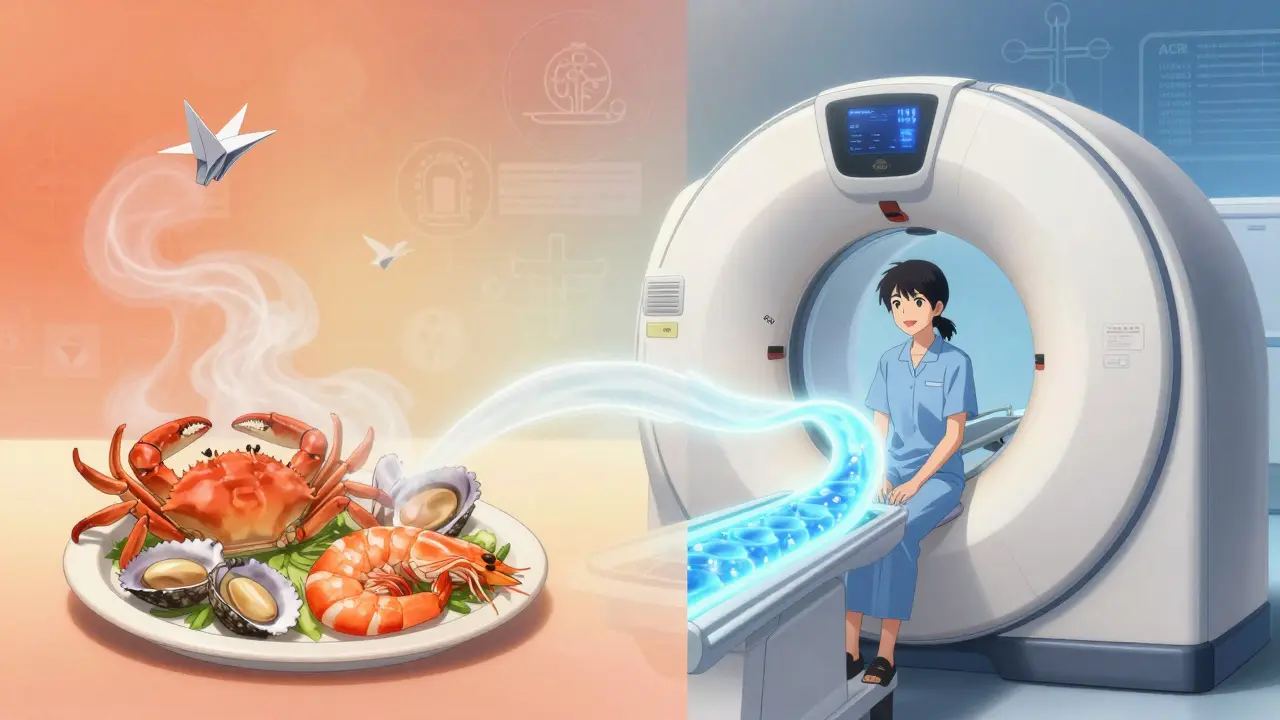
Here’s what doesn’t raise your risk: shellfish allergies, iodine allergies, or reactions to Betadine (povidone-iodine). These are common myths. Having a shellfish allergy doesn’t mean you’ll react to contrast dye. The proteins in shellfish and the iodine in contrast are completely different. Studies show people with these allergies are only 2 to 3 times more likely to react - and that’s still a very low risk. No need to pre-medicate just because you’re allergic to shrimp.
How Pre-Medication Works
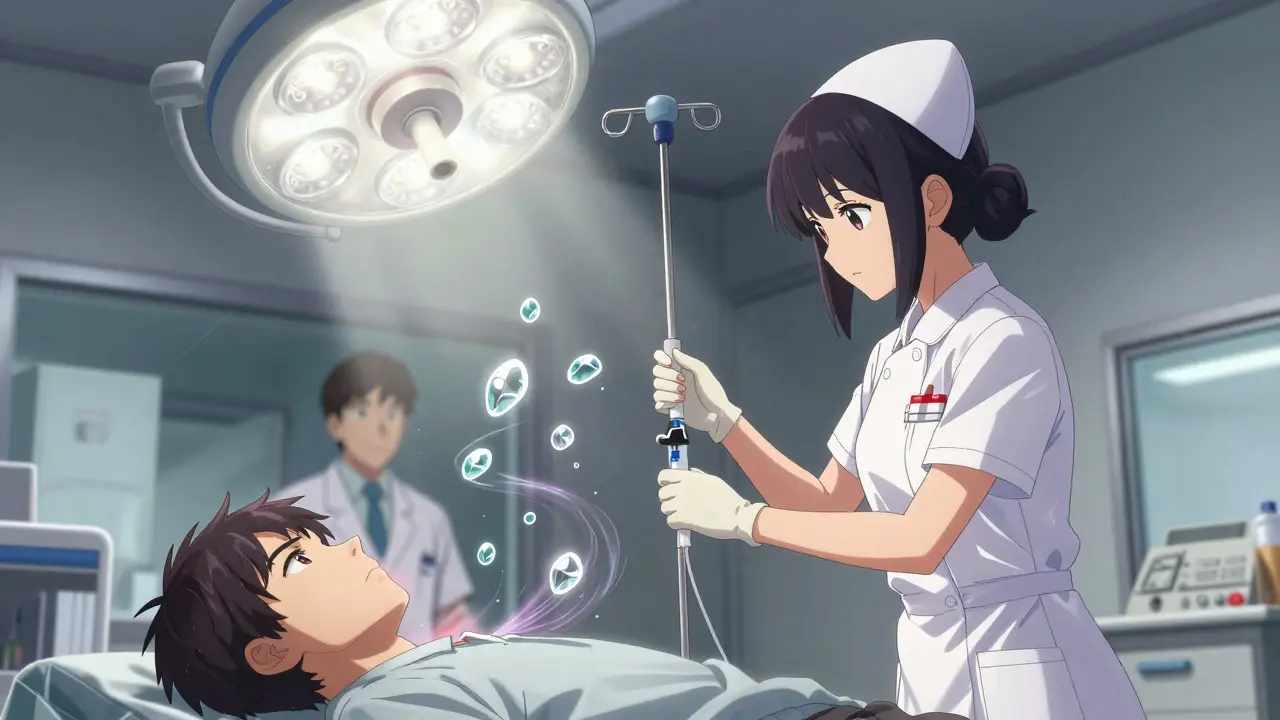
The goal of pre-medication is simple: block the body’s overreaction before it starts. It’s not about preventing all reactions - it’s about preventing the scary ones. The standard combo is a steroid and an antihistamine. Steroids like prednisone or methylprednisolone calm down your immune system. Antihistamines like diphenhydramine (Benadryl) block the chemicals that cause itching, swelling, and hives.There are two main ways to give these drugs: oral and IV. The choice depends on how much time you have.
- Oral protocol (13-hour lead time): Prednisone 50 mg by mouth at 13 hours, 7 hours, and 1 hour before the scan. Plus, Benadryl 50 mg by mouth 1 hour before. This is common for outpatient scans. But Benadryl makes you drowsy. You’ll need someone to drive you home.
- IV protocol (emergency/inpatient): Methylprednisolone 40 mg IV right away, then every 4 hours until scan time. Plus Benadryl 50 mg IV one hour before. This works faster and is used in hospitals or ERs where time is tight.
There’s also a newer, faster option. If you only have 5 hours, you can take methylprednisolone 32 mg by mouth at 5 hours and again at 1 hour before the scan. Studies show this works just as well as the 13-hour version for urgent cases. But it’s not yet standard everywhere - ask your radiology team if it’s an option.
For kids 6 and older, some centers use cetirizine (Zyrtec) 10 mg one hour before instead of Benadryl. It’s less sedating and works just as well for mild reactions.
What Doesn’t Work
Timing matters. If you take your meds less than 4 to 5 hours before the scan, they won’t help. The steroids need time to build up in your system. Taking them right before the scan is like locking the door after the burglar broke in.Also, don’t assume mild reactions don’t matter. Some centers say no pre-medication is needed for mild reactions like slight nausea or a few hives. Others say it’s worth considering - especially if the scan is critical. There’s no universal rule. Your doctor will weigh the risk of the reaction against the benefit of the scan.
And here’s the hard truth: even with pre-medication, about 2% of people still have a reaction. It’s not foolproof. That’s why safety planning goes beyond pills.
Safety Planning: More Than Just Pills
Premedication is only part of the plan. The real safety net is the environment where the scan happens.If you’ve had a severe reaction before - like trouble breathing, low blood pressure, or swelling of the throat - you should only get contrast in a hospital or emergency department. Not a free-standing imaging center. You need immediate access to a crash cart, oxygen, and trained staff who can handle anaphylaxis.
Many hospitals require that patients with a history of severe reactions be scanned at specific locations. For example, UCSF only does these scans at Moffitt-Long, Mt. Zion, or Mission Bay hospitals - places with rapid access to intensive care. UCLA Health requires a radiologist consultation before scheduling anyone with a prior allergy. And if you’re on Benadryl? You need a driver. No exceptions.
In emergencies, the rule is simple: if you’re having a life-threatening reaction, the doctor should go with you to the imaging room. That way, if another reaction happens, help is already there.
Cost, Coverage, and Real-World Use
The cost of pre-medication is tiny. Prednisone 50 mg tablets cost about 25 cents each. Benadryl 50 mg is 15 cents. That’s less than 0.1% of a typical $1,000 CT scan. Insurance covers it. No surprise bills.Most academic hospitals - like Yale, UCLA, UCSF, and Memorial Sloan Kettering - follow the same guidelines from the American College of Radiology (ACR) Manual on Contrast Media. That’s the gold standard. Community hospitals are catching up, but not all follow it strictly. A 2020 ACR survey found only 78% of non-academic centers use standardized protocols.
That’s changing. With more awareness and better data, even smaller clinics are adopting the rules. The Joint Commission requires all facilities that use contrast to have trained staff and emergency equipment ready. So if you’re getting a scan, your facility should be prepared.
What’s Next for Contrast Safety?
The field is shifting. Newer contrast dyes are even safer than the ones used in the 1990s. Reaction rates have dropped by more than 70%. That means pre-medication might not be as necessary as it once was.Some experts now believe switching contrast agents - not giving steroids - is the better first step for patients with prior reactions. If you reacted to one brand, try a different one. It’s simpler, cheaper, and avoids side effects from steroids.
The ACR is expected to release Version 11 of its Contrast Media Manual in late 2024. Early drafts suggest a stronger push toward agent switching and a more selective approach to pre-medication. The message is clear: don’t treat everyone the same. Tailor the plan to the patient, the history, and the urgency.
For now, if you’ve had a reaction before, talk to your doctor. Ask: Did I react to the same class of dye? Can we switch to a different one? Do I need pre-medication? Do I need to go to a hospital? And who will drive me home?
There’s no one-size-fits-all answer. But with the right planning, you can get the scan you need - without the fear.
Can I have a CT scan with contrast if I’m allergic to shellfish?
Yes. Shellfish allergies have nothing to do with contrast dye reactions. The proteins in shellfish are different from the iodine in contrast agents. Studies show people with shellfish allergies are only slightly more likely to react - and that’s not enough to justify routine pre-medication. You don’t need to avoid contrast just because you’re allergic to shrimp or crab.
How long before a CT scan should I take my pre-medication?
For the traditional oral regimen, take prednisone at 13, 7, and 1 hour before the scan, plus Benadryl at 1 hour before. For faster options, a 5-hour protocol with methylprednisolone at 5 and 1 hour before is now proven effective. If you take meds less than 4 hours before, they likely won’t work. Always confirm the timing with your radiology team.
Does Benadryl make you too sleepy to drive?
Yes. Benadryl causes drowsiness in most people. Even if you feel fine, your reaction time and alertness can be impaired. Most hospitals require you to have a driver if you take Benadryl before your scan. If you don’t have one, your appointment may be rescheduled. Don’t risk it - plan ahead.
Can I skip pre-medication if my reaction was mild?
It depends. Some centers say no pre-medication is needed for mild reactions like a few hives or mild nausea. Others recommend it if the scan is critical or if you’re at higher risk for complications. The key is to talk to your radiologist. They’ll review your history and decide if the benefit outweighs the risk - and whether switching contrast agents might be a better option.
What if I have a reaction during the scan even after pre-medication?
Even with pre-medication, about 2% of people still have a reaction. That’s why scans for high-risk patients are only done in places with emergency equipment and trained staff nearby. If a reaction happens, the team will stop the scan, give oxygen, IV fluids, epinephrine if needed, and monitor you closely. The goal is to catch it early and treat it fast - which is why location matters as much as the meds.
Dayanara Villafuerte
January 17, 2026 AT 14:57Naomi Keyes
January 19, 2026 AT 00:30kenneth pillet
January 20, 2026 AT 11:35Andrew Qu
January 20, 2026 AT 21:27Jodi Harding
January 20, 2026 AT 22:28Danny Gray
January 22, 2026 AT 21:08Tyler Myers
January 23, 2026 AT 02:02Kristin Dailey
January 23, 2026 AT 05:11Stacey Marsengill
January 24, 2026 AT 23:13