

Counterfeit meds online: Risks of buying from unlicensed sources
 Mar, 7 2026
Buying medicine online sounds simple-click, pay, wait, get your pills delivered. But what if those pills aren’t real? What if they’re laced with something deadly? Every year, thousands of people around the world order pills from websites that look like real pharmacies. They think they’re getting Oxycodone, Adderall, or even insulin. Instead, they’re getting counterfeit meds-fake, dangerous, and sometimes lethal.
What exactly are counterfeit medications?
Counterfeit meds aren’t just expired or low-quality drugs. They’re completely fake. They might have no active ingredient at all. Or they might have too much of one. Or worse-they’re laced with fentanyl, methamphetamine, or industrial chemicals. Criminals package them to look exactly like the real thing: same color, same shape, same logo. Even the blister packs and bottles can be nearly identical.
The Pharmaceutical Security Institute found that in 2024 alone, law enforcement seized over 2,428 different types of fake medicines across 136 countries. These weren’t random pills. They targeted high-demand drugs: cancer treatments, diabetes meds, opioids, and even weight-loss injectables like semaglutide. One fake semaglutide pen can sell for hundreds of dollars on the black market.
How do these fake drugs get to you?
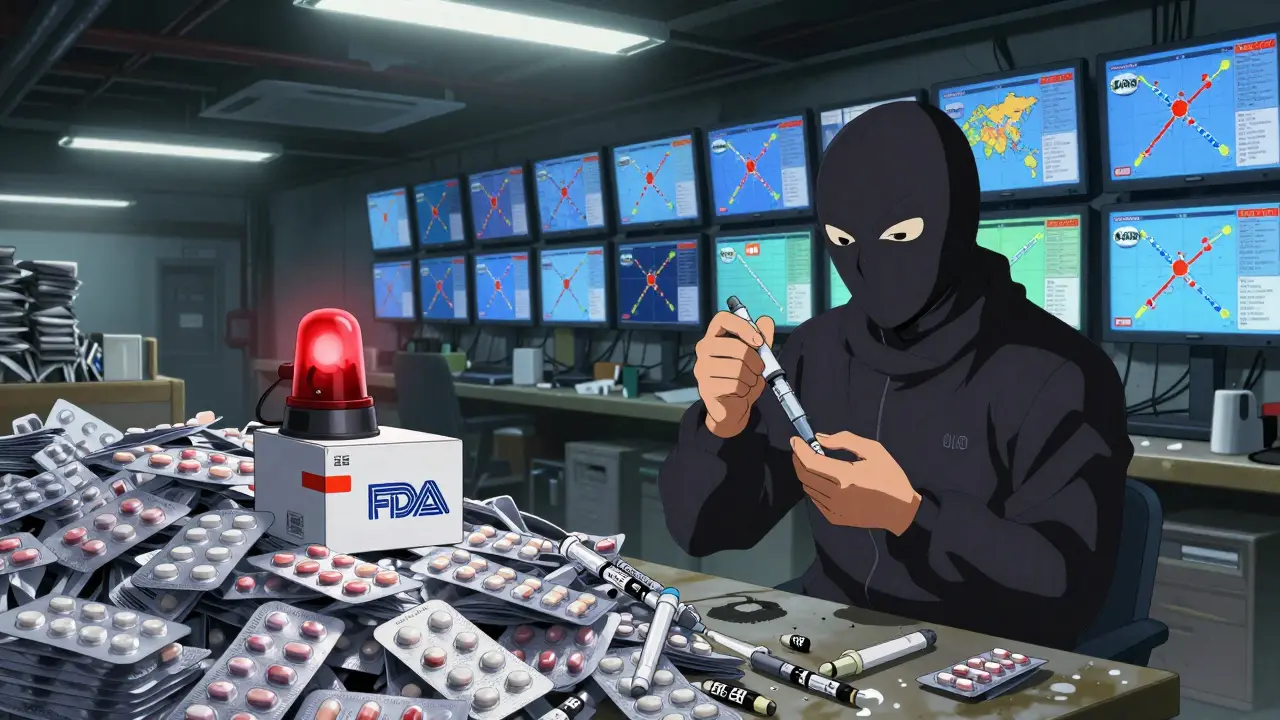
Nearly 95% of websites selling prescription drugs online are illegal. They don’t need a license. They don’t need a pharmacist. They don’t even need to be in the same country as you. Many operate out of India, the Dominican Republic, or China-but they use U.S. addresses, fake certifications, and professional-looking websites to trick you.
Every day, 20 new illegal pharmacy sites pop up. They advertise on social media, Google ads, and even YouTube. They use phrases like "No prescription needed" or "Discounted brand-name meds." They look real. They even have testimonials. But behind the scenes, they’re run by criminal networks.
Interpol’s 2025 Operation Pangea XVI shut down 13,000 websites and seized 50.4 million doses of fake drugs. That’s not a typo. Over 50 million pills. And that was just one operation. The drugs were shipped in small parcels through the mail-hard to catch, easy to hide.
The deadly risks: Fentanyl and beyond
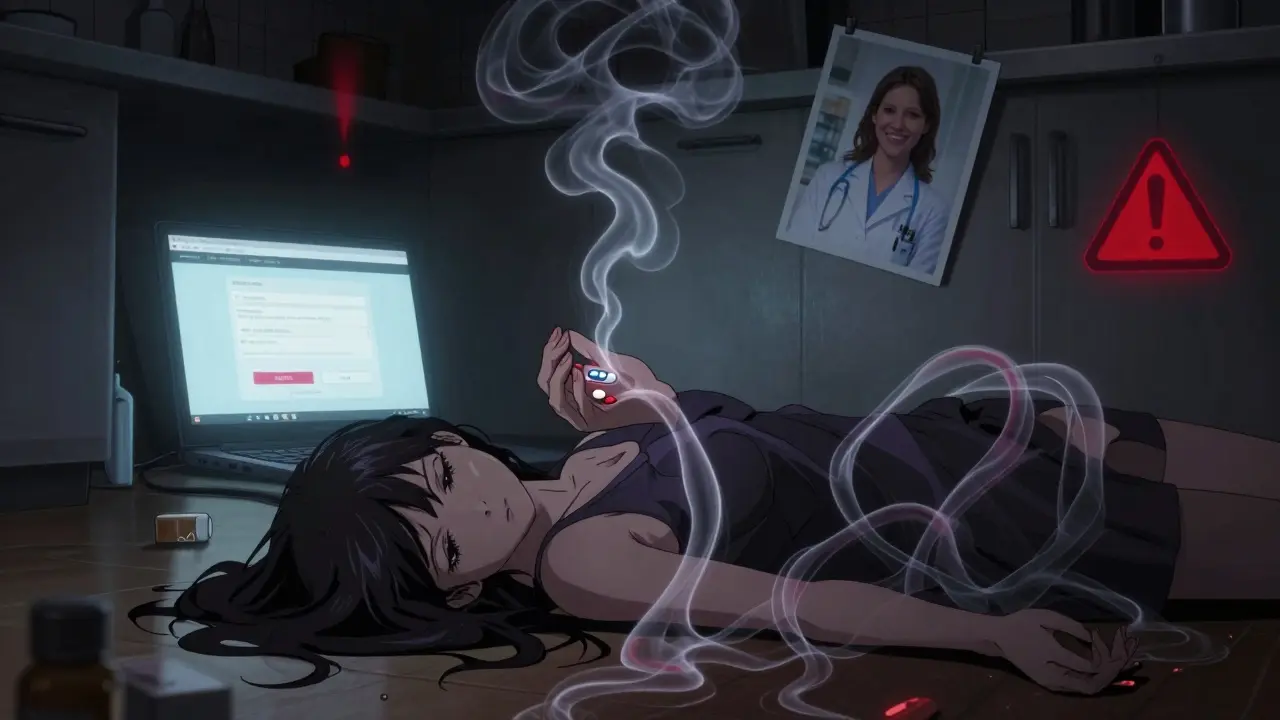
The most terrifying part? Many counterfeit pills contain fentanyl. Fentanyl is 50 to 100 times stronger than morphine. A dose as small as two grains of salt can kill you. The U.S. Drug Enforcement Administration (DEA) issued a public alert in October 2024 after a woman in Ohio ordered what she thought was oxycodone. She died three days later from fentanyl poisoning.
It’s not just fentanyl. Fake Adderall has been found with methamphetamine. Fake Viagra contains rat poison. Fake insulin has no insulin at all. People with diabetes have gone into diabetic ketoacidosis after taking fake insulin. Cancer patients have seen their tumors grow because their chemo pills were filled with chalk.
There’s no warning. No label. No way to tell until it’s too late. The FDA has sent over 100 warning letters to these sites. They say these drugs "may be substandard, contaminated, ineffective, or even dangerous." That’s the polite way of saying: "This could kill you."
Why do people still buy them?
Because they’re cheap. Because they’re easy. Because they promise results.
People without insurance can’t afford $500 for a single prescription. So they search online for a cheaper option. They find a site that sells 30 pills of Adderall for $30. It looks legit. The reviews are glowing. They click "Buy Now."
Others are desperate. They’ve tried every legal option. They’ve been told they can’t get the drug they need. So they turn to the dark web. Or a Facebook group. Or a TikTok ad promising "miracle weight loss" with semaglutide.
The World Health Organization says lack of access to affordable medicine is one of the top three reasons people risk buying fake drugs. But the real cost isn’t just money. It’s your life.
How to spot a fake online pharmacy
You can’t tell by looking. But you can check.
- Do they require a prescription? If they don’t, they’re illegal. Legit pharmacies always need one.
- Is there a real pharmacy license? Check the site’s license number on the National Association of Boards of Pharmacy’s Verified Internet Pharmacy Practice Sites (VIPPS) program. If it’s not there, walk away.
- Do they have a physical address? Click on it. Does it lead to a real pharmacy? Or just a PO box? Fake sites often list addresses that don’t exist.
- Are they based in the U.S.? Most aren’t. Look up the domain registration. If it’s registered in Russia, China, or India-avoid it.
- Do they offer "too good to be true" prices? If brand-name Viagra costs $10 per pill online, it’s fake. The real thing costs $60-$80.
PharmacyChecker.com and the FDA’s list of unsafe online pharmacies are your best tools. Bookmark them. Check before you buy.
What happens if you buy from a fake pharmacy?
It’s not just about the pills.
You could get sick. You could die. But you could also lose your identity. Many of these sites steal your credit card, Social Security number, and medical history. They sell that data on the dark web. You could end up with fraudulent medical bills, stolen tax returns, or even a criminal record if someone uses your name to order drugs.
On Reddit, users report receiving pills that dissolve in water (a sign of no binding agents). Others say the pills are the wrong color, have no markings, or taste like chalk. One person ordered insulin and found the vial was empty. Another got pills that made them vomit for 12 hours.
And if you get caught? You might not be prosecuted-but the people who sold you the drugs? They’re often part of international crime rings. You’re just another victim.
What should you do instead?
There are safe options.
- Use verified online pharmacies like those listed on VIPPS or PharmacyChecker.com.
- Ask your doctor about patient assistance programs. Many drug companies offer free or low-cost meds to people who qualify.
- Check with local pharmacies-they often have discount programs for cash payers.
- Use mail-order services from your insurance provider. They’re regulated and safe.
If you’re struggling to afford meds, talk to your pharmacist. They know the programs. They’ve helped others. They won’t judge you. But they will warn you about the risks.
The bigger picture: Why this keeps happening
This isn’t a glitch in the system. It’s a business model.
Counterfeit drugs are one of the most profitable crimes in the world. The OECD estimates global fake goods trade hit $467 billion in 2024. Medicines make up a growing share. Why? Because people need them. And criminals know it.
They use social media to target people with chronic illnesses, mental health conditions, or weight-loss goals. They exploit gaps in regulation. They ship in tiny packages. They change websites every few weeks. They’re always one step ahead.
Law enforcement is fighting back. Interpol, the DEA, and the FDA are working together. But they can’t shut down every site. They can’t stop every package. They need your help.
What you can do
- Don’t buy from sites you don’t trust. Even if they look real.
- Report suspicious sites. The FDA and DEA have online forms to report fake pharmacies.
- Talk to someone. If you or a loved one has bought fake meds, tell a doctor. Tell a pharmacist. Tell someone.
- Share this information. A friend might be next. Don’t wait for a tragedy.
Medicine isn’t a commodity. It’s a lifeline. And when you buy it from a shadowy website, you’re gambling with your life.
How can I tell if an online pharmacy is real?
Look for the VIPPS seal from the National Association of Boards of Pharmacy. Check if the site requires a prescription, lists a real physical address, and has a licensed pharmacist available to answer questions. If it offers drugs without a prescription, doesn’t have a phone number, or has a domain registered overseas, it’s fake.
Can counterfeit meds really kill you?
Yes. In 2024, the DEA confirmed multiple deaths from counterfeit pills laced with fentanyl. One woman in Ohio died after taking a pill she thought was oxycodone-it was pure fentanyl. Fake insulin, cancer drugs, and antibiotics have also caused fatal outcomes. Even one dose can be lethal.
Why are fake drugs so common online?
Because demand is high and regulation is weak. People want cheap, fast, private access to medications-especially for conditions like diabetes, ADHD, or weight loss. Criminals exploit that need. They create fake websites, use social media ads, and ship small packages that slip past customs. It’s cheap to make, easy to hide, and highly profitable.
What should I do if I already bought fake medicine?
Stop using it immediately. Contact your doctor or pharmacist. Report the site to the FDA’s MedWatch program or the DEA’s online reporting system. If you have symptoms like dizziness, nausea, chest pain, or sudden weakness, seek emergency care. You may have been exposed to dangerous substances.
Are all online pharmacies dangerous?
No. Verified online pharmacies that are licensed, require prescriptions, and are listed on VIPPS or PharmacyChecker.com are safe. The problem is the 95% that are illegal. Always verify before you buy.