

FDA Boxed Warnings Explained: What You Need to Know Before Taking High-Risk Medications
 Feb, 7 2026
When you pick up a prescription, you might notice a bold, black-bordered box on the label or in the patient information leaflet. It’s not just for show. This is a boxed warning-the FDA’s strongest safety alert for drugs that can cause serious harm or even death. If you’ve been prescribed a medication with one of these warnings, it doesn’t mean you should stop taking it. But it does mean you need to understand exactly what it’s telling you-and what to watch out for.
What Exactly Is a Boxed Warning?
A boxed warning, often called a "black box warning," is the most serious type of safety notice the U.S. Food and Drug Administration (FDA) can require. It’s printed in a thick black border at the very top of a drug’s prescribing information, right before the list of side effects. The text inside is clear, direct, and legally required. It doesn’t say "may cause"-it says "can cause," "increases risk of," or "contraindicated in." These warnings aren’t random. They’re based on real-world data, not just lab studies. Clinical trials usually involve a few thousand people. But once a drug is used by millions, rare but deadly side effects start to show up. That’s when the FDA steps in. About 70% of boxed warnings are added after the drug is already on the market. For example, the warning for the diabetes drug rosiglitazone (Avandia) was added in 2007 after studies linked it to heart attacks. The drug was still available-but now, doctors had to talk to patients about the risk. The warning format itself is strict. The FDA requires it to be in 8- to 10-point font, with 1.5 line spacing, so it’s easy to read. No hiding it in fine print. It must include:- The specific serious side effect (like liver failure, suicidal thoughts, or heart rhythm problems)
- Which patient groups are most at risk (e.g., pregnant women, older adults, people with kidney disease)
- Whether the drug should be avoided entirely in certain cases
- Any required monitoring, like monthly blood tests
Why Do These Warnings Exist?
The system started after the thalidomide tragedy in the early 1960s, when a drug given for morning sickness caused severe birth defects in thousands of babies. The U.S. didn’t have strong drug safety rules back then. The Kefauver-Harris Amendments of 1962 changed that. But the black box format itself didn’t appear until the 1970s, as a way to make the most dangerous risks impossible to miss. Today, over 400 medications carry a boxed warning. That’s about 10-15% of all prescription drugs in the U.S. The biggest categories? Antipsychotics (27 drugs), antidepressants (22), diabetes medications (18), and cancer drugs (45). These aren’t rare drugs. They’re widely used. For example, fluoxetine (Prozac), sertraline (Zoloft), and metformin all have boxed warnings. But they’re still first-line treatments because, for most people, the benefits outweigh the risks. The goal isn’t to scare you off. It’s to make sure you and your doctor have a real conversation. A boxed warning means: "This drug works, but it can be dangerous if not used carefully. Let’s talk about your situation before we start."What Patients Often Get Wrong
A 2022 survey by the National Patient Safety Foundation found that 41% of patients who got a medication with a boxed warning thought it meant they shouldn’t take it at all. That’s a dangerous misunderstanding. Take antidepressants. Nearly all of them carry a boxed warning about increased risk of suicidal thoughts in young adults under 25. But here’s the truth: for teens and young adults with severe depression, the risk of suicide without treatment is much higher than the risk from the medication. Studies show that when doctors explain this clearly, patients are more likely to stick with the treatment-and far less likely to attempt suicide. Another myth: "If it has a black box, it’s unsafe." But many life-saving drugs have them. Methotrexate, used for rheumatoid arthritis and some cancers, has a boxed warning for liver and bone marrow damage. But without it, thousands of patients would suffer more pain or die from their disease. The key isn’t avoiding the drug-it’s managing the risk.
What You Should Do If Your Medication Has a Boxed Warning
Don’t panic. Don’t stop cold turkey. Do this instead:- Ask your doctor to explain the warning in plain language. Don’t settle for jargon. Say: "What exactly is the risk? How likely is it for me?"
- Know your personal risk factors. Are you over 65? Do you have liver or kidney disease? Are you pregnant or planning to be? These matter. The warning might say "avoid in pregnancy," but if you’re not pregnant, the risk doesn’t apply.
- Ask about monitoring. Does the drug need blood tests? How often? For example, lithium (used for bipolar disorder) requires monthly kidney and thyroid tests. If you skip them, you’re at risk.
- Learn the warning signs. For anticoagulants like warfarin, it’s unexplained bruising or bleeding. For antipsychotics, it’s fever, stiff muscles, or confusion (signs of a rare but deadly condition called neuroleptic malignant syndrome). Know what to watch for.
- Use the FDA’s MedWatch system. If you have a bad reaction, report it. The FDA gets over 2 million reports a year. Your report could help others.
How Doctors Are Supposed to Handle This
The American Academy of Family Physicians recommends the "teach-back" method. That means your doctor asks you to explain the warning back to them in your own words. If you can’t, they keep explaining. Doctors should also use the STEPS approach: Safety, Tolerability, Effectiveness, Price, Simplicity. A drug with a boxed warning might still be the best choice if it’s the only one that works for you, or if cheaper alternatives aren’t as effective. Some doctors avoid prescribing these drugs altogether out of fear of liability. But research from the Institute for Clinical and Economic Review shows this happens too often. Boxed warnings reduce inappropriate prescribing by 15-25%, but they also reduce appropriate use by 10-20%. That means some patients miss out on life-changing treatments because their doctor is too scared to prescribe them.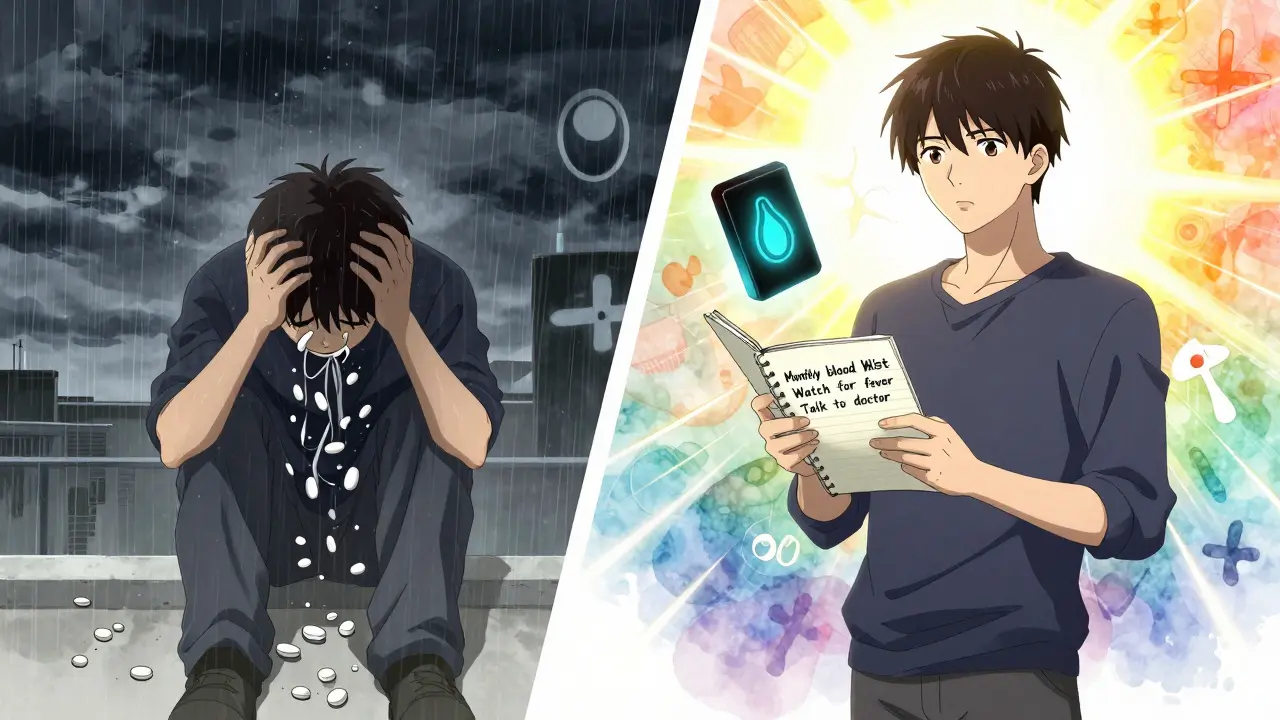
What’s Changing Now?
The FDA is trying to fix the system. In 2023, they launched a pilot program to rewrite boxed warnings in plain language. Instead of "increased risk of hepatotoxicity," it might say: "This drug can damage your liver. You’ll need blood tests every month." They’re also using real-world data from the Sentinel Initiative, which tracks health records for over 300 million Americans. This lets them spot problems faster. For example, in September 2023, they added a new boxed warning for SGLT2 inhibitors (like Jardiance) after reports of serious urinary tract infections. These drugs help control blood sugar-but now, patients are told to watch for fever, pain when urinating, or nausea. But challenges remain. A 2023 Government Accountability Office report found that only 60% of required follow-up studies on boxed warning drugs were completed on time. That means we’re still waiting for answers about some serious risks.What to Do If You’re Worried
If you’re unsure whether to keep taking a drug with a boxed warning, don’t rely on internet searches. Use trusted, evidence-based tools:- Consumer Reports Best Buy Drugs (updated quarterly) compares effectiveness and safety side-by-side.
- Drug Effectiveness Review Project (DERP) gives unbiased analysis of whether a drug’s benefits justify its risks.
Does a boxed warning mean the drug is banned or too dangerous to use?
No. A boxed warning does not mean the drug is banned or too dangerous to use. It means the FDA has identified serious risks that require careful monitoring and informed decision-making. Many life-saving medications, like antidepressants, antipsychotics, and cancer drugs, carry boxed warnings. The warning exists so that doctors and patients can weigh the risks against the benefits before starting treatment. For many people, the benefits far outweigh the risks when the drug is used correctly.
Can I still take a medication with a boxed warning if I’m pregnant?
It depends. Some boxed warnings specifically say the drug is contraindicated during pregnancy-for example, isotretinoin (Accutane) can cause severe birth defects. Others may say "use only if the benefit outweighs the risk," like certain antidepressants. Never stop or start a medication during pregnancy without talking to your doctor. They can help you find the safest option for your situation, whether that means switching drugs, adjusting the dose, or continuing under close supervision.
How often do boxed warnings get added after a drug is already on the market?
About 70% of boxed warnings are added after a drug is approved and already being used by millions of patients. Clinical trials usually involve only 1,000 to 5,000 people, which isn’t enough to catch rare but serious side effects. Once a drug is used widely, problems like liver damage, heart rhythm issues, or suicidal behavior may emerge. The FDA uses real-world data from reports and health records to decide when to add a warning. This is why long-term monitoring matters.
Do all drugs with boxed warnings require blood tests or other monitoring?
Not all, but many do. For example, methotrexate requires monthly liver and blood tests. Lithium needs regular kidney and thyroid checks. Antipsychotics may require ECGs to monitor heart rhythm. The boxed warning will specify if monitoring is required. If it doesn’t mention monitoring, it doesn’t mean you don’t need it-some risks are managed through patient education or avoiding certain conditions (like alcohol use). Always ask your doctor what monitoring, if any, is needed for your specific drug.
Can I report a side effect from a drug with a boxed warning?
Yes-and you should. The FDA’s MedWatch program lets patients report adverse events directly. You can file a report online at fda.gov/medwatch or by calling 1-800-FDA-1088. Even if you’re not sure the drug caused the problem, report it. The FDA collects over 2 million reports each year. These reports help identify new risks and improve safety for everyone. Your report could prevent someone else from having a serious reaction.
Tatiana Barbosa
February 7, 2026 AT 12:47Boxed warnings are scary but so necessary. I had a friend on lithium who skipped her blood tests and ended up in the ER. The warning? Clear as day. She thought she was fine because she 'felt good.' Nope. Monitoring isn't optional. Talk to your doc, get the labs, don't be that person.
Ken Cooper
February 7, 2026 AT 16:59so like… i got prescribed zoloft last year and saw the black box and just… stopped. like. immediately. no i didn’t ask anyone. i just googled ‘suicidal thoughts zoloft’ and panicked. now i’m depressed again. maybe i should’ve talked to my doc instead of running for the hills. idk. just saying.
Joseph Charles Colin
February 8, 2026 AT 11:48The FDA’s black box system is fundamentally sound but suffers from implementation fatigue. Clinicians often default to avoidance due to liability concerns rather than risk stratification. The data shows that when used appropriately-especially in high-risk populations like young adults with treatment-resistant depression-the benefit-risk ratio remains overwhelmingly favorable. The real failure is in communication, not pharmacology.
John Sonnenberg
February 9, 2026 AT 03:48Let me get this straight. The government puts a black box on a drug that could kill you… and then tells you to take it anyway? That’s not safety. That’s bureaucratic cowardice. They don’t want to ban it because Big Pharma pays their bills. They just want you to sign a waiver and pray. I’m not taking anything with a black box. Not anymore.
Joshua Smith
February 10, 2026 AT 15:02My dad’s on methotrexate for RA. He gets blood work every month. He says it’s a pain but he’d rather have the tests than the pain. I didn’t realize how common these warnings are until I started looking. Prozac? Zoloft? Metformin? All have them. Makes you rethink what ‘dangerous’ even means.
John Watts
February 11, 2026 AT 04:53As someone who’s lived with bipolar disorder for 15 years, I can tell you this: the black box on lithium saved my life. Not because it scared me off-but because it forced me to have real conversations. I know my numbers. I know my triggers. I know when to call my doctor. That’s power. That’s not fear. That’s partnership. If you’re scared, talk to someone who’s been there. You’re not alone.
Randy Harkins
February 11, 2026 AT 22:04Just wanted to say thank you for this. My mom just started on an antipsychotic with a black box warning. I was terrified. But after reading this, I feel way more equipped to help her. I’m going to print out the FDA’s plain-language guide and go over it with her. She’s 72, has kidney issues, so we’re being extra careful. This info matters.
Chima Ifeanyi
February 12, 2026 AT 01:1070% of boxed warnings added post-market? That’s not oversight. That’s negligence. They approve drugs on 3-month trials and then play whack-a-mole with side effects. If they had real pharmacovigilance, we wouldn’t be here. This is why I don’t trust the FDA. They’re reactive, not proactive. They’re not protecting you-they’re protecting the industry.
Tori Thenazi
February 13, 2026 AT 15:30Have you heard about the secret FDA database? The one that tracks people who die after taking black box drugs? It’s not public. They delete reports. I know because my cousin’s doctor told me. They’re covering it up. And now they want you to ‘report side effects’? Please. That’s just a trap. Don’t fall for it. Your data is being sold. Your life is being gambled.
Elan Ricarte
February 13, 2026 AT 23:51They call it a ‘warning’ but it’s really a ‘warning label on a ticking time bomb.’ You think you’re getting help? Nah. You’re getting a chemical lobotomy with extra steps. I’ve seen people on these drugs turn into zombies. No joy. No spark. Just… numb. And the doctors? They’re just happy you’re ‘compliant.’ Wake up. This isn’t medicine. It’s corporate control dressed in white coats.
Ashlyn Ellison
February 14, 2026 AT 08:15I took a drug with a black box. Didn’t even know until my pharmacist flagged it. I asked my doctor. He said, ‘It’s fine for you.’ I didn’t ask why. Should’ve. Lesson learned.
THANGAVEL PARASAKTHI
February 15, 2026 AT 18:00in india we dont even get black box warnings. my cousin took a medicine for diabetes and got liver damage. no one told him. here in us it seems like they at least try to warn you. maybe not perfect but better than nothing.
Frank Baumann
February 16, 2026 AT 17:22I’m not saying this is wrong, but I’m saying this is insane. I have a 19-year-old daughter on an SSRI with a black box warning. She’s doing great. But every time she goes to the pharmacy, the pharmacist looks at her like she’s about to die. I’ve had to explain to her teachers, her coach, her aunt, her goddamn dog walker. Why does this have to be such a spectacle? Why can’t we just treat it like any other medical decision? It’s a drug. Not a death sentence. But the way it’s handled? It’s trauma.
Chelsea Deflyss
February 17, 2026 AT 05:47you people are so naive. if you think the FDA is on your side, you’ve been watching too many commercials. they’re paid by pharma. the black box? It’s a loophole. They make you think you’re being warned, but they still let the drug stay on the market. That’s how they make money. They don’t care if you live or die. They care about the quarterly report.