

Fluoxetine Activation: How to Manage Anxiety, Insomnia, and Timing for Better Results
 Jan, 28 2026
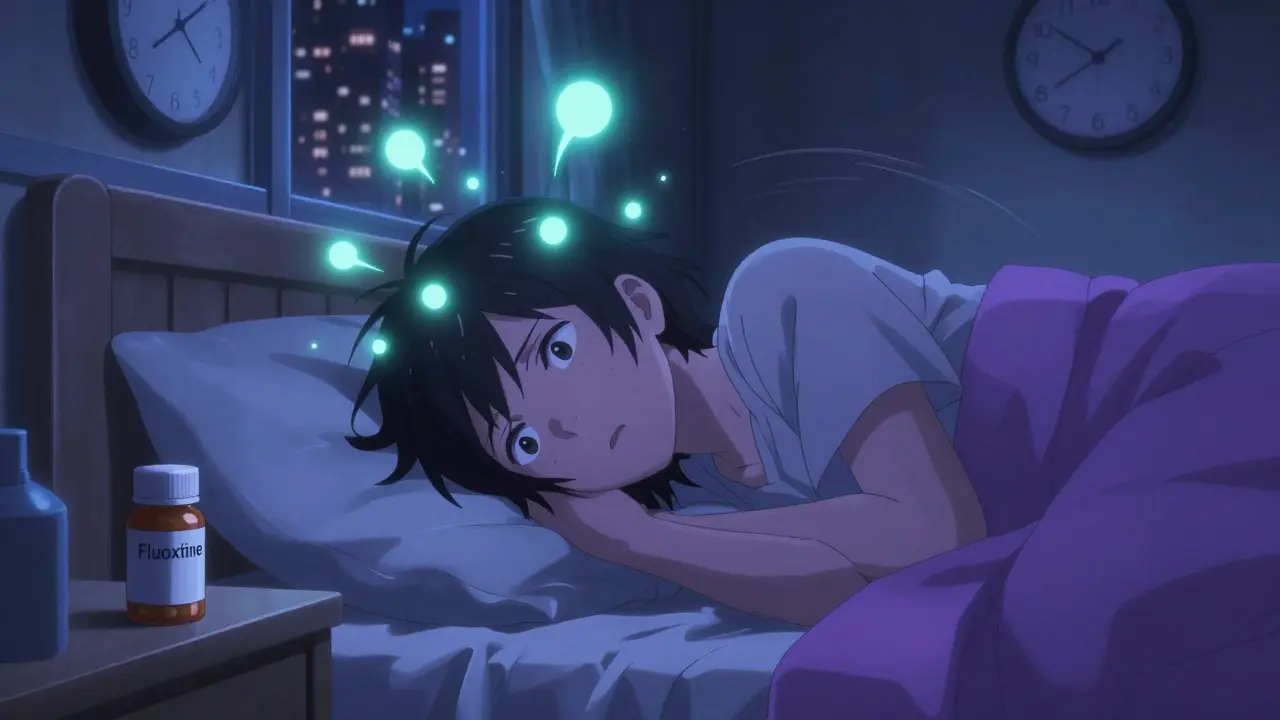
When you start fluoxetine - the generic version of Prozac - you might feel like your brain is buzzing. It’s not just in your head. This isn’t a glitch. It’s a known effect. Fluoxetine is one of the most activating antidepressants out there. For some, that energy boost is exactly what they need. For others, it’s a nightmare: racing thoughts at 2 a.m., panic creeping in by noon, and no sleep for days. If you’re dealing with anxiety or insomnia after starting fluoxetine, you’re not alone. And there are real, practical ways to handle it.
Why Fluoxetine Makes You Feel Wired
Fluoxetine works by blocking the reuptake of serotonin in your brain. More serotonin means better mood regulation - that’s the goal. But serotonin doesn’t just affect mood. It’s involved in wakefulness, alertness, and the sleep-wake cycle. When serotonin levels rise quickly, especially in people who are already sensitive, it can trigger overstimulation. That’s why fluoxetine is often called the most stimulating SSRI. Unlike sedating antidepressants like mirtazapine or trazodone, fluoxetine doesn’t calm you down. It wakes you up. And that’s why it’s sometimes prescribed for people with atypical depression - the kind where you feel heavy, sluggish, and sleep too much. But if you’re already anxious or struggling with sleep, fluoxetine can make things worse before they get better. Studies show that up to 39% of people on fluoxetine report insomnia as a side effect. Anxiety, nervousness, and tremors are also common in the first few weeks. These aren’t rare side effects. They’re expected. And they usually fade. But that doesn’t mean you have to suffer through them blindly.Timing Matters More Than You Think
The single most effective thing you can do to reduce fluoxetine-induced insomnia and anxiety is to take it in the morning. Fluoxetine has a half-life of 4 to 6 days. That means it sticks around in your body for a long time. Even if you take it at night, it’s still active the next day - and the day after that. You can’t just wait until tomorrow to fix a bad night’s sleep. The drug is still working. Taking it in the morning gives your body a full day to process the stimulation. By bedtime, the peak levels have passed. You’re not fighting an active drug when your brain is trying to wind down. One patient in Sydney, a 32-year-old teacher, started fluoxetine at 20mg and took it at 8 p.m. She didn’t sleep for three nights. Her anxiety spiked. She called her doctor, who asked, “What time are you taking it?” When she said nighttime, the doctor said, “That’s your problem.” She switched to 8 a.m. and slept 5 hours that night. By week two, she was sleeping 7. Don’t wait for side effects to get worse. Change the time before it becomes a crisis.What If Morning Doesn’t Help?
If you’re already taking fluoxetine in the morning and still can’t sleep, it’s not time to give up - it’s time to adjust. First, check your dose. Sometimes, the problem isn’t the timing - it’s the amount. Starting at 20mg might be too much for someone with anxiety or sensitivity. Many doctors start with 10mg, especially for older adults or people with a history of panic attacks. A lower dose can reduce activation without losing effectiveness. Second, give it time. Most people see improvement in sleep after 4 to 8 weeks. The brain adapts. Serotonin receptors recalibrate. That’s why some patients report that fluoxetine helped them sleep - but only after the first month. The initial activation isn’t the final outcome. Third, add non-drug strategies. Sleep hygiene isn’t just advice - it’s medicine. No screens after 9 p.m. Keep your bedroom cool and dark. Avoid caffeine after 2 p.m. Get sunlight in the morning - even 10 minutes helps regulate your circadian rhythm. If anxiety keeps you awake, try a 10-minute breathing exercise before bed. Breathe in for 4 seconds, hold for 4, exhale for 6. Repeat five times. It’s simple. It works.
Who Should Avoid Fluoxetine Altogether?
Fluoxetine isn’t for everyone. If you have:- Severe insomnia that doesn’t improve with sleep hygiene
- History of panic disorder or severe anxiety
- Restless legs syndrome or sleep apnea
- Already taking medications that affect CYP2D6 (like beta-blockers, some antipsychotics, or certain pain meds)
Real Stories: The Good, the Bad, and the In-Between
Not everyone reacts the same way. Here’s what people actually experience:- “I couldn’t sleep for a week.” - A 28-year-old student started 20mg at night. Panic attacks every night. Switched to morning. Slept 6 hours by day 10.
- “It helped me sleep.” - A 45-year-old teacher with atypical depression (sleeping 12 hours a day) started fluoxetine. Within 3 weeks, she was sleeping 7 hours and waking up refreshed.
- “I felt like I was on coffee all day.” - A 60-year-old man on fluoxetine for depression also took a beta-blocker. His doctor didn’t know about the CYP2D6 interaction. His anxiety spiked. Switched to sertraline - no issues.
What to Do If Side Effects Don’t Go Away
If after 6 to 8 weeks you’re still struggling with anxiety or insomnia:- Don’t stop cold turkey. Fluoxetine’s long half-life means withdrawal is slower, but stopping abruptly can still cause dizziness, irritability, or flu-like symptoms.
- Call your prescriber. Ask about lowering the dose. Maybe go from 20mg to 10mg for a week, then back up.
- Ask about adding a short-term sleep aid. A low dose of trazodone (25-50mg) at night can help without interfering with fluoxetine’s mood effects.
- Consider CBT-I (Cognitive Behavioral Therapy for Insomnia). It’s the gold standard for chronic insomnia - and it works better than pills for most people.
- If nothing helps, switch. Sertraline is often better tolerated for anxious patients. Escitalopram is gentler on sleep. Mirtazapine is sedating but can cause weight gain.
Fluoxetine Is Still a Powerful Tool
It’s easy to feel discouraged when fluoxetine makes you feel worse before it makes you better. But for millions of people, it’s the medication that finally lifted the fog. It’s the only SSRI approved for bulimia. It’s one of the most studied antidepressants in children and teens. It’s affordable - often under $10 for a month’s supply. The key isn’t avoiding fluoxetine. It’s using it wisely. Take it in the morning. Start low. Watch for anxiety spikes. Give it time. Talk to your doctor if it doesn’t settle. Don’t assume it’s just “normal.” It’s not. And you don’t have to live with sleepless nights and panic. Fluoxetine doesn’t work for everyone. But when it does, it changes lives. Just make sure you’re giving it the best chance to work - not sabotaging it with bad timing or ignored symptoms.Why does fluoxetine cause insomnia?
Fluoxetine increases serotonin levels in the brain, which helps improve mood but also stimulates wakefulness. Serotonin is involved in regulating alertness, so higher levels can make it harder to fall asleep, especially in the first few weeks. This effect is stronger with fluoxetine than with most other SSRIs.
Should I take fluoxetine at night if it makes me sleepy?
No. Even if you feel drowsy at first, fluoxetine’s long half-life means it stays active for days. Taking it at night can lead to rebound insomnia later in the week. Morning dosing is the standard recommendation because it allows your body to process the stimulation during the day, not at night.
How long does fluoxetine-induced anxiety last?
For most people, anxiety and agitation peak in the first 1-2 weeks and improve by weeks 4-6 as the brain adjusts. If anxiety worsens after 6 weeks or becomes severe, talk to your doctor. It may mean the dose is too high, or another medication is a better fit.
Can I take melatonin with fluoxetine?
Yes, melatonin is generally safe to take with fluoxetine. Many doctors recommend it for short-term sleep support. Start with 0.5-1 mg about 30 minutes before bed. Avoid high doses (over 5 mg), as they can disrupt your natural sleep rhythm.
Is fluoxetine better than sertraline for anxiety?
Sertraline is often preferred for anxiety because it’s less activating than fluoxetine. While both are effective, sertraline has a lower risk of causing insomnia or agitation, especially in the first weeks. Fluoxetine may be better for depression with fatigue, but sertraline is usually the first choice for pure anxiety disorders.
Can fluoxetine cause suicidal thoughts?
Yes. Fluoxetine carries a boxed warning for increased risk of suicidal thoughts in people under 25 during the first few months of treatment. This risk is higher if activation side effects like agitation, insomnia, or anxiety worsen. Close monitoring by a doctor or family member is essential during this period.
What’s the best time to take fluoxetine?
The best time is in the morning, ideally with breakfast. This gives your body time to process the stimulating effects during the day. Taking it at night increases the risk of insomnia, even if you don’t feel awake right after taking it - the drug stays active for days.
Does food affect how fluoxetine works?
Food doesn’t change how well fluoxetine works, but it can slow absorption by 1-2 hours. That’s not clinically significant. You can take it with or without food. What matters more is the time of day - morning is key for reducing sleep problems.
If you’re starting fluoxetine, expect some adjustment. But you don’t have to guess your way through it. Timing, dose, and communication with your doctor are your best tools. Don’t ignore the signs. Don’t push through the worst days alone. And don’t assume it’s all in your head - it’s pharmacology. And pharmacology can be managed.
kabir das
January 30, 2026 AT 06:42Laura Arnal
January 30, 2026 AT 19:08Eli In
February 1, 2026 AT 17:52Megan Brooks
February 2, 2026 AT 01:11Ryan Pagan
February 3, 2026 AT 22:02Paul Adler
February 4, 2026 AT 20:46Robin Keith
February 5, 2026 AT 06:00Sheryl Dhlamini
February 6, 2026 AT 04:29Doug Gray
February 7, 2026 AT 15:21LOUIS YOUANES
February 9, 2026 AT 09:01DHARMAN CHELLANI
February 10, 2026 AT 05:26Keith Oliver
February 10, 2026 AT 21:55Kacey Yates
February 12, 2026 AT 03:06