

How Nurses Counsel Patients on Generic Medications: A Practical Guide
 Jan, 18 2026
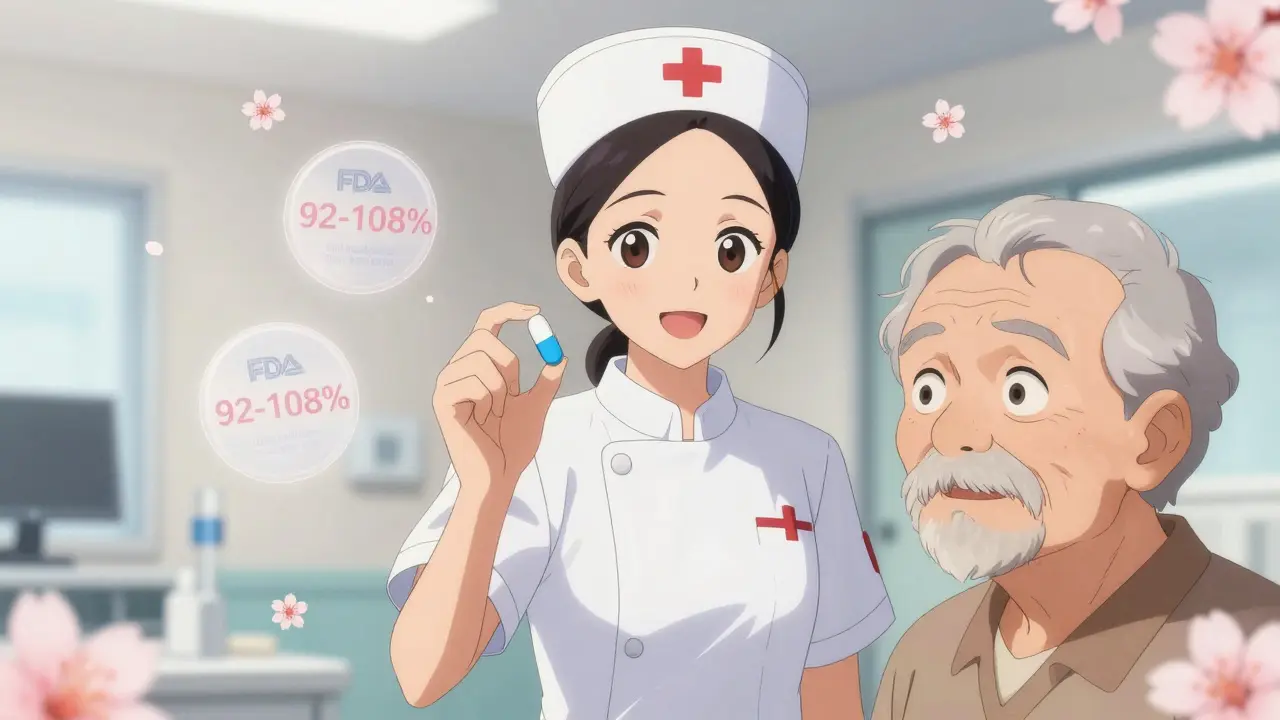
When a patient picks up a prescription and sees a pill that looks completely different from what they’ve taken before, panic can set in. Generic medications are just as effective as brand-name drugs-but many patients don’t believe it. That’s where nurses come in.
Why Patients Doubt Generics
Most patients don’t understand what "generic" really means. They see a different color, shape, or size and assume something’s wrong. Some think generics are cheaper because they’re lower quality. Others worry that switching from a brand they’ve trusted for years could make them sicker. A 2021 FDA survey found that 68% of patients believe generics are less effective. That’s not just a myth-it’s a real barrier to treatment. Nurses hear this every day. "Is this the same medicine?" "Will it even work?" "Why did they change it?" These aren’t just questions. They’re signs of fear. And if left unaddressed, that fear leads to skipped doses, hospital visits, and even life-threatening complications. One case study from 2023 documented a 68-year-old patient who stopped taking levothyroxine after a generic switch because no one explained it was safe. He ended up in the hospital with myxedema crisis-a preventable emergency.What Nurses Actually Say
Nurses don’t just hand out pamphlets. They talk. They listen. They show. The most effective counseling starts with one simple truth: "It’s the same medicine." Here’s how it works in practice:- "The FDA requires generic drugs to have the exact same active ingredient, strength, and dosage form as the brand name. That means your body absorbs it the same way."
- "The only differences are the color, shape, or inactive ingredients like fillers. Those don’t affect how the drug works."
- "The same factories that make brand-name pills also make generics. The FDA inspects them all the same way."
- "If you were on a brand-name drug and switched to a generic, your doctor would only do it if it was safe-and the FDA says it’s just as good."
When It Gets Tricky: Narrow Therapeutic Index Drugs
Not all generics are the same in practice. For drugs with a narrow therapeutic index-like warfarin, levothyroxine, phenytoin, or digoxin-even tiny changes in absorption can cause serious problems. That’s why nurses pay extra attention here. A nurse in an ICU shared on Nurse.org: "I’ve had patients on warfarin get scared when their pill changed from white to blue. They thought the dose was wrong. I had to sit with them for 15 minutes, showing them the label, explaining the FDA’s bioequivalence rules, and confirming we weren’t changing the dose." In these cases, nurses don’t just explain-they document. They note the manufacturer, pill appearance, and patient understanding. Many hospitals now use a "Generic Medication Passport," a simple card patients keep that lists every generic switch they’ve had, with a picture of the pill. It helps them recognize changes at the pharmacy or ER.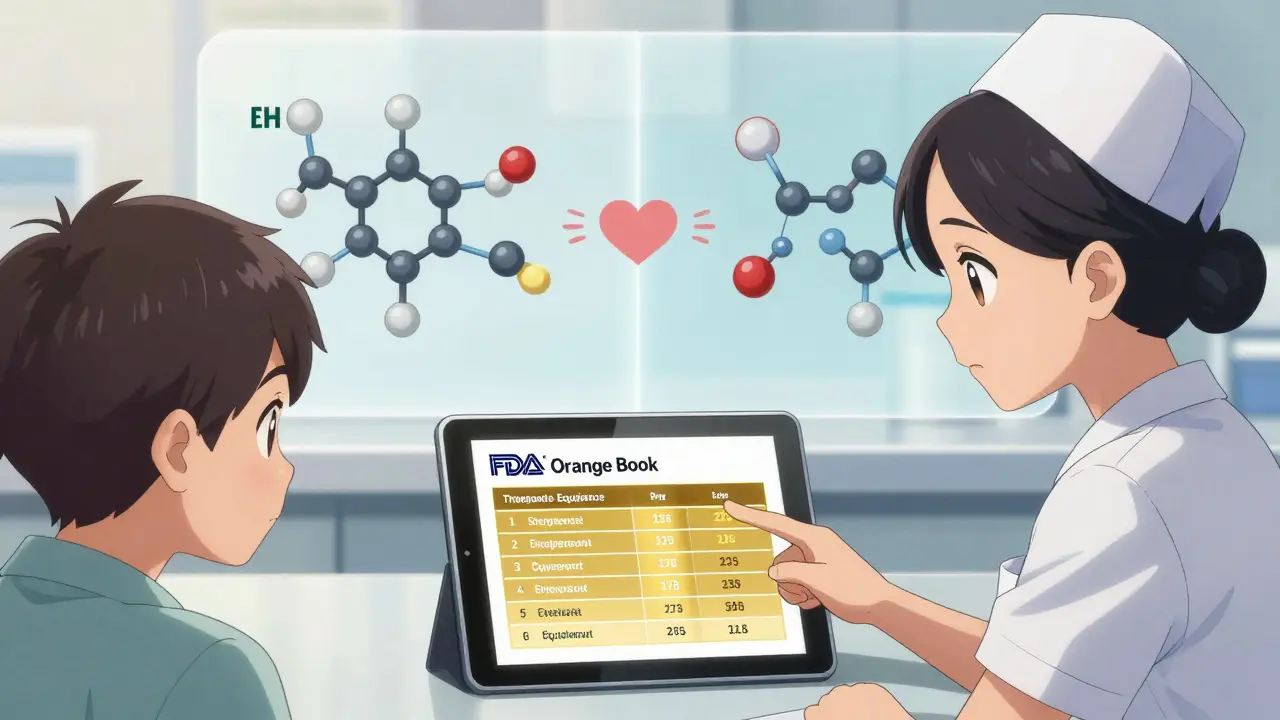
The Nursing Advantage: Timing and Trust
Pharmacists counsel patients when they pick up prescriptions. But nurses are the ones who hand them the pill, watch them swallow it, and check in the next day. That’s the difference. A 2022 study in the Journal of Advanced Nursing found that while pharmacists achieved slightly higher comprehension rates (93% vs. 89%), nurses were far better at addressing immediate concerns about how to take the drug. Nurses answer questions like:- "Should I take this with food?"
- "Can I crush it if I can’t swallow?"
- "What if I miss a dose?"
What Nurses Are Required to Do
It’s not optional. Nursing standards now require it. The American Nurses Association (ANA) made generic counseling part of its 2021 Scope and Standards of Practice. The Joint Commission mandates patient education on all medications, including generics. And in 2023, 92% of Magnet-designated hospitals required nurses to use the "teach-back" method: asking the patient to explain it back in their own words. The National Council for Prescription Drug Programs (NCPDP) says counseling must cover eight key points:- Generic and brand name
- Why it’s prescribed
- When and how to take it
- What it looks like (including changes)
- Expected results
- Possible side effects
- What to do if a dose is missed
- How to store it
The Training Gap
Here’s the problem: many new nurses aren’t ready. A 2023 survey by the National Council of State Boards of Nursing found that 41% of new graduate nurses felt unprepared to counsel on generics. They learned about drug mechanisms in school-but not how to talk to a scared patient about a blue pill that used to be white. Hospitals are fixing this. Most now include 8-10 hours of specialized training during orientation. It’s not just about facts-it’s about communication. Role-playing patient fears. Practicing teach-back. Learning how to respond when someone says, "My cousin took a generic and got worse." One nurse in Sydney told me: "I used to just say, ‘It’s fine.’ Now I say, ‘Let me show you why it’s safe.’ That changes everything."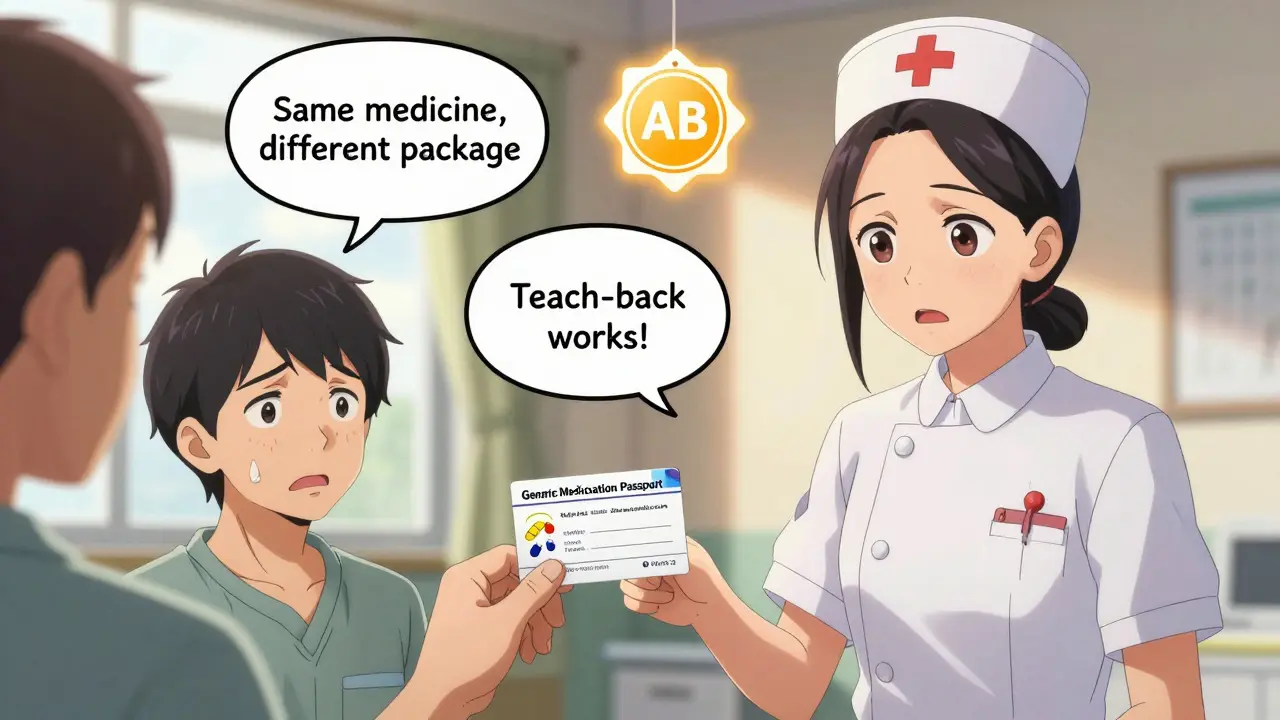
What’s Changing Now
The future of generic counseling is tech-driven. By 2024, 45% of U.S. hospitals had AI tools built into their EHRs that pull up real-time FDA data when a nurse selects a generic medication. The system might pop up: "This generic has an AB rating. Same as brand. Manufacturer: Teva. Pill color: Yellow. Bioequivalence range: 92-108%." The Nursing Generic Medication Education Collaborative, launched in January 2024 with federal funding, aims to standardize training across 500 hospitals by 2026. And with biosimilars-complex biologic generics-expected to grow 300% by 2028, nurses will soon need to explain even more advanced concepts.What Nurses Can Do Today
You don’t need fancy tools to make a difference. Start here:- Always ask: "Have you seen this pill before?"
- Never say, "It’s the same." Say, "Here’s why it’s the same."
- Use the FDA’s free patient materials. They’re clear, simple, and trusted.
- Use teach-back. "Can you tell me how you’ll take this?"
- Document everything-even if it’s just a quick note in the chart.
- If a patient is anxious about a narrow therapeutic index drug, pause. Call the pharmacist. Don’t rush.
Why This Matters
Generics make up 90% of all prescriptions filled in the U.S. Nurses are the frontline in making sure patients actually take them. Studies show proper counseling improves adherence by 22-37%. That means fewer hospitalizations. Fewer ER visits. Lower costs. And most importantly-better health. It’s not about pushing generics. It’s about trusting science-and helping patients trust it too. Nurses don’t just give pills. They give peace of mind.Are generic medications really as effective as brand-name drugs?
Yes. The FDA requires generics to have the same active ingredient, strength, dosage form, and bioequivalence as the brand-name drug-meaning they work the same way in the body. They must be within 80-125% of the brand’s absorption rate, which is a strict scientific standard. Generics are tested in the same labs, made in the same types of facilities, and held to the same quality controls.
Why do generic pills look different from brand-name ones?
By law, generic manufacturers can’t copy the exact appearance of brand-name pills to avoid trademark infringement. So they change the color, shape, or markings-but not the active ingredient. These differences are only cosmetic. They don’t affect how the drug works. Nurses often show patients side-by-side images to help them recognize changes and reduce anxiety.
Can switching to a generic cause side effects?
The active ingredient is identical, so side effects should be the same. But some patients notice differences because of inactive ingredients-like dyes or fillers-which can rarely cause reactions in sensitive individuals. Nurses check for this by asking, "Have you noticed any new symptoms since the switch?" If a patient reports something unusual, the nurse documents it and consults the pharmacist. This is especially important for drugs with a narrow therapeutic index.
What should nurses do when a patient refuses a generic?
Don’t force it. First, listen to their concerns. Then, explain the science simply: "This is the same medicine, just made by a different company." Use visual aids like the FDA’s "It’s the Same Medicine" materials. If the patient still refuses, document their choice and notify the prescriber. Some patients, especially those on critical medications, may need to stay on the brand if it’s medically necessary or if insurance allows an exception.
Is there a list of drugs where generics are not recommended?
The FDA doesn’t say generics aren’t recommended for any drug. But for drugs with a narrow therapeutic index-like warfarin, levothyroxine, or phenytoin-even small differences in absorption can matter. Nurses and pharmacists often recommend sticking with the same manufacturer when possible. Some states have laws restricting automatic substitution for these drugs. Always check local guidelines and consult the pharmacy team if unsure.
How do nurses verify that a patient understands generic counseling?
The gold standard is the "teach-back" method. Instead of asking, "Do you understand?" nurses ask, "Can you tell me in your own words how you’ll take this pill?" If the patient can correctly explain the purpose, dosage, and why it’s safe-even if they don’t use medical terms-they’ve understood. This method is used in 92% of Magnet hospitals and reduces medication errors significantly.
Do nurses need special training to counsel on generics?
Yes. While nursing school covers drug classes, most don’t focus on counseling techniques for generics. Hospitals now provide 8-10 hours of specialized training, including role-playing patient fears, using FDA resources, and documenting conversations. The American Association of Colleges of Nursing requires all nursing graduates to demonstrate competency in explaining therapeutic equivalence before licensure.
What happens if a nurse doesn’t counsel a patient about a generic switch?
It’s a gap in care. Without proper counseling, patients may stop taking their medication, leading to worsening conditions, hospital readmissions, or even death. It also increases liability for the facility. In 2023, CMS proposed a new rule requiring documentation of generic counseling for all Medicare beneficiaries-a sign that this is becoming a mandatory standard, not just a best practice.
Malikah Rajap
January 20, 2026 AT 09:23Oh my gosh, I just had to share this-my grandma took her generic levothyroxine and thought it was a mistake because it was blue instead of white. She cried for an hour. Then her nurse sat with her, showed her the FDA pamphlet, and said, 'It’s the same medicine, just wearing a different hat.' Now she carries that pamphlet in her purse like a holy text. Nurses are unsung heroes, honestly.
Jacob Hill
January 22, 2026 AT 03:12I work in a rural clinic, and this is SO true. Patients see a different pill and think we’re cutting corners. I use the toothpaste analogy too-same paste, different tube. And I always show them the pill on the FDA’s website. They don’t trust me at first, but when they see the FDA logo and the AB rating? It clicks. It’s not magic-it’s just clear, calm, visual teaching.
Jackson Doughart
January 23, 2026 AT 13:49The emotional labor involved in this kind of counseling is profound. Patients aren’t just resisting a pill-they’re resisting change, fear of the unknown, and sometimes, a lifetime of mistrust in the medical system. Nurses don’t just explain pharmacokinetics; they rebuild confidence. That’s not protocol-it’s art. And it deserves more recognition than a checkbox in Epic.
Erwin Kodiat
January 24, 2026 AT 10:06Just had a patient yesterday ask if generics were ‘American-made.’ I told him, ‘Some are, some aren’t-but the FDA checks every single one the same way, whether it’s made in Indiana or India.’ He nodded, looked at the pill, and said, ‘So it’s like buying a Honda from Japan instead of Ohio?’ I said, ‘Exactly.’ He took it without another word. Sometimes, all you need is a good metaphor.
Jake Rudin
January 25, 2026 AT 13:25It’s fascinating how deeply we anthropomorphize medicine. A pill isn’t ‘brand’ or ‘generic’-it’s a molecule. But we assign it identity, loyalty, even personality. We’ve been conditioned to believe that price equals worth, and appearance equals authenticity. The real tragedy isn’t the misinformation-it’s that we’ve forgotten that healing doesn’t care about packaging. The science is silent. The fear is loud. Nurses are the translators.
Astha Jain
January 27, 2026 AT 12:48generic? more like genericus interruptus. why do we even have brand names if we just gonna swap em? my cousin took a generic for blood pressure and got dizzy for a week. so yeah, i’m not buying it. also, why do nurses get to be the ones talking? pharmacists are the experts, right? lol
Lydia H.
January 28, 2026 AT 09:59Love how this highlights the quiet power of nursing. It’s not about the science alone-it’s about the pause. The eye contact. The ‘Let me show you.’ I’ve seen nurses turn panic into peace with a printed FDA sheet and five minutes of their time. That’s the kind of care that doesn’t show up in stats but saves lives. Also, the ‘Generic Medication Passport’ idea? Genius. Can we make those into bracelets? I’d wear one.
Phil Hillson
January 28, 2026 AT 19:59Ugh another feel good nursing article. Like, sure, nurses are great but lets be real-this whole generic thing is a cost cutting scam by pharma and insurers. They don’t care if you’re scared, they just want to save a buck. And now they’re forcing nurses to be salespeople? No thanks. I’d rather pay the extra $5 and keep my white pill. End of story.
Josh Kenna
January 28, 2026 AT 23:50THIS. I’m a nurse and this is EXACTLY what we deal with every day. I had a guy last week scream at me because his generic Adderall was round instead of oval. He said it ‘felt different’-like the pill was lying to him. I showed him the FDA bioequivalence chart, the manufacturer info, the exact same milligram count. He still didn’t believe me. So I asked him to take it right there in front of me. He did. And then he said, ‘Huh. I guess it’s just the shape.’ That’s the moment. Not the pamphlet. Not the tech. Just the moment someone lets go of fear. That’s nursing.
Valerie DeLoach
January 30, 2026 AT 12:33As someone who trained in a rural nursing program with zero formal education on generic counseling, I’m so glad this is changing. But let’s be honest-most new nurses still feel unprepared. We learn drug mechanisms, but not how to hold space for someone who’s terrified their thyroid is failing because the pill changed color. The teach-back method isn’t just a tool-it’s a lifeline. And the FDA’s materials? They’re the only thing standing between a patient and a hospital bed. We need more of this. Not just training-but cultural change. Nurses aren’t just giving pills. We’re giving safety. And that’s worth every minute.