

How to Talk to Your Doctor About Taking Your Medications Correctly
 Dec, 7 2025
More than half of people with chronic conditions don’t take their medications as prescribed. Not because they’re careless, but because they’re confused, overwhelmed, scared, or just don’t know how to ask for help. And too often, they never tell their doctor. That silence costs lives. It drives up hospital visits. It adds billions to healthcare costs. But here’s the truth: medication compliance isn’t just about remembering to take pills. It’s about having the right conversation with your doctor.
Why Most People Don’t Tell Their Doctor
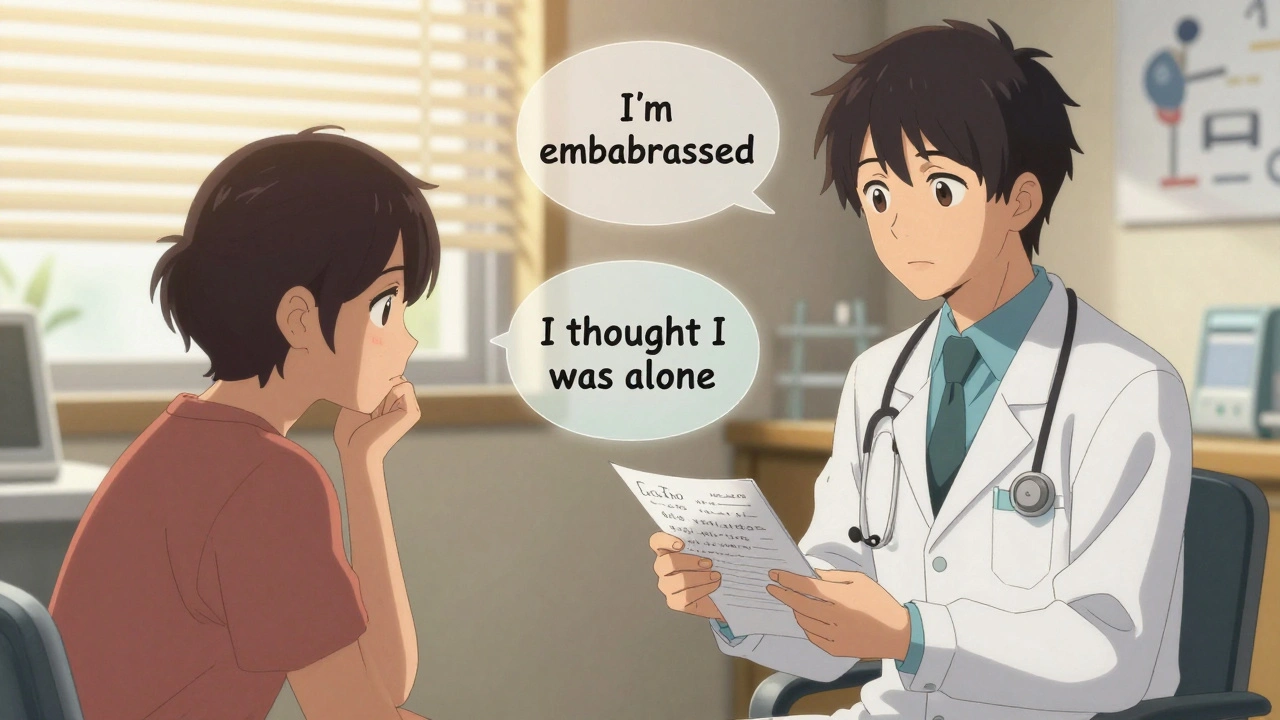
You skip a dose because you felt fine. You stop taking the pill because it made you dizzy. You can’t afford it. You’re embarrassed. You don’t understand why you need it. All of these are normal. But if you don’t say anything, your doctor thinks you’re doing fine. And they keep writing prescriptions based on that assumption. A 2021 study in JAMA Internal Medicine found that 78% of patients who weren’t taking their meds stayed silent - not because they didn’t care, but because they feared being judged. One patient shared: “I missed my blood pressure pills for months. I didn’t say anything because I thought my doctor would call me irresponsible.” When the doctor finally asked in a calm, non-blaming way - “Many people struggle with remembering pills. Does that happen to you?” - the patient broke down and admitted the truth. That conversation led to a simpler dosing schedule. Their blood pressure improved within weeks.What Doctors Really Need to Hear
Doctors aren’t trying to scold you. They’re trying to keep you alive. But they can’t help if they don’t know what’s going wrong. The real issue isn’t forgetfulness. It’s communication gaps. The American Medical Association lists five key reasons patients miss doses:- Side effects (nausea, dizziness, fatigue)
- Cost - pills are too expensive
- Too many pills, too many times a day
- Don’t understand why the medicine matters
- Believe they’re fine now, so they don’t need it
How to Start the Conversation - Without Feeling Ashamed
You don’t need to wait for your doctor to ask. You can start it. Here’s how:- “I’ve been having trouble keeping up with my pills. Can we talk about how to make it easier?”
- “I stopped taking the last prescription because it made me feel awful. Is there another option?”
- “I’m worried about the cost. Are there cheaper versions or programs to help?”
- “I don’t really get why I need this. Can you explain it again in simpler terms?”
What Makes a Doctor Good at This
Not all doctors are trained to talk about adherence. But the best ones use proven techniques:- Non-judgmental language: Instead of “Why didn’t you take it?” they say, “What’s been getting in the way?”
- Active listening: They pause. They don’t interrupt. They nod. They take notes.
- The teach-back method: “Can you tell me in your own words how you’ll take this pill?” If you can’t explain it, they rephrase it.
- Shared planning: “You know your life best. What time of day works for you? What’s realistic?”
What Doesn’t Work
Avoid doctors who:- Use jargon like “noncompliant” or “poor adherence.”
- Dismiss your concerns with “It’s not that hard.”
- Give you a 10-page handout and walk away.
- Only ask about meds at the end of a rushed visit.
Simple Steps You Can Take Today
You don’t need to wait for your next appointment. Start now:- Write down every pill you’re supposed to take - name, dose, time.
- Check your bottle. Are you still taking the same ones? Did your doctor change them?
- Ask yourself: What’s the #1 reason you miss a dose?
- Write down one question to ask your next doctor: “How can we make this easier?”
- Bring your pill bottles to your appointment. No shame. It helps them see what you’re actually taking.
What If You Can’t Afford Your Meds?
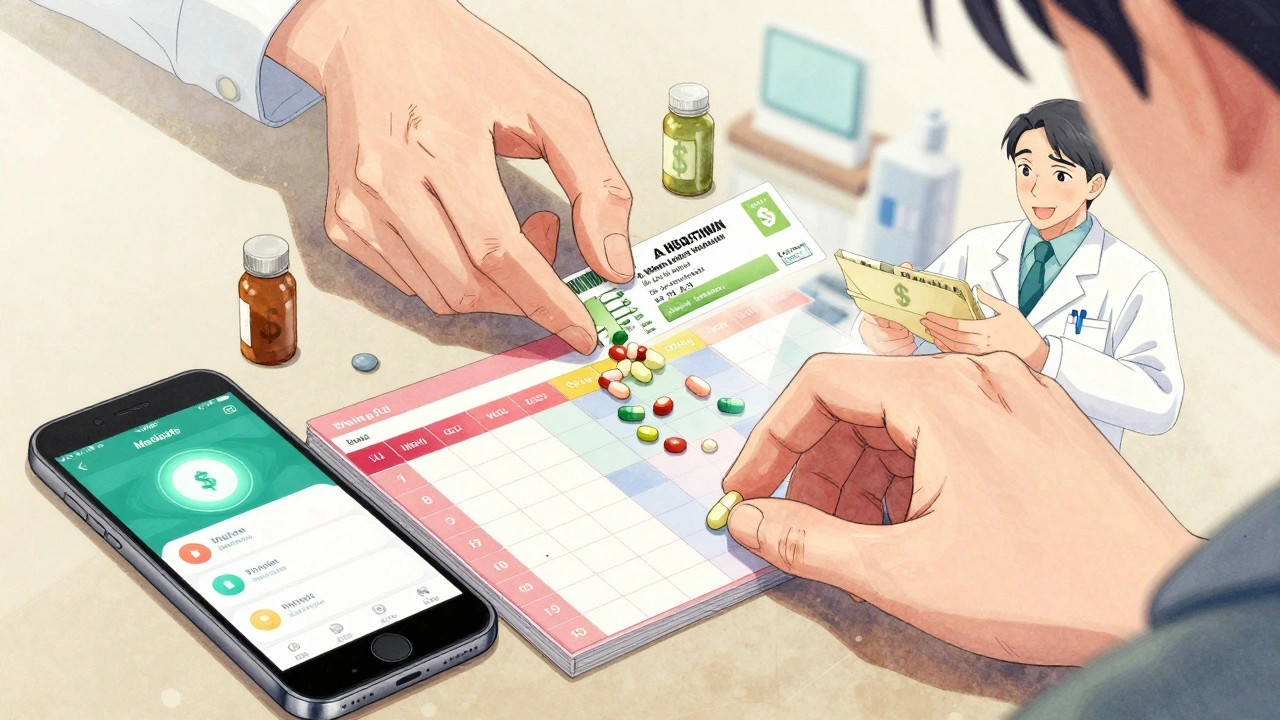
Cost is the #1 reason people skip pills. And it’s fixable. In Australia, the Pharmaceutical Benefits Scheme (PBS) caps prescription costs at $31.60 per script for concession card holders, and $9.90 for others. If you’re paying more than that, ask your pharmacist: “Is this covered under PBS?” If not, ask your doctor for a cheaper alternative. Many generic drugs work just as well. Pharmacies also offer free medication reviews. You can book one without an appointment. Bring your list. Ask: “Are all these still needed? Can any be combined or cut?”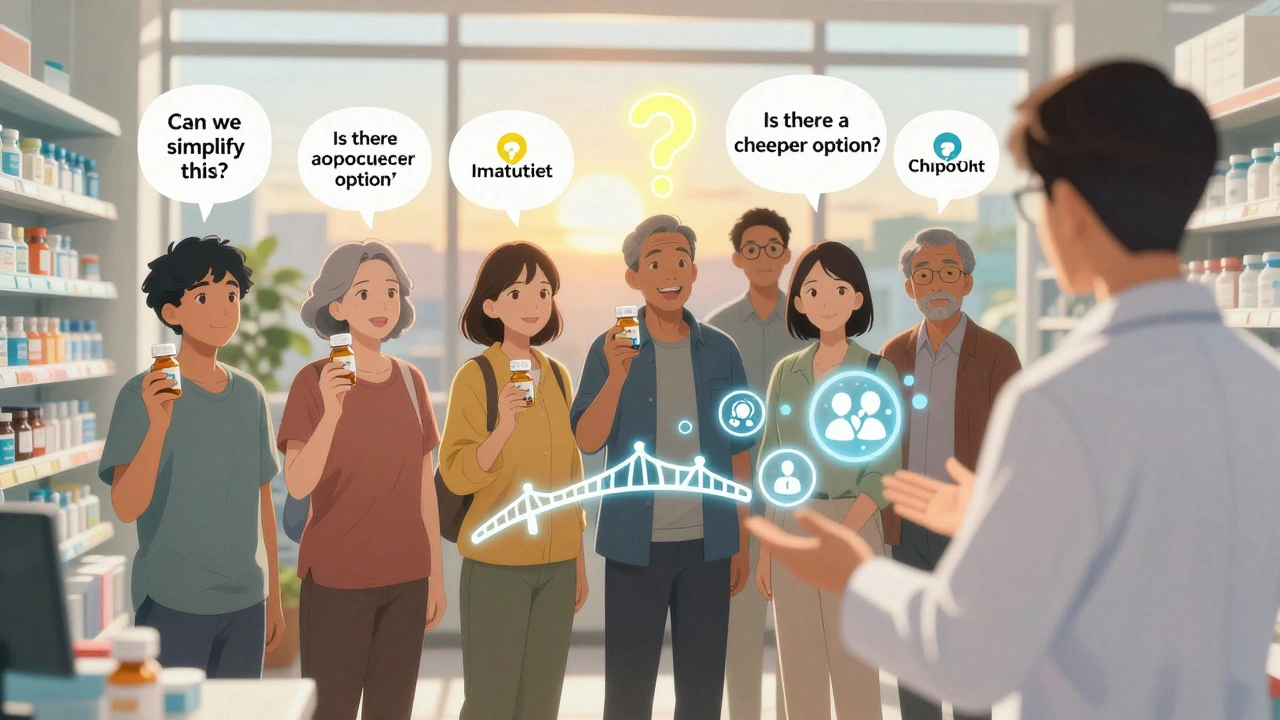
What About Side Effects?
Side effects don’t mean you’re weak. They mean the medicine isn’t right for you - yet. Don’t quit cold turkey. Talk to your doctor. Say: “I’m getting headaches and nausea after taking this. Can we adjust the dose? Try a different time? Switch to something else?” Many meds can be taken at night instead of morning. Some can be split. Others have delayed-release versions that reduce side effects. Your doctor can’t help unless you tell them.How to Remember Your Pills
Forgetfulness is common. Here’s what actually works:- Use a pill organizer with days and times.
- Set phone alarms - label them: “Blood pressure pill” not “Take med.”
- Link pills to daily habits: “After I brush my teeth, I take my pill.”
- Ask a family member to check in once a week.
- Use free apps like Medisafe or MyTherapy - they send reminders and track your history.
When Your Doctor Doesn’t Listen
If your doctor dismisses you, rolls their eyes, or rushes you - it’s not your fault. It’s a system problem. You have the right to a second opinion. You can ask: “Can you refer me to a pharmacist for a medication review?” Many hospitals and community health centers offer free sessions. Pharmacists are trained to spot drug interactions, simplify regimens, and help with cost. In Sydney, the NSW Health Medication Management Service offers free consultations. No referral needed. Just walk in.You’re Not Alone. And You’re Not Failing.
Taking meds correctly isn’t about willpower. It’s about support. About clear communication. About being heard. You’re not lazy. You’re not irresponsible. You’re a person trying to manage a complex health situation - with limited time, money, and energy. That’s hard. The best thing you can do? Speak up. Even if it’s awkward. Even if you’re scared. Your doctor can’t fix what they don’t know. But once they know - they can help.What if I feel embarrassed to tell my doctor I’m not taking my meds?
Feeling embarrassed is common - but it’s based on fear, not facts. Most doctors have heard this before. In fact, 50% of patients with chronic conditions struggle with adherence. When you say, “I’ve been having trouble taking my pills,” your doctor doesn’t judge - they problem-solve. One patient said, “I thought I was the only one. Turns out half my doctor’s patients are in the same boat.”
Can I just stop taking a pill if it makes me feel bad?
No. Stopping suddenly can be dangerous - especially for blood pressure, heart, or mental health meds. Instead, call your doctor or pharmacist and say: “I’m having side effects. Can we adjust this?” Many times, a small change - like taking it with food, switching times, or lowering the dose - fixes the problem without stopping the medicine.
My doctor gave me 10 pills. Do I really need all of them?
Not always. Polypharmacy - taking too many meds - is a real risk, especially for older adults. Ask your doctor: “Can we review all my medications? Are any of these no longer needed?” Many people can safely reduce their pill count. A 2022 study showed that 30% of patients on 5+ meds could cut down without losing health benefits.
What if I can’t afford my meds even with PBS?
Talk to your pharmacist. They know about patient assistance programs, manufacturer discounts, and generic alternatives. Some drugs have cheaper brand-name versions. Others can be ordered in bulk for less. Never assume it’s unaffordable - ask. Many people get help they didn’t know existed.
How do I know if I’m actually taking my meds correctly?
The best way is to track it. Use a simple calendar or app. Mark each day you take your pill. After a week, review it. Do you miss doses on weekends? After meals? When you’re stressed? Patterns show up. Bring that list to your doctor. It’s not a report card - it’s a tool to fix the problem.
Anna Roh
December 8, 2025 AT 07:07I mean, sure, it's nice to say 'just talk to your doctor' but have you tried getting an appointment that doesn't involve a 3-month wait and a 45-minute drive? My doctor barely looks up from his screen. He just nods and writes another script. I'm not the problem. The system is.
om guru
December 9, 2025 AT 12:38Respect for the article. Medication adherence is a critical public health issue. Communication is the cornerstone. Doctors must be trained to listen. Patients must be empowered to speak. No blame. No shame. Only solutions.
Delaine Kiara
December 10, 2025 AT 17:42Okay but let's be real - how many of these 'simple steps' are actually doable when you're working two jobs, raising kids, and your phone dies at 2pm? I tried the pill organizer. It sat in my drawer for six months. The alarms? I muted them because I was tired of being reminded I'm failing. This article reads like it was written by someone who's never missed a dose because they were too broke to buy groceries that week.
And don't get me started on 'ask your pharmacist' - my pharmacist doesn't even know my name. He just scans the barcode and says 'have a nice day' like I'm a Walmart customer.
It's not about willpower. It's about resources. And nobody here is talking about that.
Also - who wrote this? A pharma rep? Because it sounds like a brochure they give you after you sign a consent form you didn't read.
Darcie Streeter-Oxland
December 12, 2025 AT 07:51While the sentiment is commendable, the article exhibits a concerning lack of structural analysis. The assumption that patients are merely silent due to fear overlooks systemic failures in healthcare delivery, insurance fragmentation, and the commodification of pharmaceuticals. The proposed solutions are individualistic and neglect the institutional responsibility inherent in patient adherence.
Moreover, the reference to Australia's PBS is both misleading and patronizing. It implies a universal standard exists, which it does not. In the United States, without universal healthcare, such benchmarks are irrelevant.
One must ask: why is the burden of communication placed solely on the patient?
Andrea Petrov
December 12, 2025 AT 16:33Did you know that 87% of doctors who say they 'ask about adherence' are actually just reading from a checklist? The real reason patients stay silent? Because the system is rigged. Big Pharma pays for these 'awareness campaigns' so you think it's your fault you can't afford your meds. The real villains? The CEOs who hike prices 400% overnight and then fund 'educational content' that tells you to 'just speak up.'
And the 'free medication reviews'? They're just a funnel to push you toward more expensive generics they own the patent for. I've seen it. I used to work in pharmacy billing. You think your pharmacist cares? They're paid per script filled.
Don't trust this. It's all a distraction.
Haley P Law
December 14, 2025 AT 03:57OMG I JUST HAD THIS EXACT THING HAPPEN 😭 I stopped my anxiety med because I felt like a zombie and I was too scared to say anything. Then one day my mom found the bottle in my drawer and said 'you're not doing this alone.' She walked me into my doctor's office. He didn't even blink. Just said 'let's try something gentler.' Now I'm on a new med and I haven't cried in a week. I just needed someone to hold my hand. You're not alone. Seriously. 💛
Andrea DeWinter
December 15, 2025 AT 22:34People think it's about remembering pills but it's about remembering you matter. If your doctor doesn't see you as a person, find one who does. I've been on 12 meds at once. I got overwhelmed. I wrote down every question on a napkin. Took it to my appointment. My doctor didn't rush. We cut three. Changed two. Added a pillbox. Now I sleep better. You don't need to be perfect. You just need to be heard. And you deserve that.
Steve Sullivan
December 17, 2025 AT 10:13bro this whole thing is like… we're all just trying to survive in a world that treats health like a subscription service. you're not lazy if you forget your pill because you were working double shifts and your kid got sick. you're not broken if you can't afford it. you're just human. and doctors? most of them are drowning too. they're not evil. they're just stuck in a machine that rewards speed over care. the fix? not more pamphlets. not more apps. it's time. real time. with people who actually listen. and yeah maybe that means changing doctors. or moving. or fighting the system. but you're not alone. i've been there. we're all just trying to stay alive.
George Taylor
December 17, 2025 AT 11:08