

Over-the-Counter Medications Past Expiration: What You Really Need to Know
 Dec, 1 2025
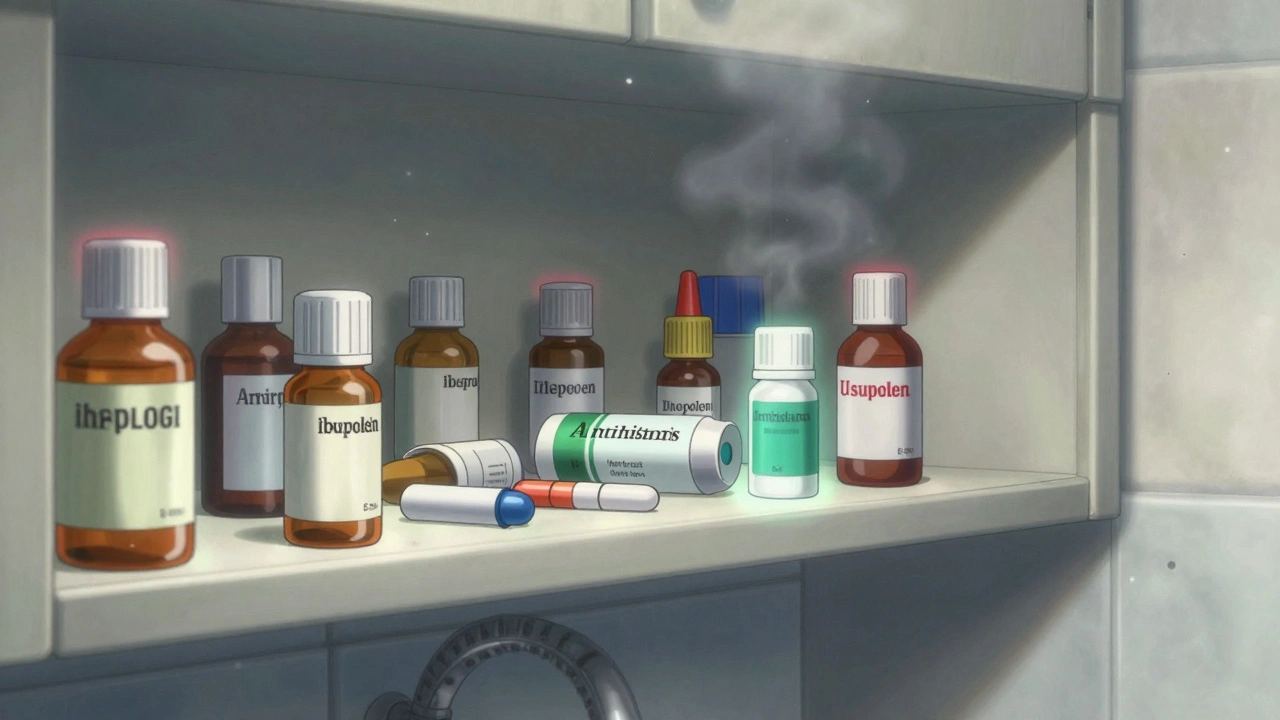
Most of us have a drawer or cabinet full of old pills, syrups, and ointments with dates that have long passed. You find that bottle of ibuprofen from last winter, or the antihistamine you bought during allergy season - and wonder: is it still safe to take? The answer isn’t simple. It’s not a yes or no. It’s not even a maybe. It depends on what you’re holding, how it’s been stored, and what you’re using it for.
Expiration Dates Aren’t Just Random Dates
The expiration date on your medicine isn’t a marketing trick or a way for drug companies to make you buy more. It’s a legal requirement. Since 1979, the U.S. Food and Drug Administration has required manufacturers to test their products and guarantee that they’ll remain safe and effective up to that date. That means if you take a pill on the day before its expiration date, you can expect it to work as intended - full strength, full safety.
But after that date? The manufacturer stops guaranteeing anything. That doesn’t mean the medicine suddenly turns toxic. Most of the time, it just loses strength. Think of it like a battery. It still works, but not as well as it used to.
Some Medicines Are Fine - Others Are Dangerous
Not all expired medications are created equal. Solid forms like tablets and capsules tend to hold up much better than liquids. A study from Harvard Medical School found that 88% of expired tablets stored in their original packaging at room temperature still had at least 90% of their original potency one to two years past the expiration date. That includes common pain relievers like ibuprofen and acetaminophen. If you’ve got a headache and your Advil is six months past its date, it’s probably still going to help.
But then there are the exceptions - the ones you absolutely should not risk.
Nitroglycerin, used for chest pain, can lose half its potency within six months of expiration. That’s not just ineffective - it’s dangerous. If you’re having a heart attack and your nitroglycerin doesn’t work, the consequences can be fatal.
Epinephrine auto-injectors (like EpiPens) are another critical case. If you’re allergic to peanuts or bee stings, an expired EpiPen might not deliver enough medicine to stop anaphylaxis. There’s no room for guesswork here.
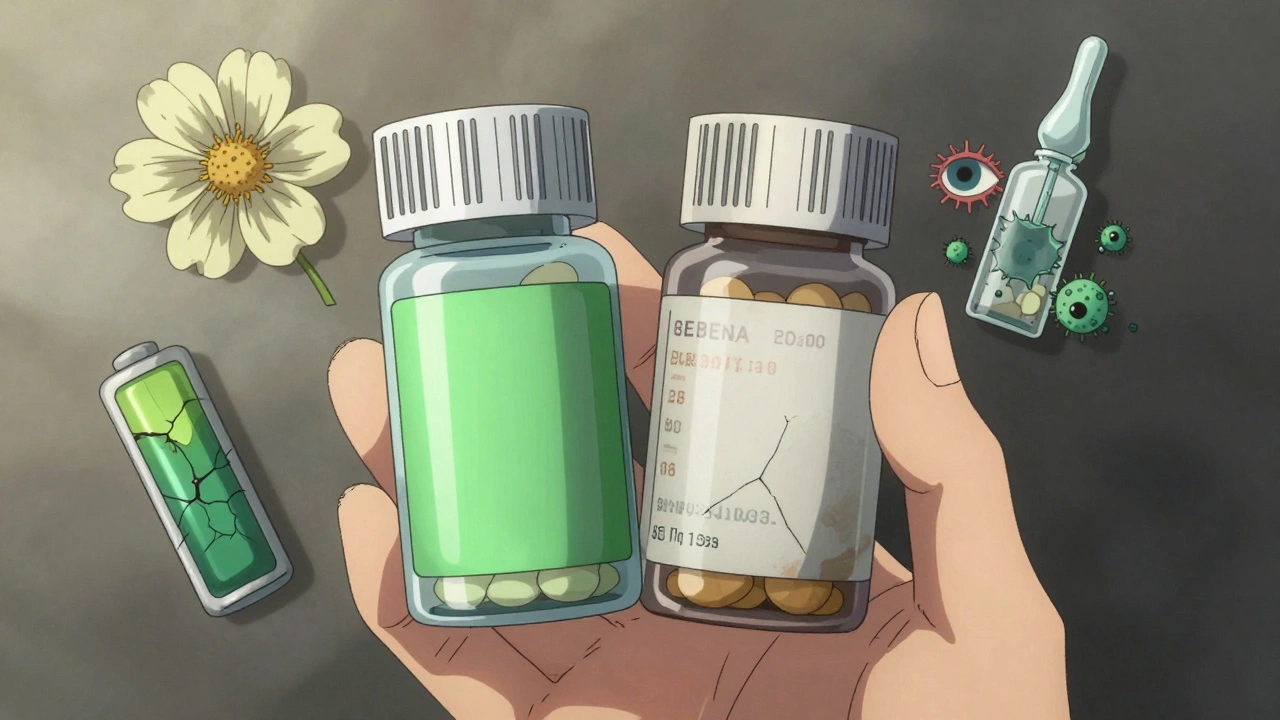
Eye drops? Avoid them past expiration. A study from Providence Health found that 72% of expired eye drops developed harmful bacteria within three months. Using contaminated drops can lead to serious eye infections - even blindness in rare cases.
And antibiotics? Don’t even think about it. While most expired antibiotics won’t make you sick directly, they can become weak enough to fail at killing bacteria. That doesn’t just mean your infection won’t go away - it means the surviving bacteria can grow stronger, leading to antibiotic resistance. That’s not just your problem. It’s everyone’s problem.
Storage Matters More Than You Think
Where you keep your medicine affects its lifespan more than the expiration date itself. Heat, moisture, and light are the enemies.
If you store your pills in the bathroom - near the shower, where steam rises and humidity builds - they degrade faster. The FDA says medications stored above 30°C (86°F) lose potency up to three times faster than those kept at or below 25°C (77°F). That’s why the medicine cabinet above the sink is one of the worst places in your house.
Original packaging matters too. Pills kept in their original blister packs or bottles with desiccants (those little packets that say "Do Not Eat") stay drier and more stable. Once you dump them into a pill organizer or a plastic bag, you’re exposing them to air and moisture. University Hospitals found that pills stored in their original containers stayed effective 40% longer than those moved elsewhere.
And never, ever store medicines in the car. Summer temperatures inside a parked car can hit 60°C (140°F). That’s not just bad for your pills - it’s a science experiment in degradation.
How to Tell If Your Medicine Is Gone Bad
Expiration dates are one clue. But your eyes and nose are better detectors.
Look for:
- Tablets that crumble easily or have cracks
- Pills that have changed color - yellowing, darkening, or spotting
- Liquids that are cloudy, separated, or have particles floating in them
- Syrups that smell sour or weird
- Creams or ointments that smell rancid or separate into layers
If you see any of these signs, toss it. Even if it’s before the expiration date. That’s not a waste - that’s prevention.
What About Allergy Meds and Painkillers?
Here’s where things get practical. For minor, non-life-threatening issues, a little leniency makes sense.
Loratadine (Claritin), cetirizine (Zyrtec), and diphenhydramine (Benadryl) are among the most stable OTC drugs. Pharmacy575’s lab tests showed they retained full effectiveness for 3 to 5 years past expiration when stored properly. If you’re dealing with seasonal allergies and your Zyrtec is a year old? It’s probably still working fine.
Same with ibuprofen and acetaminophen. If your headache is mild and you’ve got nothing else, an expired bottle won’t hurt you - it might just take longer to work. But don’t rely on it for serious pain, fever, or inflammation. Replace it.
But here’s the line: if you’re taking aspirin daily for heart protection, don’t risk it. Even a small drop in potency could mean your blood isn’t thinning enough. Same with any medication prescribed by a doctor, even if it’s available over the counter.
What Should You Do With Expired Medicine?
Don’t flush it unless it’s a controlled substance like opioids. Flushing can pollute water supplies. Don’t throw it in the trash loose - kids or pets might find it.
The safest method? Mix it with something unappetizing - coffee grounds, cat litter, dirt - seal it in a plastic bag, and toss it in the trash. That’s what 87% of pharmacists recommend.
For opioids, painkillers like oxycodone, or other high-risk drugs, the FDA says flushing is acceptable to prevent accidental overdose. Check the label or ask your pharmacist.
Many pharmacies and local health departments also offer drug take-back programs. In Australia, pharmacies like Chemist Warehouse and Priceline run periodic collection bins. Use them.

Why Do We Keep Expired Medicine Anyway?
According to FDA surveys, nearly 7 out of 10 U.S. households have expired meds in their cabinets. Why? Because we’re practical. We don’t want to waste money. We think, "It’s just a little past the date - it’s probably fine." And sometimes, it is.
But that mindset costs us. Americans spend $765 million every year replacing medicines that were still good. At the same time, an estimated $1.2 billion in extra healthcare costs come from infections and treatment failures caused by using expired drugs.
It’s a cycle: we hoard because we’re frugal, then we pay more later because something didn’t work.
The Future: Smart Packaging and Real-Time Tracking
There’s good news on the horizon. The FDA and pharmaceutical companies are investing billions into smart packaging that can tell you if your medicine is still good.
Researchers at the University of Florida are testing time-temperature indicators - tiny labels that change color if the medicine has been exposed to heat or humidity beyond safe levels. Early trials show 92% accuracy in predicting whether the drug is still potent.
Imagine a bottle that glows green if it’s safe, red if it’s not. No more guessing. No more risking your health because you forgot when you bought that bottle of Tylenol.
These technologies are still in testing, but they’re coming fast. In 2023 alone, companies spent $4.7 billion developing them.
Bottom Line: Use Your Head, Not Just the Date
Don’t automatically throw out everything that’s past its date. But don’t blindly take it either.
For painkillers, allergy meds, and antacids - if they look right, smell right, and you’re using them for minor symptoms? It’s usually okay to use them a few months past expiration.
For anything that could save your life - heart meds, epinephrine, insulin, antibiotics, eye drops - if it’s expired, replace it. No exceptions.
Store your meds in a cool, dry place. Keep them in original containers. Check for changes in color, texture, or smell. When in doubt, throw it out.
Your health isn’t worth the gamble. And your wallet will thank you in the long run - because replacing a $5 bottle of ibuprofen is cheaper than an ER visit for a preventable infection or allergic reaction.
Sandi Allen
December 3, 2025 AT 14:19Let me just say this: the FDA is a puppet of Big Pharma! They set expiration dates so you’ll keep buying pills-period. I’ve got ibuprofen from 2018 that still works fine; I tested it on my migraines. They don’t want you to know that drugs don’t just ‘expire’-they’re engineered to become less effective so you come back for more. And don’t get me started on the ‘smart packaging’ nonsense-how convenient that it’s still in testing after 4.7 BILLION dollars spent. It’s all a scam. You’re being manipulated. Always question the narrative.
Fern Marder
December 4, 2025 AT 16:40OMG YES 😭 I just threw out my entire medicine cabinet last week because I found a 2020 bottle of Benadryl and my cat looked at me like I was a monster for even considering it. 🐱💔 But seriously-my grandma always said, ‘If it looks weird, smells weird, or makes you hesitate-toss it.’ She lived to 98. Coincidence? I think not. 💪💊
Carolyn Woodard
December 6, 2025 AT 08:54The philosophical underpinning here is fascinating: we treat pharmaceuticals as consumables with fixed shelf lives, yet the chemical stability of many compounds is demonstrably prolonged under controlled conditions. The expiration date is a legal artifact, not a biological one. The real variable is environmental degradation-humidity, thermal flux, and photolytic exposure-which are rarely accounted for in household storage. The FDA’s guarantee is a minimum, not a ceiling. Yet, the cultural anxiety around expiration reflects a broader epistemological discomfort with uncertainty. We crave binary answers-safe or unsafe-when the truth is probabilistic. The real failure isn’t the expired pill; it’s our refusal to engage with nuance.
Allan maniero
December 7, 2025 AT 13:37I’ve been keeping my meds in a drawer under the bed since I moved out of my parents’ house-no bathroom humidity, no sun, no kids or pets getting into things. My last bottle of loratadine was three years past expiry and it knocked out my spring allergies like it was fresh. I’ve got a friend in Manchester who swears by his 2019 aspirin for his heart-he’s 72 and still rides his bike every morning. Point is, common sense beats blind adherence to dates. If it looks and smells fine, and you’re not treating something life-threatening, it’s probably okay. Just don’t be dumb about it. Store it right, check it once in a while, and if in doubt? Swap it out. Easy.
Anthony Breakspear
December 8, 2025 AT 00:09Look, I’m not here to be a medical guru-but I’ve been a paramedic for 14 years and let me tell you: I’ve seen people show up in the ER because they took expired antibiotics and ended up with a resistant staph infection. Not cool. Not worth it. I’ve also seen folks use old ibuprofen for a headache and live to tell the tale. So yeah, context matters. But here’s the real deal: if it’s something that could kill you if it fails-EpiPen, nitro, insulin-then it’s not ‘maybe’ or ‘probably.’ It’s a HARD NO. No exceptions. And if you’re storing meds in the bathroom? Bro. That’s like keeping your phone in the shower. You’re asking for trouble. Chill out, move your pills to a cool, dark drawer, and stop being cheap with your health. You wouldn’t drive a car with expired brakes-why treat your body like a discount bin?
Zoe Bray
December 9, 2025 AT 11:49It is imperative to underscore the regulatory framework underpinning pharmaceutical expiration dating, as established pursuant to the Federal Food, Drug, and Cosmetic Act. The manufacturer’s guarantee of potency and safety is predicated upon rigorous stability testing under ICH guidelines. Deviation from these parameters, particularly in the context of biologics or sterility-dependent formulations, constitutes a significant deviation from accepted pharmacological standards. Furthermore, the disposal methodology recommended-namely, the incorporation of unpalatable adulterants prior to landfill disposal-is consistent with the Environmental Protection Agency’s guidelines for household pharmaceutical waste. It is not merely prudent; it is ethically and environmentally obligatory.
Girish Padia
December 9, 2025 AT 12:14People in US always overthink everything. In India, we use medicine till it's gone. If it works, it works. If it don't, we go to doctor. Simple. No smart labels. No studies. Just common sense. Why waste money? My aunt used 7-year-old paracetamol for fever last month. She's fine. You think too much.
Saket Modi
December 10, 2025 AT 22:14Ugh. I read this whole thing and now I feel guilty about my expired Advil. 😩 I just kept it because it was on sale. Like, come on. I'm not a doctor. I just want my headache to go away. Can we just get a pill that tells us if it's still good? Or better yet-why don't they just make pills that last 10 years? 🤷♂️