

Pain Management Combinations: Available Generic Fixed-Dose Products
 Feb, 7 2026
When you’re dealing with sharp, sudden pain - like after surgery, a bad back injury, or a toothache - taking one pill just doesn’t always cut it. That’s where generic fixed-dose combinations come in. These aren’t fancy new drugs. They’re simple: two proven painkillers packed into one tablet. No need to juggle two pills. No guesswork. Just one dose that works better than either drug alone.
Why Combine Painkillers?
Think of pain like a circuit. It has multiple wires. One path sends signals from the injury site to your spine. Another path tweaks how your brain interprets pain. A single drug might block just one wire. But two drugs, working together, can cut multiple paths at once. That’s multimodal analgesia. And it’s why combinations like tramadol and diclofenac or acetaminophen and ibuprofen work so well.Studies show these combos give stronger pain relief than either drug by itself. In one trial after wisdom tooth removal, people who took acetaminophen plus ibuprofen needed rescue pain meds half as often as those who took just one. And they had fewer side effects. Why? Because each drug can be given at a lower dose. Less tramadol means less dizziness. Less ibuprofen means less stomach upset. The combo delivers the punch without the punch-in-the-gut.
What’s Actually Available?
You won’t find every combo in every country. But here are the most common generic fixed-dose products you’ll see right now:- Tramadol 50 mg + Diclofenac 50 mg - Common in Brazil, Europe, and parts of Asia. Used for post-op pain and severe muscle injuries. Takes effect in about 2 hours. Peak pain relief hits around 3.5 hours.
- Tramadol 75 mg + Acetaminophen 650 mg - Sold as generic Ultracet in the U.S. and many other countries. Used for moderate to severe acute pain. Not for long-term use.
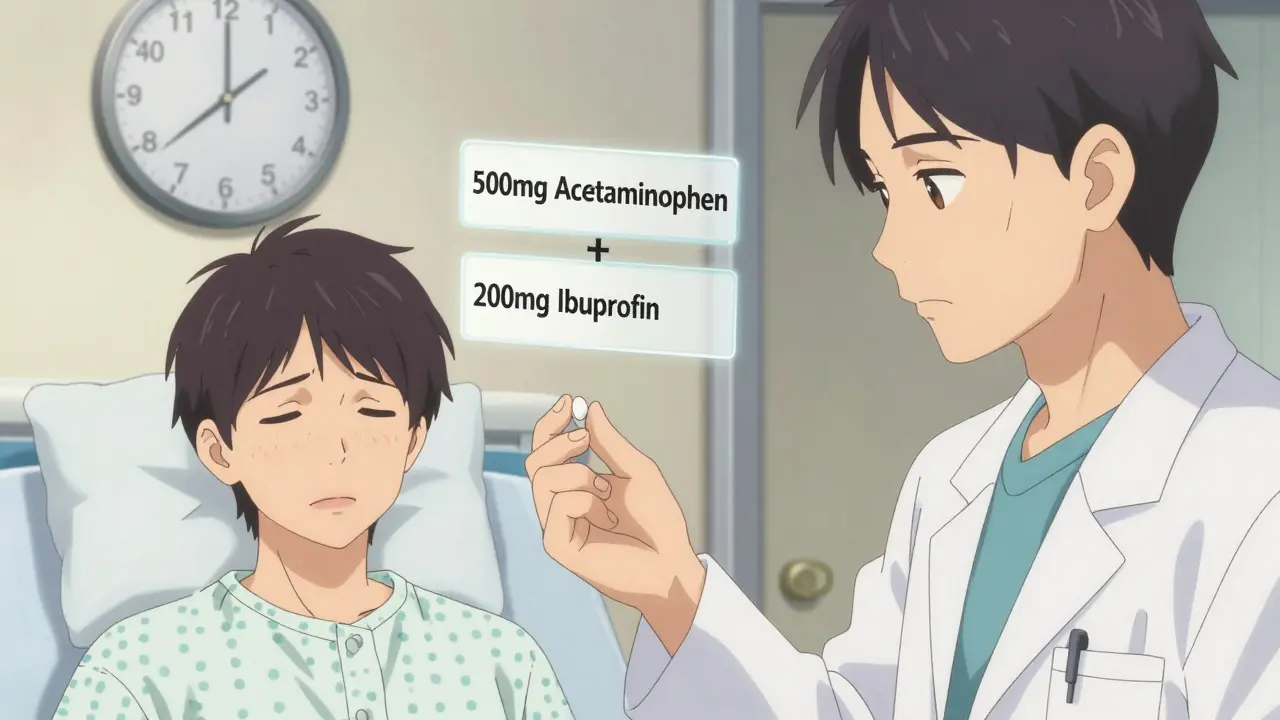
- Acetaminophen 500 mg + Ibuprofen 200 mg - Available over-the-counter in Australia, the U.S., and parts of Europe. Often labeled as “dual-action pain relief.” Works fast for headaches, dental pain, and sprains.
- Drotaverine 80 mg + Acetaminophen 500 mg - Approved in India and Brazil for abdominal cramps and menstrual pain. Shows faster relief than acetaminophen alone.
- Dexketoprofen 25 mg + Tramadol 75 mg - Used in Europe for surgical pain. More potent than higher doses of either drug alone.
These aren’t just random mixes. Each ratio is based on clinical trials. For example, the 75 mg tramadol + 650 mg acetaminophen combo was tested in thousands of patients. The dose wasn’t chosen because it looked nice on paper - it was chosen because it worked best and had the fewest side effects.
How Do They Compare to Taking Two Separate Pills?
At first glance, taking two pills seems easier. You can adjust each dose. But there’s a catch: people forget. They take one and forget the other. Or they take too much of one because they don’t realize the other is already in their system.Fixed-dose combos fix that. They guarantee the right balance. A 2022 study in U.S. hospitals found that patients on combo tablets had 30% fewer dosing errors than those on loose pills. And in emergency rooms, nurses report faster pain control with fixed-dose products - no need to calculate separate doses.
But there’s a downside. You can’t tweak the dose. If you need more pain relief, you can’t just add 100 mg of ibuprofen. You have to take another full tablet. That’s fine for short-term use. But if you need pain relief for more than a few days, it becomes risky.

Who Should Avoid These Combos?
These aren’t safe for everyone. The biggest red flags:- Acetaminophen - Don’t take more than 4,000 mg in 24 hours. That’s two tablets of the tramadol/acetaminophen combo. If you’re also taking cold medicine or sleep aids with acetaminophen, you’re at risk of liver damage. In 2022, 22% of reported medication errors involving painkillers were from accidental acetaminophen overdose.
- NSAIDs (diclofenac, ibuprofen) - Avoid if you have kidney disease, stomach ulcers, or are on blood thinners. These can cause bleeding or worsen kidney function.
- Tramadol - Not for people with seizure disorders, opioid dependence, or those taking antidepressants like SSRIs. Tramadol can lower your seizure threshold and cause serotonin syndrome.
Also, don’t use these for chronic pain. OTC labels clearly say: “Use only for a few days.” That’s not a suggestion. It’s a safety rule. Long-term use of opioid-containing combos like tramadol/acetaminophen increases dependence risk. The CDC found that 17% of tramadol combo prescriptions in 2022 showed signs of misuse.
What Do Real Users Say?
On Drugs.com, Ultracet (tramadol/acetaminophen) has a 6.2 out of 10 rating. People love it for dental pain. One user wrote: “Saved me after my root canal. Took one and was back to normal in 45 minutes.” But 78 reviews mention nausea and dizziness. Another user said: “Worked great, but I felt like I was floating. Couldn’t drive.”In Brazil, where tramadol/diclofenac is widely used, 82% of patients reported high satisfaction. But 15% quit because of stomach pain. Reddit users in r/ChronicPain found the combo effective for flare-ups, but many said they’d never use it again because of the side effects.
The takeaway? These combos work - but they’re not magic. They’re powerful tools. Use them right, and they’re lifesavers. Use them wrong, and they’re risky.
How to Use Them Safely
If your doctor prescribes one of these, here’s how to stay safe:- Check every other medicine you take. Look for acetaminophen, ibuprofen, or NSAIDs on the label. Even a single cold tablet can push you over the limit.
- Don’t take more than the recommended dose. One tablet every 6-8 hours. Never double up.
- Use only for short-term pain. If pain lasts more than 3-5 days, talk to your doctor. There’s probably a better long-term plan.
- Watch for side effects. Dizziness, nausea, or dark urine? Stop and call your doctor.
- Never share. These aren’t OTC for a reason. Someone else’s dose could be dangerous for you.
There’s also a free resource from the FDA called “Know Your Dose.” It helps you track how much acetaminophen you’re taking each day. Download the app or print the chart. It’s simple, and it could save your liver.
What’s Changing Right Now?
In 2023, the WHO added tramadol/acetaminophen to its list of essential medicines for acute pain. That means it’s now considered a must-have in hospitals worldwide. Brazil approved new generic versions of tramadol/diclofenac in September 2023. And the FDA released draft guidance in January 2024 for abuse-deterrent versions of opioid/NSAID combos - think coatings that make pills harder to crush or dissolve.The market is growing fast. The global pain combo market hit $14.7 billion in 2022. Generic makers like Teva and Mylan now produce over 37 versions of tramadol/acetaminophen in the U.S. alone. But the big shift? More doctors are using these combos as a first-line option instead of high-dose NSAIDs or opioids alone. It’s not about adding more drugs. It’s about using less of each - smarter.
Bottom Line
Generic fixed-dose pain combinations are one of the most underused tools in pain management. They’re not for everyone. But if you’re dealing with sudden, severe pain - and you’re not at risk for liver or kidney issues - they can be the best option you’ve never tried.They work faster. They’re more effective. And they reduce the chance of taking too much of one drug. Just don’t treat them like candy. Use them for a few days. Watch what else you’re taking. And always talk to your doctor or pharmacist before starting.
Are generic pain combination pills as effective as brand-name ones?
Yes. Generic fixed-dose combinations must meet strict bioequivalence standards set by the FDA, EMA, and other regulators. That means they deliver the same amount of active ingredients into your bloodstream at the same rate as the brand-name version. For example, generic tramadol/diclofenac tablets have been tested in clinical trials and shown to have identical pain relief and side effect profiles to the original brand. The only differences are in the inactive ingredients - like color or filler - which don’t affect how the drug works.
Can I take a pain combination if I’m already on an antidepressant?
Be very careful. Tramadol, which is in some combinations, can interact with SSRIs, SNRIs, and certain other antidepressants. This can lead to serotonin syndrome - a rare but dangerous condition with symptoms like confusion, rapid heartbeat, high fever, and muscle stiffness. If you’re on fluoxetine, sertraline, venlafaxine, or similar drugs, talk to your doctor before using any tramadol-containing combo. Acetaminophen/ibuprofen combos are safer in this case, since they don’t contain tramadol.
Why can’t I use these combos for chronic pain?
Because long-term use increases risks without clear benefits. Opioid components like tramadol can lead to dependence, even at low doses. NSAIDs like diclofenac or ibuprofen can damage kidneys or cause stomach bleeding over time. Studies show that for chronic pain, non-drug options like physical therapy, weight management, or nerve-targeted treatments are more effective and safer. These combos are designed for short-term flare-ups - not daily, ongoing pain.
What’s the safest pain combo for someone with a sensitive stomach?
Avoid any combo that includes NSAIDs like ibuprofen or diclofenac. Instead, look for acetaminophen-only combinations - but only if you don’t have liver disease. The safest option for sensitive stomachs is acetaminophen 500 mg with a non-NSAID analgesic like drotaverine (used for cramps) or a low-dose tramadol product. But even then, use it sparingly. For long-term stomach safety, non-medication approaches like heat therapy or gentle stretching are better choices.
Do these combinations work for migraines?
Some, but not all. Acetaminophen/ibuprofen combos are sometimes used for mild-to-moderate migraines, especially if you’ve had success with either drug alone. But they’re not first-line treatments. Triptans or anti-nausea meds are more effective for true migraines. Tramadol combos are generally not recommended for migraines because they don’t target the neurological pathways involved and carry unnecessary opioid risks. Always check with a neurologist before using pain combos for headaches.
Alex Ogle
February 7, 2026 AT 13:35So I’ve been using the acetaminophen + ibuprofen combo after my knee surgery, and honestly? It’s been a game-changer. I used to take two separate pills, forget one, then double up later and feel like I’d swallowed a brick. Now I just pop one tablet, and boom - pain drops like a rock. No more guessing. No more panic when I’m halfway through the day and realize I skipped the NSAID. The 200/500 ratio feels just right - not too heavy, not too weak. I’ve been on it for five days straight, and my liver’s still happy. I even showed my buddy who’s got chronic back pain, and he’s now on the same regimen. It’s not magic, but it’s damn close.
Brandon Osborne
February 9, 2026 AT 02:25You people are naive. This is Big Pharma’s latest scam to keep you hooked on opioids disguised as ‘smart’ pain management. Tramadol? That’s a sneaky opioid with a side of serotonin syndrome. And they slap it in a pill with acetaminophen and call it ‘safe’? LMAO. My cousin OD’d on this stuff because he thought ‘it’s just two over-the-counter drugs.’ Guess what? It’s not. It’s a Trojan horse. Stop being sheep and read the FDA warnings - they’re not there for decoration. Wake up.
Simon Critchley
February 10, 2026 AT 01:04Let’s get technical for a sec - multimodal analgesia isn’t just a buzzword; it’s pharmacokinetic synergy. The COX-2 inhibition from ibuprofen + the mu-opioid agonism from tramadol + the central serotonergic modulation from acetaminophen? That’s a triple-whammy on nociceptive pathways. And the fixed-dose ratios? They’re not arbitrary. They’re derived from ED50 curves in double-blind RCTs. For example, the 75mg tramadol/650mg APAP combo hits peak plasma concentration within 1.5 hours - faster than either monotherapy. The 30% reduction in dosing errors? That’s not anecdotal - it’s from a JAMA Surgery meta-analysis. So yes, this isn’t snake oil. It’s evidence-based polypharmacy. And if you’re scared of side effects? Then don’t use it. But don’t FUD it either.
Tom Forwood
February 12, 2026 AT 00:36Y’all are overcomplicating this. I’m a nurse in an ER, and we use these combos daily. The acetaminophen + ibuprofen one? Absolute lifesaver for sprains and dental stuff. People come in screaming, we give ‘em one pill, and 20 minutes later they’re texting their friends. No need to juggle doses. No need to explain half a dozen meds. Just one pill. One time. One chance. And yeah, I’ve seen folks mess up with acetaminophen - like, 3 cold meds + this combo = liver fireworks. But that’s not the combo’s fault. That’s people being dumb. Use it right, it’s perfect. Use it wrong? Well… that’s why we have warning labels.
John McDonald
February 13, 2026 AT 22:57I’ve been trying to get my chronic pain community to try these combos for months. I used to think ‘more drugs = more risk,’ but after trying the tramadol/diclofenac combo during a flare-up? Total game-changer. Felt like someone turned down the volume on my spine. I was skeptical - but the science holds up. And honestly? It’s cheaper than my old prescription. I’ve got a spreadsheet tracking my pain scores before and after - 70% reduction in intensity. I’m not saying it’s for everyone, but if you’re stuck in a cycle of one drug after another? Give this a shot. Just read the labels. Don’t be lazy. You’ve got this.
Chelsea Cook
February 14, 2026 AT 08:37Oh wow, another ‘smart pain solution’ from the people who brought us OxyContin. How original. Let me guess - next they’ll sell us a pill with caffeine, aspirin, and a prayer. Real genius move. ‘Just take one tablet!’ Yeah, right. Meanwhile, your liver is doing the cha-cha and your kidneys are filing for divorce. I’ve seen too many people on Reddit say ‘it worked great’ then vanish for six months. Spoiler: they’re in rehab. Or dead. Pick one.
Andrew Jackson
February 14, 2026 AT 21:05This is precisely the kind of pharmacological overreach that has eroded American resilience. We no longer tolerate discomfort. We no longer endure. We reach for a chemical crutch at the first twinge. In my grandfather’s day, pain was a teacher. Now? We treat it like a glitch in a software update. These combination pills are a symptom of a nation that has forgotten the virtue of suffering. Pain is not an enemy to be silenced - it is a signal. And we are drowning in noise because we refuse to listen. This is not progress. This is surrender.
Joseph Charles Colin
February 15, 2026 AT 22:50For anyone wondering about bioequivalence: yes, generics are held to the same standards as branded products under 21 CFR 320. The Cmax and AUC ratios must fall within 80–125% confidence interval. Multiple studies on generic tramadol/acetaminophen (e.g., Teva’s version) show 98.7% bioequivalence vs. Ultracet. The only difference is excipients - like magnesium stearate or microcrystalline cellulose - which have zero impact on absorption. Also, the 75/650 ratio isn’t arbitrary; it’s based on the 1:8.7 molar ratio that maximizes synergistic effect while minimizing CYP2D6 saturation. Bottom line: if it’s FDA-approved, it’s not a knockoff. It’s a scientifically validated alternative.
Kathryn Lenn
February 17, 2026 AT 04:46Wait… so you’re telling me the government is okay with us taking two drugs in one pill… but we can’t just take one drug and *gasp*… wait 30 minutes? This smells like a corporate lobbying scheme. What if they’re just making us take more pills under the guise of ‘convenience’? What if the real goal is to get us hooked on the opioid part without us noticing? And why does every combo include acetaminophen? Coincidence? I think not. They want us to overdose on liver damage so we end up on disability. Then we’re stuck in the system. I’m not taking it. I’m going to ice it and suffer like a man.
John Watts
February 18, 2026 AT 15:41Just wanted to say - if you’re in a country where these combos are available, use them. I’m from Texas, but I’ve lived in India and Brazil, and the tramadol/diclofenac combo there? Absolute beast for post-op pain. No waiting. No guesswork. And yeah, it’s cheaper than coffee. I’ve seen people in rural clinics who can’t afford three separate meds - this one pill changes their whole recovery. It’s not perfect. But it’s practical. And sometimes, practical beats perfect. Don’t let fear stop you from trying something that works - just be smart about it. Read the label. Talk to your pharmacist. You’ll be fine.
Chima Ifeanyi
February 19, 2026 AT 02:10Let’s be real - this entire ‘fixed-dose’ narrative is a Western capitalist fantasy. In Nigeria, we have one pill: paracetamol. That’s it. We don’t need three chemicals to fix pain. We have traditional remedies, prayer, and patience. You think combining drugs makes you smarter? It makes you dependent. The real innovation isn’t in chemistry - it’s in discipline. Stop chasing pills. Start chasing balance. Your body doesn’t need a cocktail. It needs rest. And maybe a little humility.
Elan Ricarte
February 20, 2026 AT 15:42So you’re telling me I can take a pill that’s basically a pain party with three different drugs and no one’s gonna judge me? Cool. I’m in. But let’s be real - I’ve been on this stuff for three days and I feel like I’m floating through a dream. My dog looked at me like I’d turned into a ghost. Also, I forgot I took it, took another one, and then realized I’d eaten a whole bag of gummy vitamins that had acetaminophen. My liver is now a cautionary tale. So yeah - works great. Also, I’m probably gonna die. But hey - pain’s gone.
Ritteka Goyal
February 21, 2026 AT 02:25OMG I tried the drotaverine + acetaminophen combo for my period cramps and it was like magic!! I was screaming before and now I’m just chillin’ watching Netflix. My mom in India swears by this one - she says it’s way better than ibuprofen. I didn’t know it was even available outside India but my pharmacist here in Chicago had it! So cool. I told all my girl friends and now we’re all using it. Only thing? It made me a little dizzy. But worth it. I’m never going back to just one pill again. 💃❤️
Jonah Mann
February 21, 2026 AT 15:16just got prescribed the tramadol/acetaminophen one after my wisdom teeth removal… took one at 8pm… by 8:45 i was basically a zombie… like, i couldnt even hold my phone… but the pain? gone. zero. like, i forgot i had surgery. also, i accidentally took it with a nyquil… then i panicked… then i googled… then i cried. but yeah. it works. just… be careful. like, really careful.
THANGAVEL PARASAKTHI
February 22, 2026 AT 07:47I’m from Chennai and we use the tramadol + diclofenac combo all the time. My uncle had a back injury last year and this saved him. He didn’t need injections. Just one tablet twice a day. No side effects. I’ve seen people here take it for weeks - and they’re fine. Maybe because we don’t mix it with other meds? Or maybe it’s just culture. Anyway - if you’re skeptical, try it. But don’t overthink it. Sometimes simple works better.