

Pharmacy Sourcing Requirements: Legitimate Drug Procurement Standards
 Mar, 21 2026
Every pill, injection, or inhaler that ends up on a pharmacy shelf didn’t just appear there. It traveled through a complex network of manufacturers, distributors, and wholesalers - and if even one link in that chain is broken, patients could be at risk. In 2026, the fight against counterfeit drugs isn’t just about catching fakes on the black market. It’s about how pharmacies themselves source their medications. Legitimate drug procurement isn’t optional. It’s the foundation of patient safety.
What Makes a Drug Supply Chain Legitimate?
A legitimate drug supply chain doesn’t just mean buying from a company with a nice website or a long history. It means following strict rules designed to prevent counterfeit, stolen, or contaminated drugs from entering the system. In the U.S., the backbone of this system is the Drug Supply Chain Security Act (DSCSA), passed in 2013 and fully enforced by November 2023. This law requires every pharmacy, wholesaler, and manufacturer to track prescription drugs electronically from the factory to the patient. No paper logs. No hand-written notes. Just digital transaction data - including product lot numbers, expiration dates, and who handled the drug at each step.
The goal? To make it impossible for fake drugs to slip through unnoticed. The FDA estimates that up to 1% of global pharmaceuticals are counterfeit. That might sound small, but it translates to billions in losses and real danger for patients. A fake blood pressure pill might have no active ingredient. A counterfeit insulin vial could be laced with toxic substances. Legitimate sourcing is the only thing standing between patients and harm.
How Pharmacies Verify Their Suppliers
Pharmacists can’t just pick a supplier because they offer the lowest price. The American Society of Health-System Pharmacists (ASHP) outlines clear standards for evaluating suppliers. Pharmacies must check for:
- Current FDA registration and state pharmacy licenses
- Proof of compliance with current Good Manufacturing Practices (cGMP)
- History of product recalls or adverse events
- Security measures to prevent theft or diversion
- Financial stability - a supplier that goes bankrupt might sell off inventory without oversight
- Full DSCSA compliance - including electronic transaction records
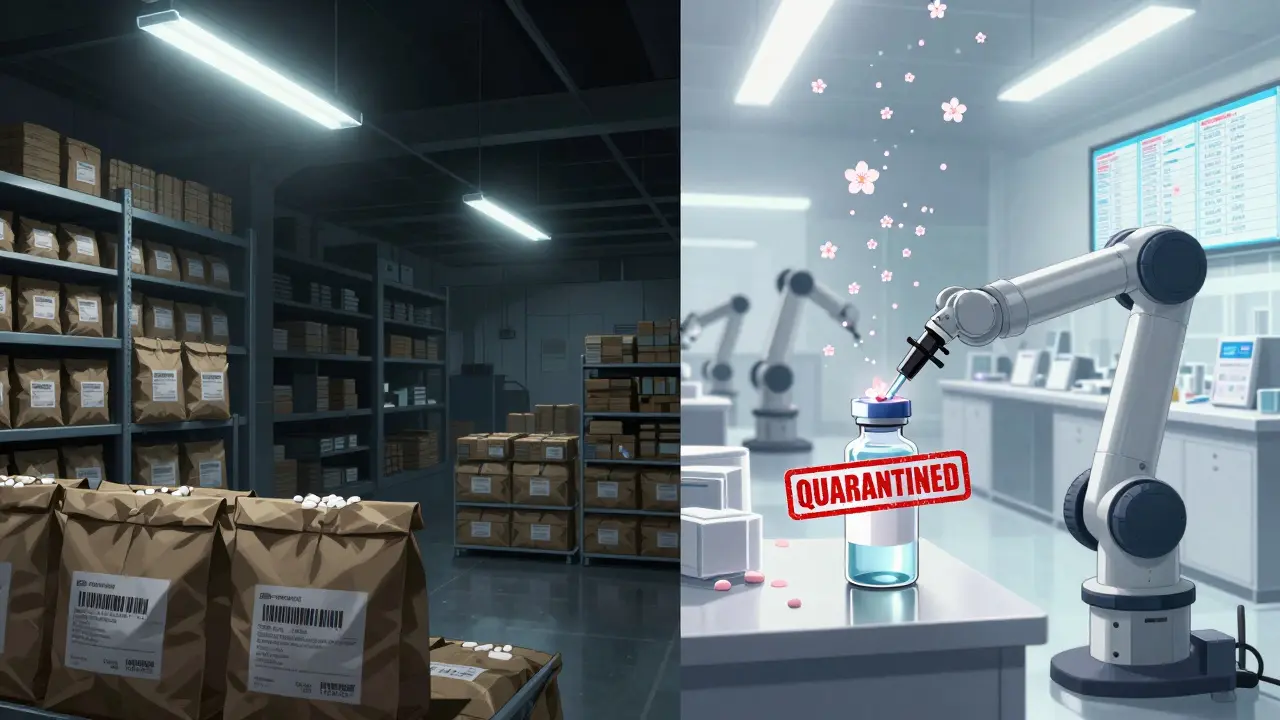
ASHP recommends suppliers have at least three consecutive years of documented compliance. One hospital pharmacy manager in Ohio told me: "Last year, we rejected a $120,000 order because the distributor couldn’t produce a complete transaction history. We had to quarantine the whole shipment. It cost us time and money - but it kept fake drugs off our shelves."
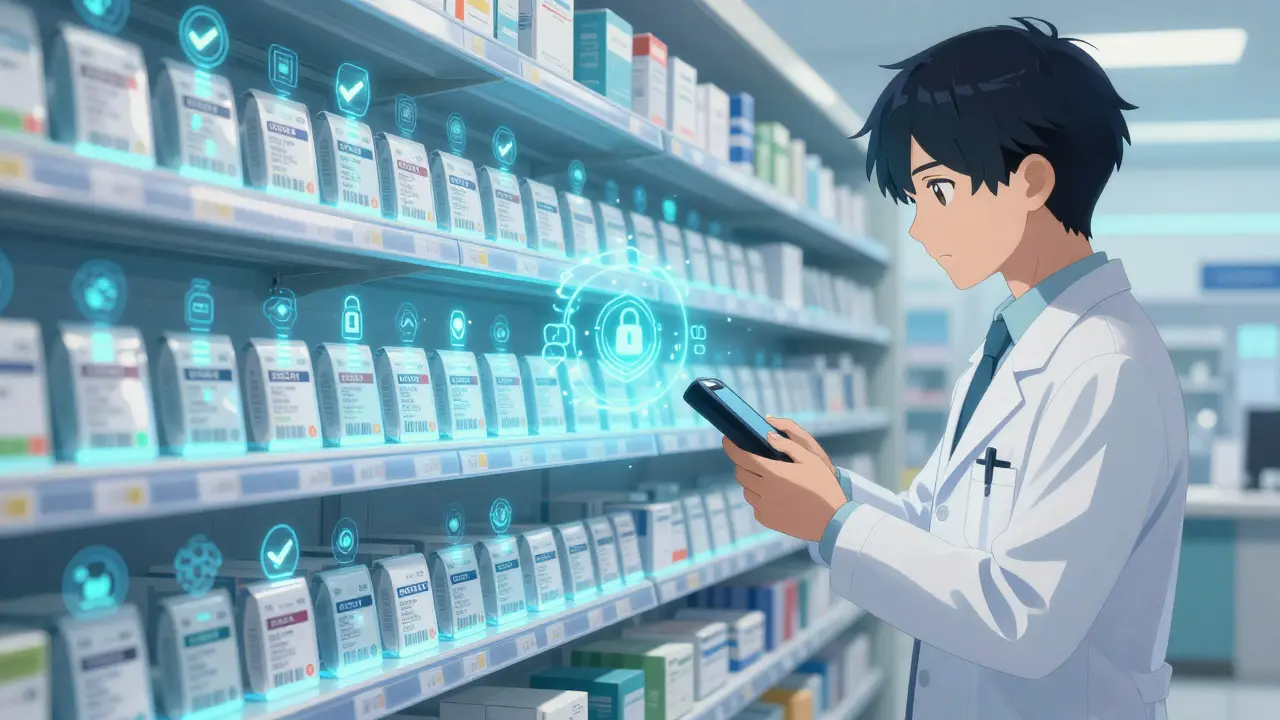
Verification isn’t just paperwork. It’s hands-on. Leading pharmacies scan every incoming package using barcode readers to match the National Drug Code (NDC), lot number, and expiration date against their purchase order. If the data doesn’t match? The drug is quarantined. No exceptions.
The Cost of Cutting Corners
Some pharmacies try to save money by sourcing drugs through "brown bag" or "white bag" channels - where patients bring in drugs from retail pharmacies or specialty distributors. But these methods are risky. ASHP found that 42% of health systems using these nontraditional routes had at least one medication error in 2022. Why? Because temperature control, handling, and traceability are lost outside the regulated supply chain.
Even international sourcing can be dangerous. While countries like Denmark use price incentives to drive 90% generic drug use, the U.S. system is fragmented. A pharmacy in Texas might buy a generic from India, while one in California buys the same drug from a U.S. wholesaler. The quality can vary wildly. The FDA has intercepted counterfeit drugs from India, China, and other countries that passed as legitimate - with ingredients like chalk, sawdust, or even rat poison.
Independent pharmacies feel the pressure hardest. The National Community Pharmacists Association reports that 65% of small pharmacies spend over 10% of their budget just on compliance - paperwork, audits, staff training. Chain pharmacies, with centralized systems and group purchasing organizations (GPOs), spend just 6%. That gap isn’t just financial - it’s a safety gap.
Technology Is Changing the Game
Blockchain, AI, and digital traceability platforms are no longer sci-fi. By 2026, 90% of pharmaceutical transactions are expected to use AI to detect anomalies in supply chain data. Systems like TraceLink and rfxcel now help pharmacies automatically match transaction records across the entire supply chain. If a wholesaler’s system drops a data packet, the pharmacy’s platform flags it immediately.
But technology alone won’t fix everything. Only 35% of U.S. health systems have fully integrated their electronic medical records (EMR), enterprise resource planning (ERP), and traceability platforms. The rest are still juggling spreadsheets, faxed documents, and manual checks. One pharmacy director in Florida said: "We still get calls from distributors saying, ‘We lost the transaction data - can you just accept it?’ No. We can’t. Not anymore."
Who’s Responsible?
Legitimate procurement isn’t just the job of the pharmacist. It requires leadership. By 2023, 92% of academic medical centers had appointed a Chief Pharmacy Officer (CPO) with direct oversight of sourcing. This person ensures policies are followed, staff are trained, and audits happen. Without that role, compliance slips.
Training matters too. New staff need 120 hours of specialized training just to understand DSCSA, 503A/503B compounding rules, and 340B program requirements. Certification through the Healthcare Supply Chain Association’s CHCSCP program takes six months. This isn’t a side task. It’s a core competency.

What Happens When Standards Fail?
In 2022, the FDA received 2,147 reports of suspicious pharmaceutical activity - a 28% jump from 2021. That’s not just fraud. It’s life-threatening. A single batch of fake antibiotics could cause widespread resistance. A counterfeit cancer drug could kill someone waiting for real treatment.
And the financial cost? The U.S. healthcare system spent 220% more on procurement compliance between 2015 and 2023. But that’s cheaper than the cost of a patient death. The FDA’s 2024 budget includes $150 million more for supply chain security - a 35% increase. That’s not charity. It’s damage control.
What Should Pharmacies Do Now?
Here’s what actually works:
- Use only suppliers with verified FDA registration and state licenses
- Scan every incoming drug package with barcode readers
- Keep electronic transaction records for at least six years
- Monitor temperature for refrigerated drugs - 2°C to 8°C is standard
- Require full DSCSA-compliant documentation before accepting any shipment
- Train staff annually on procurement standards
- Join a GPO with a dedicated compliance team - they do the heavy lifting
If your pharmacy doesn’t have a CPO, get one. If you still rely on faxed invoices, upgrade. If you’re not scanning every item? You’re gambling with lives.
Counterfeit drugs don’t come in with a sign saying "FAKE." They come in looking exactly like the real thing. That’s why the only defense is a system that checks, verifies, and documents - every time.
What is the DSCSA and why does it matter for pharmacies?
The Drug Supply Chain Security Act (DSCSA) is a U.S. federal law passed in 2013 that requires all pharmaceutical manufacturers, distributors, and dispensers to electronically trace prescription drugs from manufacturer to patient. It mandates unique product identifiers, transaction data, and verification systems to prevent counterfeit drugs from entering the supply chain. By November 2023, all trading partners had to comply. For pharmacies, this means scanning every package, keeping digital records, and rejecting shipments without complete transaction history. Failure to comply risks fines, legal liability, and most importantly - patient harm.
Can a pharmacy buy drugs from international suppliers?
Yes, but with extreme caution. The FDA allows imports only from manufacturers registered with the FDA and compliant with cGMP standards. Many international suppliers, especially for generics, are not properly vetted. In 2022, the FDA intercepted counterfeit drugs from India and China that were labeled as U.S.-approved. Pharmacies must verify FDA registration, request batch-level documentation, and scan every item. Buying from unverified international sources is one of the top ways counterfeit drugs enter U.S. pharmacies.
What are the risks of "brown bagging" or "white bagging"?
Brown bagging (patients bringing drugs from retail pharmacies) and white bagging (facilities obtaining drugs directly from specialty pharmacies) bypass the regulated supply chain. This means temperature control, tamper-proof packaging, and traceability are lost. ASHP reports that 42% of health systems using these methods had at least one medication error in 2022. Errors include wrong dosages, expired drugs, or contamination. These practices are not recommended for anything other than rare, temporary situations - and even then, only with strict protocols.
How do pharmacies verify a supplier’s compliance?
Pharmacies must request and verify: FDA registration number, state pharmacy license, proof of cGMP compliance, DSCSA transaction records for the past three years, and a history of recalls or FDA warning letters. Many use third-party verification services or group purchasing organizations (GPOs) that do this screening for them. ASHP recommends checking at least three years of compliance history. A supplier that can’t provide this documentation should be avoided.
Do small independent pharmacies struggle more with compliance?
Yes. The National Community Pharmacists Association found that 65% of independent pharmacies spend over 10% of their budget on compliance - compared to just 6% for chain pharmacies. They lack dedicated compliance staff, centralized systems, and negotiating power with suppliers. Many can’t afford the software needed for DSCSA data exchange. This puts them at higher risk of inadvertently sourcing counterfeit drugs. Joining a GPO or regional consortium is often the only practical way for small pharmacies to stay compliant.
What’s the role of barcode scanning in legitimate procurement?
Barcode scanning is mandatory under DSCSA. Every package must be scanned to verify the National Drug Code (NDC), lot number, and expiration date match the purchase order. This catches mismatches, expired products, and counterfeit items that look real but have fake barcodes. ASHP recommends 100% scanning of all incoming pharmaceuticals. Pharmacies that skip scanning have no way to prove they received legitimate drugs - and can’t defend themselves in an FDA audit.
How often should pharmacies audit their suppliers?
Pharmacies should conduct supplier audits at least quarterly. This includes reviewing licenses, checking for new FDA warning letters, confirming DSCSA data flow, and verifying temperature monitoring logs for refrigerated drugs. Annual audits aren’t enough - the supply chain changes too fast. One pharmacy in Minnesota found a supplier had been operating without a state license after a quarterly audit. They cut ties immediately.
What happens if a pharmacy receives a suspicious shipment?
If a shipment doesn’t match the transaction data, lacks proper documentation, or shows signs of tampering, it must be quarantined immediately. The pharmacy should notify the supplier and report the incident to the FDA through its MedWatch system. Do not dispense the product. Do not return it to the supplier without documentation. Keep it secured until the FDA or a regulatory authority provides guidance. Failure to quarantine suspicious drugs can result in legal liability if patients are harmed.
Is blockchain the future of drug traceability?
Yes. Blockchain technology creates an immutable, tamper-proof record of every transaction in the supply chain. By 2026, 90% of pharmaceutical transactions are expected to use blockchain or AI-enhanced traceability systems. These systems reduce data errors, prevent fraud, and allow instant verification of drug authenticity. Companies like TraceLink and rfxcel already offer blockchain-based platforms. While adoption is still growing, it’s the most reliable way to ensure every pill can be traced back to its origin.
What are the consequences of non-compliance with DSCSA?
Non-compliance can lead to FDA warnings, fines, loss of state licensing, and civil liability if counterfeit drugs reach patients. In 2022, the Health Resources and Services Administration (HRSA) identified $1.3 billion in non-compliant purchases under the 340B program alone. Pharmacies that ignore DSCSA aren’t just breaking rules - they’re putting lives at risk. Regulatory agencies are increasing enforcement. The cost of compliance is high. The cost of non-compliance is far higher.
shannon kozee
March 22, 2026 AT 09:32trudale hampton
March 24, 2026 AT 00:40Shaun Wakashige
March 25, 2026 AT 21:21Paul Cuccurullo
March 26, 2026 AT 10:24Solomon Kindie
March 28, 2026 AT 03:11Johny Prayogi
March 29, 2026 AT 20:01Nicole James
March 30, 2026 AT 17:37Casey Tenney
March 31, 2026 AT 19:07Sandy Wells
April 2, 2026 AT 12:09Bryan Woody
April 4, 2026 AT 01:21Chris Dwyer
April 5, 2026 AT 02:00Timothy Olcott
April 5, 2026 AT 13:03Desiree LaPointe
April 6, 2026 AT 03:34shannon kozee
April 6, 2026 AT 18:59