

Placebo Effect with Generics: Why Perception Shapes Medication Outcomes
 Dec, 15 2025
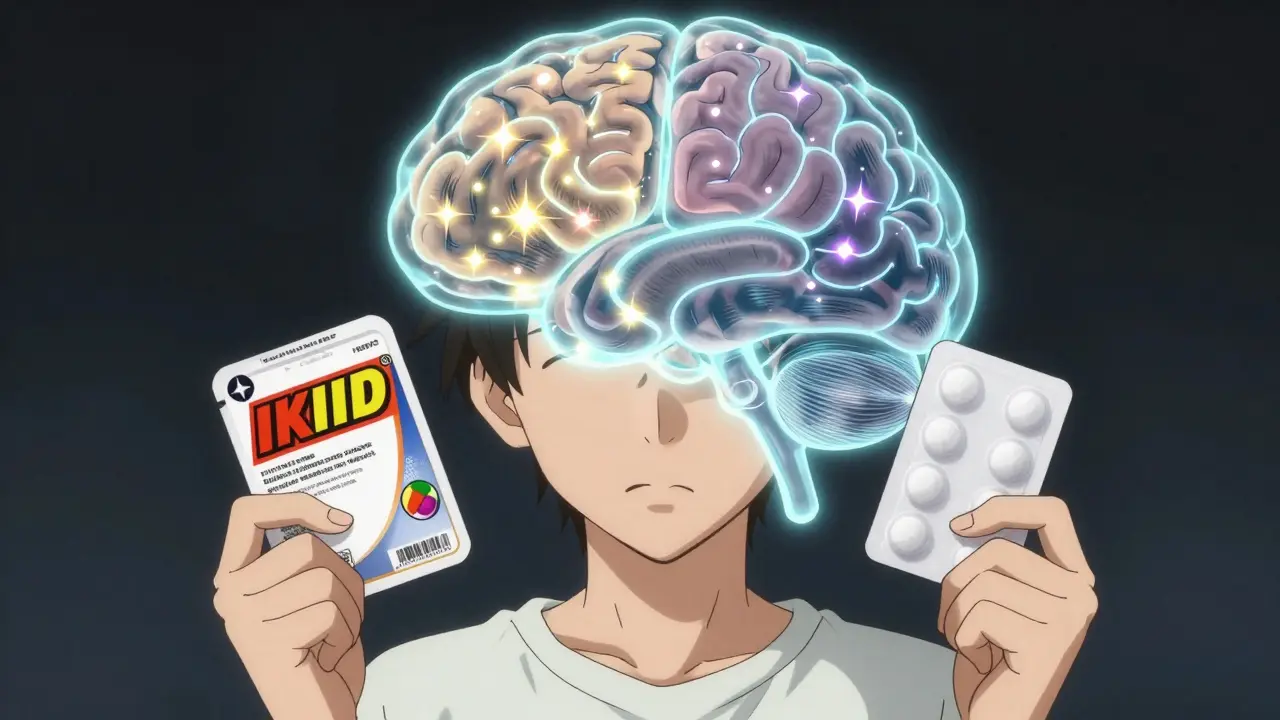
When you pick up a pill bottle and see the word generic on the label, do you feel less confident it will work? You’re not alone. Millions of people around the world believe brand-name drugs are stronger, safer, or more effective-even when the active ingredient is identical. This isn’t just a myth. It’s a measurable, brain-based phenomenon called the placebo effect-and it’s happening every time someone takes a generic medication.
Why Your Brain Believes a Brand Is Better
Your brain doesn’t judge medicine by its chemical formula. It judges it by what it sees: the color of the pill, the logo on the box, the price tag, even the way your doctor says, “This is the generic version.” In 2016, researchers gave 87 people placebo pills labeled as either “Nurofen” or “Generic Ibuprofen.” Both groups got exactly the same sugar tablet. But the group that thought they were taking Nurofen reported pain relief just as strong as if they’d taken real ibuprofen. The other group? Their pain barely improved. The difference? Perception. This isn’t about being gullible. It’s about expectation. When you’ve used a brand-name drug before and it worked, your brain learns to associate that packaging with relief. That association triggers real biological changes-dopamine release, reduced activity in pain-processing areas of the brain, even changes in heart rate and blood pressure. A 2017 fMRI study showed that when people believed they were taking a brand-name aspirin, their dorsolateral prefrontal cortex lit up like a Christmas tree. That’s the part of the brain that handles expectation and reward. The same pill labeled “generic”? Barely a flicker.The Nocebo Effect: When Belief Makes Things Worse
Expectation doesn’t just boost results-it can wreck them too. This is called the nocebo effect. In one study, patients taking a placebo (a sugar pill) for statins reported muscle pain at rates as high as 26%. Not because the pill had any muscle-damaging ingredients. Because they’d been told statins cause muscle pain. So they watched for it. Felt every twinge. And blamed the pill. Even though it was just a placebo. The same thing happens with generics. When patients are told, “This is the cheaper version,” their brains start looking for reasons it won’t work. In one experiment, people given identical creams were told one cost $200 and the other $2. The “expensive” cream reduced pain. The “cheap” one? It made pain worse-even though both were plain moisturizer. Spinal cord scans confirmed it: their bodies were actually processing more pain. The label didn’t just change their mind. It changed their nerves.Real-World Impact: Adherence, Cost, and Health Outcomes
This isn’t just academic. It’s costing lives and money. In the U.S., 90% of prescriptions are filled with generics. But 27% more people stop taking their generic antidepressants within 30 days than those on brand-name versions-even though blood tests show identical drug levels. Why? Because they feel like it’s “not working.” That drop in adherence has real consequences. People with high blood pressure who stop their meds because they think the generic is weaker are at higher risk of stroke. Diabetics who skip insulin because they believe the generic isn’t “as good” risk nerve damage and kidney failure. A 2021 Johns Hopkins study estimated that perception gaps around generics cost the U.S. healthcare system $28 billion a year in extra doctor visits, ER trips, and hospitalizations. Meanwhile, the global generic drug market hit $467 billion in 2023. But despite being 80-90% cheaper than brand-name drugs, they only make up 23% of total drug spending. Why? Because people aren’t using them as much as they should. And when they do, they often don’t stick with them.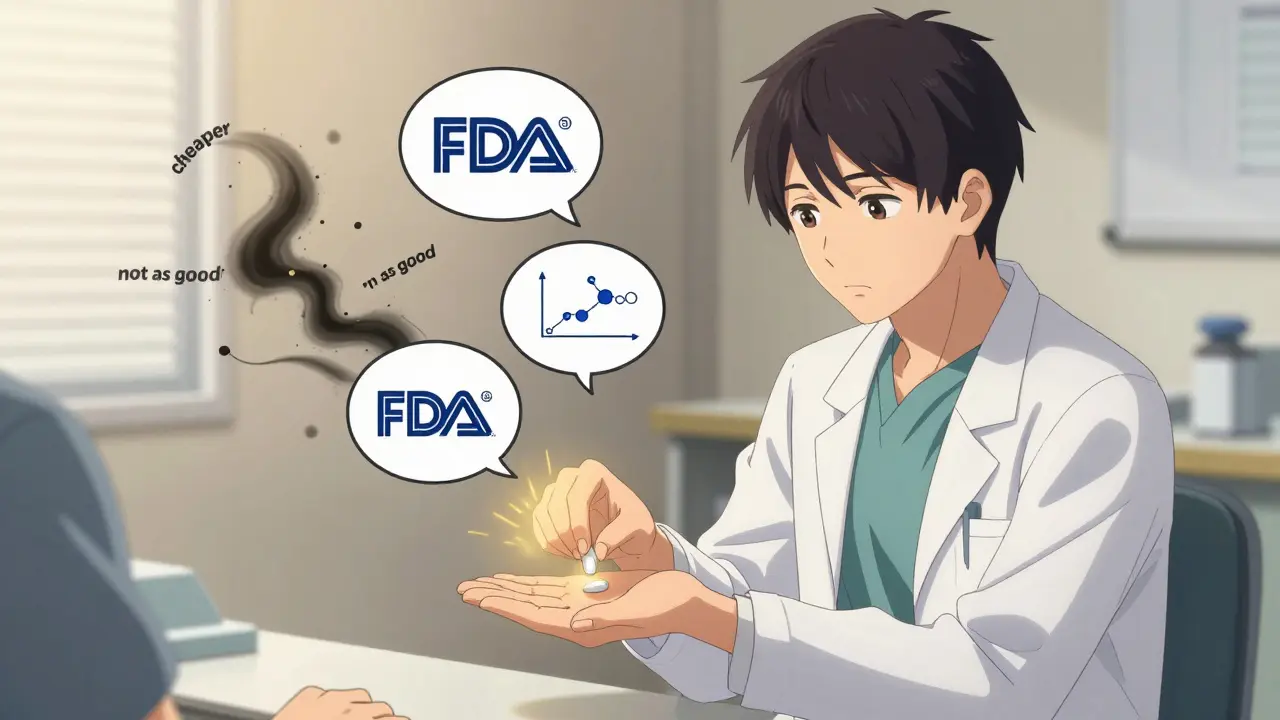
What Actually Works: Fixing the Perception Problem
You can’t fix perception by slapping a fancy logo on a generic pill. One study tried giving generics sleek packaging, brighter colors, and premium-looking labels. It made no difference. Another tried telling patients, “This is the same as the brand.” That helped-but only if the doctor said it with confidence and detail. The most effective fix? Education that’s specific, clear, and repeated. In one 2020 study, doctors who spent just two extra minutes explaining that generics must contain the same active ingredient within 8-13% of the brand-name version saw patient adherence jump by 20%. Patients didn’t need a chemistry lesson. They needed to hear: “The FDA requires this to be just as effective. Thousands of people take it every day. It’s not a downgrade-it’s the same medicine, just cheaper.” Even small wording changes matter. Saying “This is a generic version of Lipitor” works better than “This is just the generic.” Saying “This is FDA-approved to work exactly like the brand” increases patient confidence by 34%, according to a BMJ study. And never say, “It’s cheaper.” That triggers the nocebo effect. Patients who were told a pill was inexpensive reported 40% more side effects-even when it was identical to the expensive version.Who’s Most Affected-and Why
Not everyone reacts the same way. About 30% of people are highly suggestible. They’re the ones who feel the placebo effect most strongly. They’re also the ones most likely to stop a generic because they “feel” it’s not working. This isn’t about intelligence or education. It’s about how your brain processes expectation and anxiety. Certain conditions are more vulnerable to this effect. Pain, depression, anxiety, and irritable bowel syndrome all have high placebo response rates-anywhere from 30% to 40% of improvement comes from belief alone. That’s why people on generic antidepressants often report feeling “nothing changed.” It’s not the drug. It’s the doubt. Cardiovascular meds? Much less affected. People are more likely to stick with generic blood pressure pills because the consequences of skipping them are obvious: dizziness, headaches, chest pain. The body gives feedback. With depression? No visible signs. So the mind fills in the blanks-and often, it fills them with fear.
What the Experts Are Saying
Dr. Ted Kaptchuk at Harvard says, “In psychiatric disorders with large placebo responses, lower treatment cost may diminish treatment gains.” He’s not saying generics don’t work. He’s saying if you make patients feel like they’re getting second-rate medicine, their brains will respond accordingly. Dr. Ulrike Bingel, who studies nocebo effects, puts it bluntly: “Patients don’t just imagine side effects. Their nervous systems actually amplify them.” And Dr. Charlotte Blease, who tested enhanced generic packaging, found something surprising: plain, simple packaging sometimes worked better than fancy branding. Why? Because it reduced anxiety. No one was expecting perfection. No one was disappointed.What You Can Do
If you’re taking a generic:- Don’t assume it’s weaker. The FDA requires it to be bioequivalent. That means it delivers the same amount of medicine into your bloodstream as the brand.
- If you feel it’s not working, ask your doctor to check your blood levels. In most cases, they’ll show the same concentration as the brand.
- Write down your symptoms before and after switching. Often, the change is in your mind-not your body.
- Don’t say “just a generic.” Say “this is the same medicine, approved by the FDA to work just like the brand.”
- Explain why generics are cheaper: no marketing, no patent, same science.
- Use visual aids. Show them the FDA’s official statement on generic equivalence.
- Don’t mention price unless they ask. And if they do, say, “It’s the same medicine, just without the brand name.”
The Bigger Picture
The placebo effect with generics isn’t about tricking patients. It’s about respecting how the human brain works. Medicine isn’t just chemistry. It’s psychology. It’s trust. It’s expectation. And when we ignore that, we’re not just wasting money-we’re undermining treatment. The solution isn’t to make generics look like brands. It’s to make patients believe in them. And that starts with honest, clear, confident communication.Generic drugs save lives. But only if people take them. And they won’t take them if they think they’re not good enough.
Are generic drugs really as effective as brand-name drugs?
Yes. The FDA requires generic drugs to contain the same active ingredient, in the same strength, and deliver the same amount into the bloodstream as the brand-name version. Bioequivalence must be within 8-13%-a range proven to be therapeutically equivalent. Thousands of studies confirm this. The only differences are inactive ingredients like color, shape, or filler, which don’t affect how the medicine works.
Why do some people say their generic medication doesn’t work?
It’s often not the drug-it’s the belief. Studies show that when people know they’re taking a generic, their brains expect less. This lowers the placebo effect, which can be 30-40% of the total benefit in conditions like depression or chronic pain. Some patients also notice minor differences in pill size or color, which triggers doubt. But blood tests consistently show identical drug levels.
Can the nocebo effect make side effects worse with generics?
Absolutely. In statin trials, up to 26% of people taking a placebo reported muscle pain because they believed statins caused it. The same happens with generics. If you’re told, “This is cheaper,” your brain starts scanning for problems. You notice normal twinges and blame the pill. Brain scans confirm: the nocebo effect triggers real physiological changes, not just complaints.
Does packaging or price affect how well a generic works?
Yes, but not in the way you might think. Studies show that identical pills labeled as expensive cause more pain and side effects than the same pills labeled as cheap. Brand-name labeling increases placebo response by 30-40%. But fancy generic packaging doesn’t help-unless it includes clear messaging like “FDA-approved equivalent to [Brand].” Price references and vague branding can backfire.
How can I trust a generic drug if it looks different?
Different looks don’t mean different results. Generic pills change shape or color to avoid trademark issues. That’s all. The active ingredient is identical. The FDA tests every batch. If you’re unsure, ask your pharmacist to show you the FDA’s generic drug approval page. You can also check the National Library of Medicine’s DailyMed database to compare active ingredients.
Should I avoid generics to get better results?
No. There’s no clinical evidence that brand-name drugs work better than generics for any condition. The only reason to choose a brand is if you have a rare allergy to an inactive ingredient-which is extremely uncommon. For 99% of people, generics are just as safe and effective. Choosing a brand only because you think it’s better may cost you hundreds of dollars a year-and reduce your chances of sticking with treatment.
Rulich Pretorius
December 15, 2025 AT 22:40The placebo effect with generics isn't just about branding-it's about the deep-seated cultural trust we assign to symbols. A pill with a logo isn't more potent; it's more *meaningful*. Our brains evolved to read signals, not chemical structures. When we see a familiar name, we're not fooled-we're reminded of past relief, of doctors' reassurances, of safety. The real tragedy is when we mistake this biological response for weakness in the drug itself.
Dwayne hiers
December 16, 2025 AT 05:50From a pharmacokinetic standpoint, bioequivalence thresholds (8-13% AUC/Cmax) are clinically insignificant for the vast majority of therapeutics. The FDA's ANDA pathway requires rigorous in vivo and in vitro testing to ensure therapeutic equivalence. The perception gap is a behavioral economics problem, not a pharmacological one. Patients are conflating marketing capital with pharmacodynamic efficacy-a cognitive bias well-documented in decision theory literature.
Sarthak Jain
December 16, 2025 AT 08:40bro i switched to generic omeprazole last year and thought it wasnt working at first... then i realized i was just stressed and noticing every little burp. same pill, same dose. my doc showed me the FDA page and i felt dumb. but also kinda relieved? like wow my brain tricked me. thanks for writing this, man.
Edward Stevens
December 16, 2025 AT 21:23So let me get this straight. We're spending billions on healthcare because people are too emotionally attached to the color of their pills? Next you'll tell me the placebo effect is why my iPhone 14 feels faster than my iPhone 13 even though they have the same chip.
Daniel Thompson
December 18, 2025 AT 16:01As a physician who has spent over a decade in clinical practice, I can confirm that patient adherence to generic medications is directly correlated with the tone, confidence, and specificity of the prescriber’s explanation. The mere act of saying "this is the same" without elaboration is insufficient. Patients require structured, repeated reinforcement. I use printed handouts from the FDA’s website. I show them the ANDA number. I do not say "cheaper." I say "equivalent." This is not optional. It is standard of care.
Alexis Wright
December 18, 2025 AT 18:20Let’s be brutally honest here: the pharmaceutical industry doesn’t want you to know that 90% of prescriptions are generics because they’re making less money. They’ve spent decades conditioning you to believe that brand = quality. They’ve funded studies, bought ad time, paid doctors to whisper "stick with the brand." The FDA? A puppet. The nocebo effect? A brilliant distraction. The real question isn’t whether generics work-it’s why we let corporations control our perception of health. Wake up.
Rich Robertson
December 20, 2025 AT 01:17In India, where generics are the norm, people don’t question them. Why? Because they’ve never had the luxury of brand-name drugs. No marketing. No glossy ads. Just medicine. And guess what? They get better. It’s not about the pill-it’s about the context. When you grow up with a system where everything is affordable and accessible, you stop attaching status to medicine. Maybe the problem isn’t the patient. Maybe it’s the culture that sells pills like status symbols.
Thomas Anderson
December 20, 2025 AT 11:53I used to think generics were weak too. Then I switched my blood pressure med and didn’t feel any different. My BP stayed the same. My doctor said, "You’re taking the same stuff, just without the fancy name." I stopped overthinking it. Now I save $50 a month. Best decision ever.
Tim Bartik
December 22, 2025 AT 02:44Ohhh so now we’re blaming the patient for being too dumb to realize their brain is lying to them? Meanwhile, the same corporations that sell you the brand-name drug for $100 are the ones making the generic for $2. And you want us to trust them? Nah. This ain’t psychology-it’s corporate fraud wrapped in a lab coat. I’m sticking with the brand. Screw your "equivalent" nonsense.
Natalie Koeber
December 23, 2025 AT 01:47Have you ever heard of the MK-Ultra experiments? They used placebos to manipulate perception. Now they’re doing it with generics. Think about it-why would the government allow cheap generics if they weren’t trying to control our minds? The FDA doesn’t test for psychological impact. They only test chemicals. That’s a loophole. They know what’s happening. They just don’t care.
Wade Mercer
December 23, 2025 AT 19:36It’s not about money. It’s about responsibility. If you’re willing to risk your health because you’re too cheap to pay for a brand-name drug, you’re not being frugal-you’re being reckless. People die because they skip meds they think are "just generics." That’s not wisdom. That’s negligence.
Jonny Moran
December 24, 2025 AT 23:54Hey, if you’re worried your generic isn’t working, talk to your pharmacist. They see this every day. Most of them will pull up the FDA’s bioequivalence data on the spot. I’ve had pharmacists show me side-by-side lab reports. It’s the same. You’re not getting second-best. You’re getting the same medicine, just without the ad budget. That’s not a compromise-it’s a win.
Sinéad Griffin
December 26, 2025 AT 01:32OMG YES 😭 I switched to generic Zoloft and felt like a failure for a week… then I realized I was just anxious about the switch. I wrote down my mood daily and guess what? No difference. I’m crying happy tears now. Also, I bought a cute pill organizer 🎀 and it made me feel like I’m taking care of myself. Maybe the placebo effect works both ways? 🫶
jeremy carroll
December 27, 2025 AT 05:34man i used to hate generics til i got my first prescription for them. i was scared. but my grandma told me she’s been on generics for 20 years and still hikes 5 miles every weekend. she said "if it was bad, they wouldn’t let us use it." that stuck with me. now i tell everyone. it’s the same stuff. just cheaper. no magic, no trick. just science.