

Protein-Rich Foods and Medications: How Diet Affects Absorption and Effectiveness
 Dec, 4 2025
Protein Medication Interaction Calculator
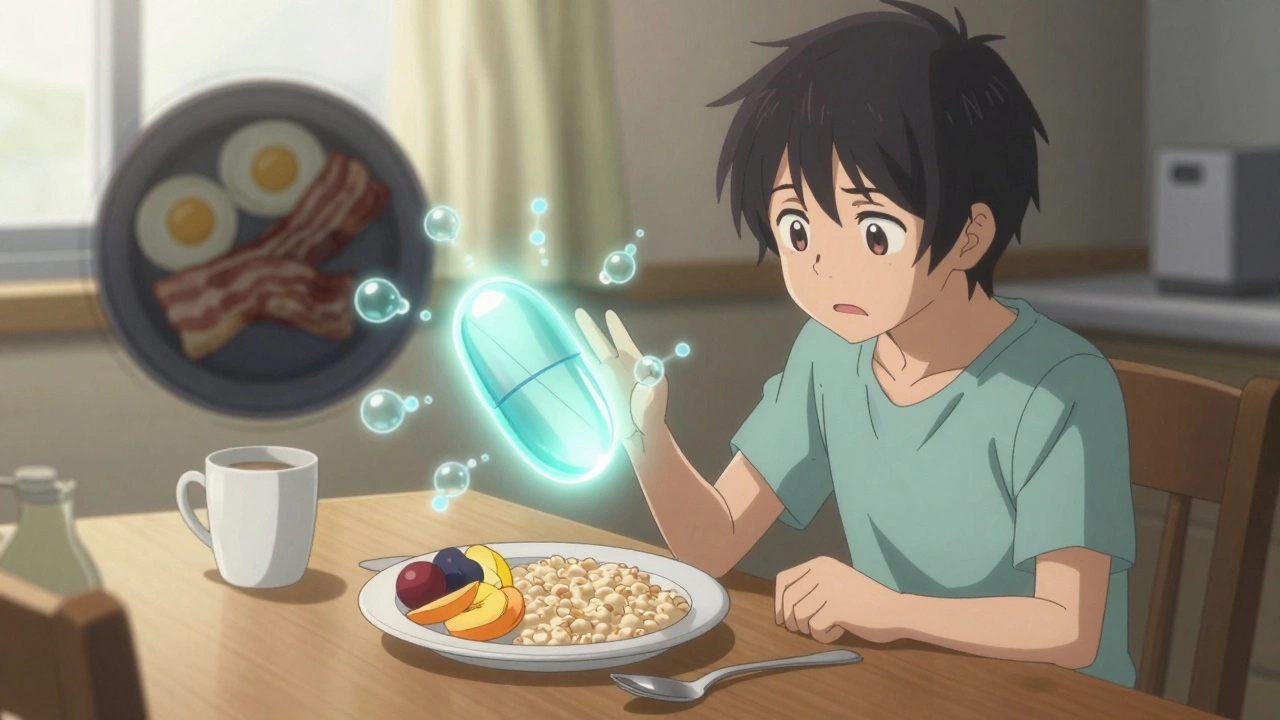
Many people don’t realize that what they eat for breakfast can make their medication work better-or worse. If you’re taking levodopa for Parkinson’s, or even certain antibiotics, your protein intake might be quietly sabotaging your treatment. It’s not about avoiding protein. It’s about timing it right.
How Protein Blocks Medication Absorption
Protein-rich meals don’t just fill you up-they change how your body handles drugs. When you eat meat, eggs, beans, or dairy, your bloodstream gets flooded with amino acids. These are the building blocks of protein. But here’s the catch: the same transporters in your gut and blood-brain barrier that carry amino acids also carry certain medications. Levodopa, used to treat Parkinson’s disease, is one of them. It competes directly with amino acids like leucine, isoleucine, and valine. When there’s a lot of protein around, levodopa gets pushed aside. Studies show this can cut its absorption by 30% to 50% in most patients.This isn’t just theory. The Michael J. Fox Foundation tracked over 1,200 Parkinson’s patients and found that those who ate high-protein meals with their levodopa had up to 45% less drug reach the brain. The result? More tremors, stiffness, and ‘off’ periods-times when the medication just doesn’t work.
The problem isn’t limited to Parkinson’s. Certain antibiotics, like penicillins, also rely on these transporters. A 2024 Australian Prescriber review found protein meals reduced their absorption by 15% to 20%. Even some epilepsy drugs, like gabapentin, show similar interference. The key is the Biopharmaceutics Classification System (BCS). Drugs in Class III-high solubility, low permeability-are most at risk. Levodopa is a textbook example. It dissolves easily but struggles to cross membranes. Protein makes that struggle worse.
Why Protein Is Different from Fat or Fiber
You’ve probably heard that fatty meals slow down drug absorption. That’s true. But protein does something more complex. While fat just delays gastric emptying-making drugs take longer to enter your system-protein actively blocks specific transporters. That’s why two people taking the same pill, one with a fatty burger and one with a chicken salad, can have wildly different results. The burger might delay the drug. The chicken salad might block it entirely.Fiber also interferes, but differently. High-fiber foods like oats or bran can bind to statins and reduce their absorption by 15% to 20%. But fiber doesn’t compete for transporters. It just traps the drug in the gut. Protein, on the other hand, is like a traffic jam at a single checkpoint. Only one thing gets through at a time-and amino acids usually win.
The Protein Redistribution Strategy
The most effective fix isn’t cutting protein. It’s moving it. The protein redistribution diet means eating most of your daily protein at dinner, not breakfast or lunch. This gives you a protein-free window during the day when you take your medication. Studies from the Parkinson’s Foundation show this simple shift can add 2.5 hours of ‘on’ time per day-meaning better movement, fewer falls, and more independence.Here’s how it works in practice:
- Breakfast: Low-protein options like oatmeal, fruit, toast (under 5g protein)
- Lunch: Salad, rice, vegetables, small portions of lean protein (10-15g)
- Dinner: Main protein source-chicken, fish, tofu, beans (50-70g)
One Reddit user, u/ParkinsonsWarrior, tracked his symptoms with a wearable sensor and found his ‘off’ time dropped from over five hours to just over two after switching to this plan. He didn’t change his meds. He just changed when he ate his steak.
But this isn’t easy. Most people eat protein at breakfast-eggs, yogurt, bacon. Shifting that requires planning. Registered dietitians recommend 3 to 4 sessions to teach patients how to identify hidden protein in foods. A ‘healthy’ granola bar can have 7g of protein. A protein shake? Up to 30g. Even some breads pack 5g per slice. You need to read labels.
What About Low-Protein Diets?
Some patients try cutting protein altogether. It sounds logical. But it backfires. A 2024 study in the Journal of Parkinson’s Disease found that 23% of patients on strict low-protein diets developed muscle wasting within 18 months. Protein isn’t just for meds-it’s for your muscles, your immune system, your skin, your organs. You can’t remove it without consequences.Instead of reducing total protein, focus on redistribution. The Parkinson’s Foundation recommends 0.8 to 1.0 grams of protein per kilogram of body weight daily. For a 70kg person, that’s 56 to 70g total. That’s not a low amount. It’s just spread differently.
When to Take Your Medication
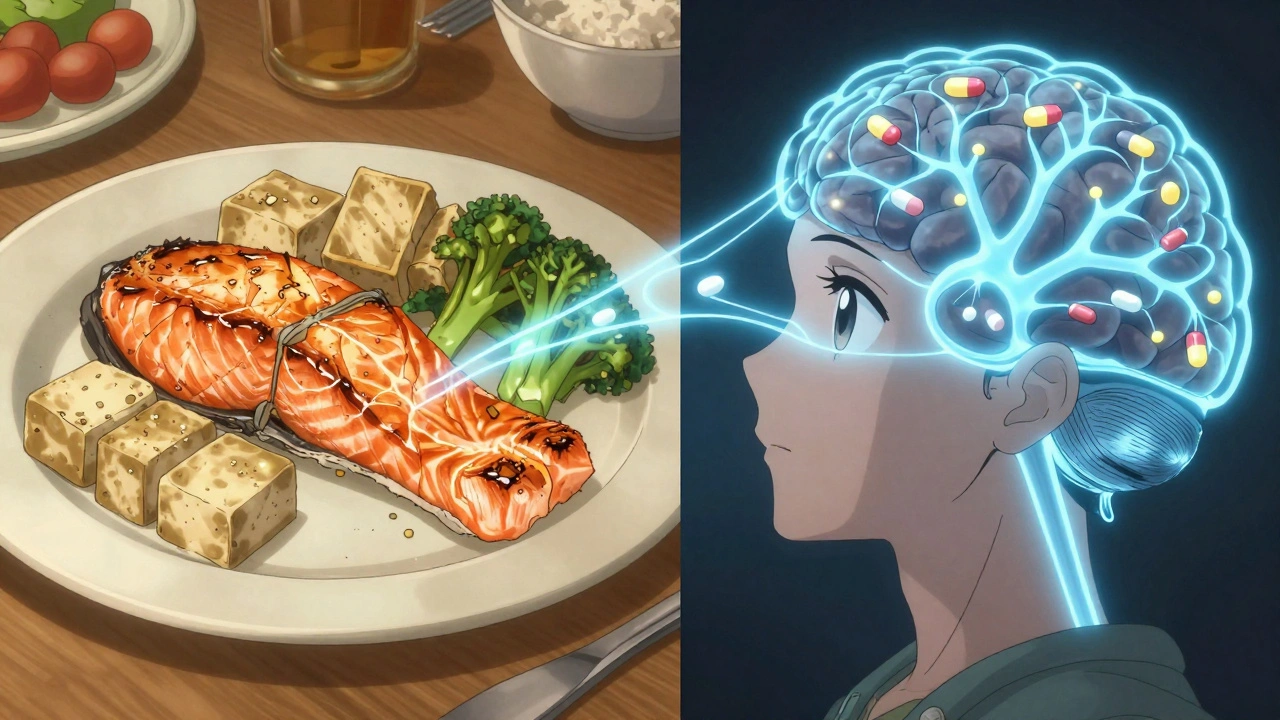
Timing matters more than you think. If you’re on levodopa or similar drugs, take it 30 to 60 minutes before eating. That gives it a head start. Your stomach empties faster on an empty stomach, and the drug gets absorbed before the amino acid flood hits.Some people can’t take meds on an empty stomach because of nausea. That’s common. The American Academy of Neurology says it’s okay to have a low-protein snack-like a banana, apple, or rice cake-with your pill. But avoid anything with cheese, yogurt, nuts, or protein powder. Even a small amount can interfere.
Apps like ProteinTracker for PD, developed by Johns Hopkins, help patients log meals and medication times. Users report 40% fewer timing errors. That’s huge when you’re trying to manage a chronic condition.
What Other Medications Are Affected?
Levodopa is the most studied, but it’s not alone:- Carbidopa/levodopa combinations: Bioavailability drops 25% with a 50g protein meal.
- Penicillin and amoxicillin: Absorption reduced by 15-20% with high-protein meals.
- Gabapentin: Competes for the same transporters; protein may reduce brain uptake.
- Carbidopa: Less affected than levodopa, but still impacted in combination.
- Some antidepressants and antivirals: Emerging evidence suggests possible interference.
Not all drugs are affected. BCS Class I drugs-like ibuprofen or atorvastatin-have high permeability and aren’t blocked by amino acids. But if your drug is known to be affected, the label should say so. Sadly, it often doesn’t. The European Medicines Agency found that 61% of medication guides don’t mention protein interactions, even when proven.
Why Doctors Don’t Talk About This
Here’s the uncomfortable truth: most doctors don’t ask about diet. A 2023 survey by the American Society for Nutrition found that 68% of clinicians never discuss protein timing with patients starting levodopa. Why? Time. Training. Lack of awareness. It’s not negligence-it’s a gap in medical education.Dr. Alberto Espay, a leading neurologist, calls protein redistribution ‘underutilized despite strong evidence.’ Dr. Robert Venuto says protein interactions cause 12-15% of therapeutic failures in Parkinson’s-but only 37% of neurologists check dietary habits. That’s a massive blind spot.
But change is coming. Since January 2025, the European Medicines Agency requires all CNS drugs to include protein-specific instructions on labels. The FDA is working on a ‘Protein Interaction Score’-a warning label system similar to alcohol warnings. Pharmaceutical companies now include food-effect studies in 92% of Phase III trials, up from 67% in 2020.

Real-Life Challenges
Life doesn’t always fit into a perfect schedule. Dining out? Problematic for 63% of patients. A restaurant salad might come with grilled chicken, cheese, and croutons soaked in protein-rich dressing. A ‘healthy’ smoothie? Often packed with whey protein powder.One patient, u/TremblingHands, tried a low-protein diet and lost muscle. She switched to Duopa, a gel delivered directly into the intestine, bypassing the stomach entirely. She regained 8 pounds in three months. Duopa isn’t for everyone-it’s expensive and requires a feeding tube-but it’s proof that bypassing the gut can solve the problem.
Emerging research is even more promising. A March 2025 study in Nature Medicine found that certain probiotics reduced amino acid competition for drug transporters by 25%. Time-restricted eating-eating all protein between noon and 8pm-improved levodopa efficacy by 32% in a 2025 Michael J. Fox Foundation trial. These aren’t magic bullets, but they’re real options.
What You Can Do Today
You don’t need a PhD to manage this. Start simple:- Check your meds. Look up if your drug is affected by protein. Ask your pharmacist.
- Take your pill 30-60 minutes before meals, especially breakfast and lunch.
- Track your protein intake for a week. Use an app or write it down.
- Shift your main protein meal to dinner.
- Choose low-protein snacks if you need something with your pill.
- Ask for a referral to a dietitian who specializes in Parkinson’s or medication interactions.
It’s not about eating less protein. It’s about eating it at the right time. For many, this one change means more control, less stiffness, and more days where the medication actually works.
Can I still eat meat if I’m on levodopa?
Yes, but timing matters. Eat meat at dinner, not with your morning or afternoon levodopa dose. Most people can get by with 50-70g of protein per day-just spread it out. Eating protein at night helps your meds work better during the day.
Does protein affect all medications?
No. Only certain drugs that use the same transporters as amino acids are affected. Levodopa, some antibiotics like penicillin, and a few epilepsy drugs are the main ones. Most painkillers, blood pressure meds, and cholesterol drugs aren’t impacted. Always check with your pharmacist or doctor.
What if I get nauseous when I take my pill on an empty stomach?
Have a small, low-protein snack like a banana, apple, rice cake, or plain toast. Avoid yogurt, nuts, cheese, or protein bars. These can still interfere. If nausea persists, talk to your doctor-there are other options like extended-release forms or different delivery methods.
Are there apps to help track protein and medication timing?
Yes. Apps like ProteinTracker for PD, developed by Johns Hopkins, let you log meals, meds, and symptoms. Users report 40% fewer timing mistakes. Some even sync with wearables to show how protein affects your movement. They’re free or low-cost and available on iOS and Android.
Should I go on a low-protein diet to make my meds work better?
No. Cutting protein too much can cause muscle loss, fatigue, and weakened immunity. Studies show 23% of Parkinson’s patients on strict low-protein diets developed muscle wasting within 18 months. The better approach is redistribution-eating most protein at night. You get the benefits without the risks.
Is this a problem only for Parkinson’s patients?
No. While levodopa is the most studied, other drugs like certain antibiotics, gabapentin, and some antidepressants can also be affected. If your medication has a food interaction warning, check if protein is mentioned. If not, ask your pharmacist-it’s worth confirming.
Juliet Morgan
December 5, 2025 AT 20:27i had no idea protein could mess with my meds like this. i’ve been taking my levodopa with my breakfast yogurt and wondering why i’m so stiff by noon. switched to oatmeal and fruit now-huge difference. my tremors are way less. thank you for this.
Harry Nguyen
December 7, 2025 AT 12:31So let me get this straight-you’re telling me the entire medical establishment has been lying to us about protein for decades? Of course. Because why would the FDA care about what you eat for breakfast when they’re busy selling us antidepressants and electric cars? This is just another Big Pharma distraction to sell more expensive gel tubes.
Stephanie Fiero
December 8, 2025 AT 05:33OMG YES. I’ve been doing the protein redistribution thing for 6 months and my husband says I’m ‘lighter on my feet’-which is a huge deal since I used to fall every other day. I used to eat 3 eggs and bacon every morning like a ‘healthy American’-turns out that’s poison with levodopa. Now I eat berries and toast. Life-changing. Also, read labels like your life depends on it-because it does.
Laura Saye
December 10, 2025 AT 03:02The biopharmaceutics classification system reveals a deeper truth: we treat pharmacology as a binary system-drug or no drug-when in reality, the body is a dynamic ecosystem of competing transporters, gut flora, and circadian rhythms. Protein redistribution isn’t just a dietary hack; it’s an epistemological recalibration of how we conceive of therapeutic efficacy. The body doesn’t metabolize drugs in isolation-it negotiates them. And when we ignore that negotiation, we don’t fail patients-we fail physiology.
Carole Nkosi
December 11, 2025 AT 13:16This is what happens when Western medicine ignores ancient wisdom. In my village in South Africa, we eat meat at sunset. We’ve known for generations that food timing affects healing. Now scientists are ‘discovering’ it? Pathetic. And why is no one talking about glyphosate in soy protein? That’s the real villain here.
Stephanie Bodde
December 12, 2025 AT 11:36THIS. I cried reading this. My mom has PD and I’ve been stressing over her meals for years. Now I know what to do. I made her a little chart with low-protein breakfast ideas 🥺 I’m printing it out and taping it to the fridge. Thank you for making this so clear.
Philip Kristy Wijaya
December 14, 2025 AT 09:50One must consider the systemic implications of dietary interference with pharmacokinetics within the context of neoliberal healthcare systems wherein patient education is outsourced to Reddit threads and mobile applications developed by academic institutions with insufficient funding. The fact that this information is not mandated on pharmaceutical labeling by regulatory bodies constitutes a gross dereliction of duty and a violation of the patient’s right to informed consent
Mellissa Landrum
December 16, 2025 AT 01:12They don’t want you to know this because Big Pharma makes more money selling you Duopa than telling you to eat your steak at night. Also, the CDC is hiding the truth-protein interferes because the vaccines are in the meat. You think they’d let you fix your meds with a diet? No way. They need you dependent. Wake up.
Mark Curry
December 16, 2025 AT 20:22My dad’s been on this plan for a year. He’s walking without his cane now. Just moved his chicken dinner to 7pm and took his pill at 6:30. No magic. Just timing. He says it’s the first time in 5 years he’s felt like himself before bedtime.
an mo
December 17, 2025 AT 18:29Let’s quantify this. 30-50% absorption drop? That’s not a ‘reduction’-that’s a clinical failure. And yet we’re giving patients a ‘dietary adjustment’ instead of developing drug formulations that bypass the gut entirely? This is a systemic failure of pharmaceutical R&D. The fact that we’re still relying on timing meals instead of engineering transport-resistant analogs is a scandal. We’re treating symptoms of a broken system with lifestyle hacks. It’s embarrassing.