

Storing Medications Away from Children: Safety Best Practices
 Dec, 29 2025
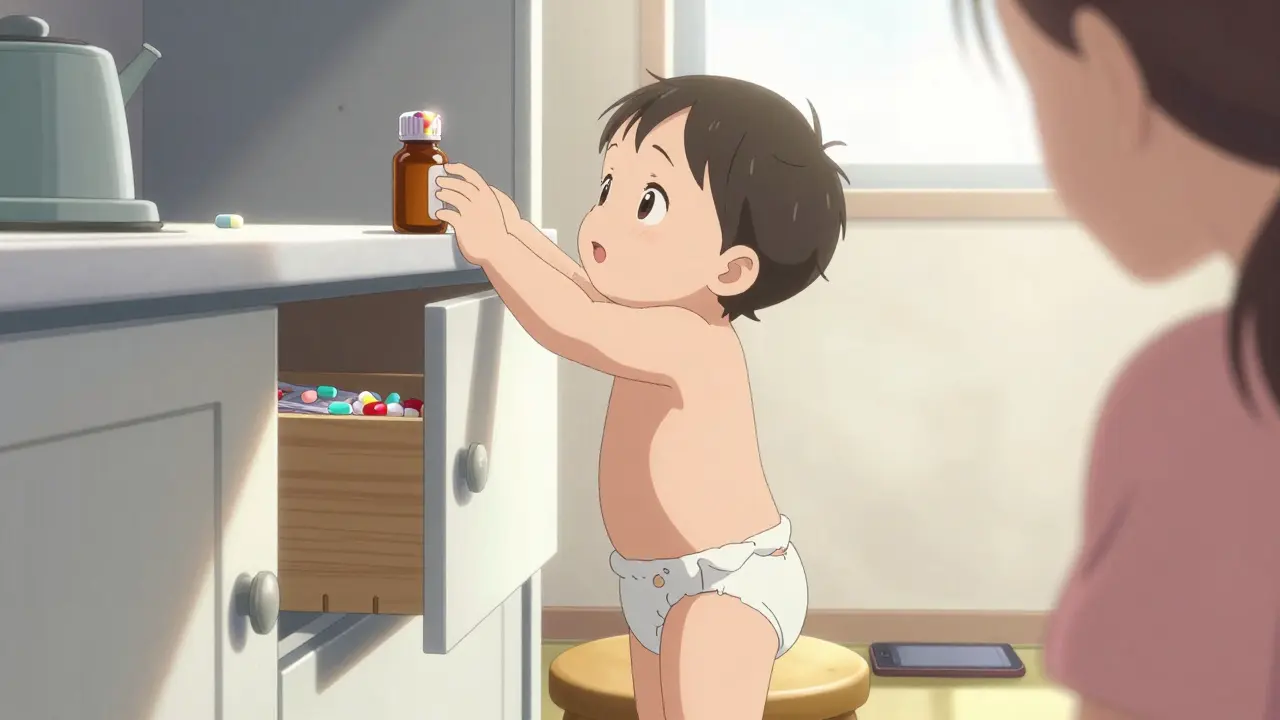
Every year, around 60,000 children under five end up in emergency rooms because they got into medications they weren’t supposed to. That’s more than 160 kids a day. Most of these incidents aren’t caused by reckless parents-they happen because someone left a pill bottle on the counter for just two minutes while answering the door, or tucked the medicine into a drawer that looked "high enough" but wasn’t locked. Kids aren’t curious little explorers here-they’re determined problem-solvers who learn fast how to open latches, climb chairs, and reach for anything that looks like candy.
Why "Up and Away" Isn’t Enough
You’ve heard it before: "Keep medicine up and away from kids." But if you’re relying only on height, you’re already behind. A 2022 study from the Journal of Pediatric Health Care tracked 1,200 homes with young children. Only 72% of kids were kept from medicine when it was just stored on a high shelf. That means nearly one in four kids still got to it. Why? Because toddlers as young as 24 months can open standard cabinet doors. They’ve seen you do it. They’ve practiced turning knobs. They don’t need strength-they need patience, and they’ve got plenty of time when no one’s watching. The real solution? Lock it up. Not just put it out of reach. Not just in a drawer. Lock it. The same study showed that locked cabinets reduced access to just 2%. That’s a 98% success rate. And it’s not just about cabinets. It’s about what’s inside them.What to Lock Up-And What You Might Be Missing
It’s not just prescription painkillers or antibiotics. It’s the vitamins you leave on the nightstand. The cough syrup you keep in the bathroom cabinet. The Tums your kid sees you chew like candy. The aspirin that looks like Skittles. The insulin pen you forget to put back in the fridge after giving a dose. Even over-the-counter stuff can be deadly in small amounts. Children’s Mercy Hospital found that chewable medications-like Tums, Children’s Tylenol, or antihistamines-are especially dangerous because they’re shaped, colored, and flavored to appeal to kids. One study showed a 17% spike in accidental ingestions of these types of meds in kids aged 2 to 4. That’s not a coincidence. It’s design meeting danger. And don’t forget the grandparents. A 2024 survey by Express Scripts found that 76% of grandparents don’t lock up medicine when grandchildren visit. Why? Because they think, "My grandchild knows not to touch medicine." But kids don’t think like adults. They don’t understand "danger." They understand "taste." And if it looks like a treat, they’ll try it.The Right Kind of Lock
Not all locks are created equal. A simple key lock on a kitchen cabinet? Better than nothing. But a biometric safe? Overkill for most homes. What you need is something simple, reliable, and fast for adults but impossible for kids. The most effective option? A small, sturdy lockbox made of steel or hardened plastic. Look for one that’s at least 6 inches by 4 inches by 2 inches-big enough to hold a week’s worth of pills, small enough to fit on a high shelf. Many parents swear by Med-Tek lock boxes, which have a 4.3/5 rating across more than 1,200 Amazon reviews. Users report 92% effectiveness at keeping kids out. Avoid plastic storage bins, plastic pill organizers left on the counter, or drawers with push-button latches. These are all easy for kids to open. Even child-resistant caps aren’t foolproof. Express Scripts found that half of all kids under five can open them in under a minute. That’s faster than you can say "I’ll just be a second."Temperature and Storage Conditions Matter Too
Medications aren’t just dangerous-they’re delicate. If you store them wrong, they lose effectiveness. The FDA says most pills should be kept between 59°F and 77°F, with humidity below 65%. That means your bathroom cabinet? A bad idea. Steam from showers ruins pills. Heat from sunlight degrades them. Your medicine drawer next to the shower? It’s basically a science experiment. Insulin, epinephrine auto-injectors, and some liquid antibiotics need refrigeration. But don’t leave them in the fridge door-temperature swings there can ruin them. Put them on a middle shelf, in a sealed container, and label it clearly so no one mistakes it for yogurt.
Travel Is the Biggest Risk
The CDC found a 31% increase in pediatric poisonings during holiday travel seasons. Why? Because routines break. The lockbox stays home. The medicine goes in a purse. Or a suitcase. Or a coat pocket. And suddenly, it’s within arm’s reach of a curious toddler on a hotel bed. The CDC’s 2024 update introduced "Travel Safety Kits"-small, portable lockboxes designed to fit in hotel safes or hang from a door handle. They’re about the size of a deck of cards. Cost? Under $25. If you’re flying, driving, or visiting family, bring one. Use it. Even if you think you’ll be watching your child every second. You won’t. You’ll be packing. You’ll be checking in. You’ll be distracted. That’s when it happens.The Two-Minute Rule
Here’s the most important habit you can build: the Two-Minute Rule. Never leave medicine unattended for more than 120 seconds. Not while you answer the phone. Not while you get water. Not while you change a diaper. Not even for a second if you’re handing a pill to your child. Research shows kids can open a cabinet in 90 seconds. That’s less than two minutes. So if you’re giving your child medicine, do it at the counter, with the lockbox open beside you. Take out one dose. Give it. Put the rest back. Lock it. Immediately. No exceptions.What About Teens?
Teenagers don’t need to be kept from medicine-they need to be taught how to handle it. The National Association of Pediatric Nurse Practitioners recommends a "monitored medication system" for teens who take daily prescriptions. That means: they take the pill, they log it in a notebook or app, and an adult checks it once a week. This reduces misuse by 67% over time. It’s not about distrust. It’s about responsibility. And if you keep Narcan (naloxone) at home for opioid overdose emergencies? Store it in a high, locked cabinet-but make sure every adult in the house knows where it is and how to use it. The NACoA’s 2025 guide says 87% of overdose reversals happen when Narcan is within 30 seconds’ reach. So lock it, but make sure it’s accessible to the right people.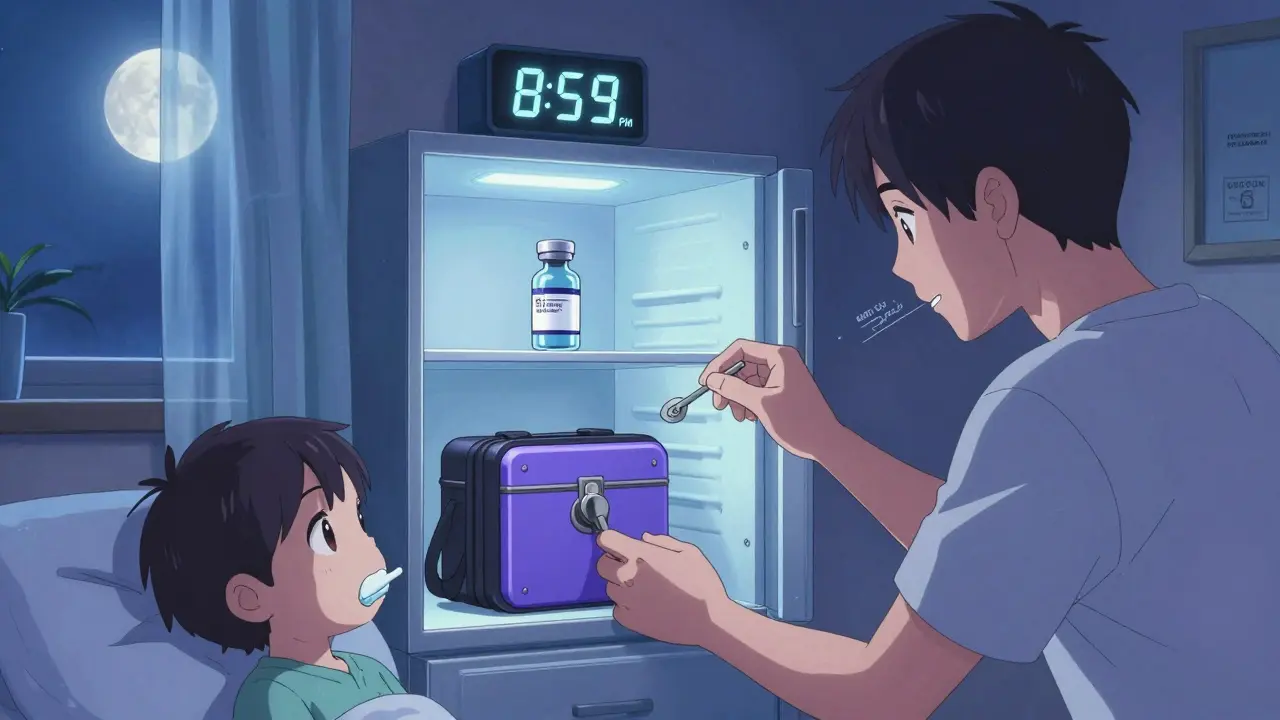
Dispose of What You Don’t Need
Expired pills, old antibiotics, unused painkillers-don’t flush them. Don’t toss them in the trash. Mix them with coffee grounds or cat litter. Put them in a sealed bag. Then drop them off at a pharmacy disposal kiosk. As of 2023, 78% of U.S. communities have them. Find yours. It’s free. And it keeps dangerous meds out of the hands of kids, pets, and even curious teens.Practice Makes Permanent
The American Academy of Family Physicians found that families who practice a daily "lock-up routine" reduce accidental access by 83%. That’s not luck. That’s habit. Make it part of your bedtime ritual. After you brush your teeth, lock the medicine. After you put the laundry away, lock the medicine. After you finish your coffee, lock the medicine. It’s not about being paranoid. It’s about being smart. Every time you lock it, you’re not just protecting your child-you’re protecting your family from a life-altering mistake.What If It Happens?
If your child swallows medicine they shouldn’t, call Poison Control immediately: 1-800-222-1222. Don’t wait for symptoms. Don’t try to make them throw up. Don’t Google it. Call. They’ll tell you exactly what to do. Keep that number saved in your phone. Write it on the fridge. Tell your babysitter. It’s the fastest way to save a life.Can child-resistant caps keep my child from opening medicine?
No. While child-resistant caps are required by law, they’re not child-proof. Express Scripts found that 50% of children under five can open them in under a minute. Kids don’t need strength-they need time and repetition. If they’ve seen you open it, they’ll figure it out. That’s why locking the entire container is the only reliable method.
Is it safe to store medicine in the bathroom?
No. Bathrooms are too humid and too warm, which can make pills lose potency. Heat and moisture break down active ingredients. The FDA recommends storing most medications between 59°F and 77°F in a dry place, like a bedroom drawer or kitchen cabinet-not near the shower or sink.
What should I do if my child swallows medicine?
Call Poison Control right away at 1-800-222-1222. Don’t wait for symptoms. Don’t try to make them vomit. Don’t give them milk or food unless instructed. Poison Control has trained specialists who will guide you through exactly what to do based on the medication and amount ingested. Keep the bottle handy so you can describe it to them.
Are medicine lockboxes worth the cost?
Yes. A basic lockbox costs between $20 and $50. Compare that to the average cost of an emergency room visit for accidental ingestion: $3,217. Even if you never use it, it’s insurance against a tragedy. Plus, many insurance plans reimburse for safety equipment like these. Check with your provider.
Should I keep all my medicine in one place?
Yes. Having one locked location makes it easier to remember where everything is and easier to check that nothing’s missing. Don’t hide pills in different drawers, purses, or nightstands. That creates confusion and increases risk. One secure spot-locked, high, and out of sight-is the safest approach.
Emma Duquemin
December 30, 2025 AT 12:44I used to think my cabinet was high enough until my 2-year-old climbed the chair, pulled out my insulin pen, and tried to suck on it like a juice box. I still have nightmares. Now I use a Med-Tek lockbox on the top shelf-no more panic attacks when I leave the room for 30 seconds. Kids are tiny ninjas. Don’t underestimate them.
Also, toss those chewable vitamins in there too. They look like Skittles because someone thought that was a good idea. It’s not. It’s a death trap with glitter.
David Chase
December 31, 2025 AT 08:49OMG YES!!! 🤯💀 This is why America needs to stop being soft!!! Child-resistant caps? LMAO. My nephew opened his grandma’s Xanax bottle in 47 seconds. 47 SECONDS. She said ‘he knows better’-NO HE DOESN’T. HE’S TWO. HE THINKS IT’S CANDY. LOCK IT. OR YOUR KID DIES. AND DON’T EVEN GET ME STARTED ON BATHROOMS. 🚿💨 STEAM IS KILLING YOUR PILLS. FIX YOUR LIFE. #ParentingIsWar
Kevin Lopez
December 31, 2025 AT 16:36Empirical data confirms: height-based storage yields 28% failure rate. Locking reduces access to 2%. ROI on lockbox: 160:1 vs. ER visit cost. Compliance requires behavioral conditioning. The Two-Minute Rule is operant conditioning applied to domestic safety. Recommend implementing as protocol.
Child-resistant caps: regulatory theater. Not engineering. Biometric? Overkill. Steel lockbox? Minimum viable solution.
Fabian Riewe
December 31, 2025 AT 20:20Just bought a lockbox last week after reading this. Best $25 I’ve ever spent. My toddler tried to open it yesterday-banged on it like a drum, then walked away. I swear, I almost cried. It’s not paranoia. It’s peace of mind.
Also, I keep the Poison Control number on my lockscreen now. Just in case. You never know when two minutes turns into two seconds.
Tamar Dunlop
January 2, 2026 AT 18:51As a Canadian mother of three, I must say: this is not merely a parenting issue-it is a societal imperative. We must transcend the notion of individual responsibility and demand institutional support: subsidized lockboxes, public awareness campaigns, mandatory education in pediatric clinics. In our province, pharmacies now distribute free lockboxes with prescriptions. Why not nationwide? The cost of inaction is measured in lives, not dollars.
Let us not wait for tragedy to galvanize us. Let us act with the dignity and foresight our children deserve.
Russell Thomas
January 3, 2026 AT 00:55So you’re telling me I’m supposed to lock up my Tums? The ones I chew like popcorn while watching Netflix? What’s next? Lock the salt shaker? Kids are gonna be kids. Let ‘em learn the hard way. Maybe then we won’t have so many entitled snowflakes.
Also, I’m pretty sure my 3-year-old is smarter than the FDA. She opened my wife’s birth control pills. Called them ‘pink candy.’ Gave one to the dog. Dog’s fine. Kid’s fine. We laughed. Grow up.
Samar Khan
January 4, 2026 AT 16:40Ugh. I live in India. My mom keeps all her pills in a plastic bag inside her dupatta pocket. My cousin swallowed her blood pressure meds last month. She’s okay now. But why do people think this is normal? 😔
My aunt says, ‘We don’t lock things. We teach respect.’ Respect? My cousin thought it was candy. 😭
Duncan Careless
January 5, 2026 AT 17:48Been using a lockbox since my daughter turned 18 months. It’s changed everything. I used to panic every time I left the room. Now? I breathe. I still check twice, but the anxiety? Gone.
One thing I’ll add: label your lockbox. Not just ‘meds’-write ‘emergency meds only’ or ‘for adults only.’ Kids read. They notice. It helps.
Joe Kwon
January 7, 2026 AT 00:39Big fan of the Two-Minute Rule. I implemented it with my wife and now we do a little ‘lock check’ after every medication use. It’s become a ritual. Calming. Safe.
Also, if you’re traveling, get the CDC’s Travel Safety Kit. I keep mine in my carry-on. It’s the size of a deck of cards. No excuses. Even if you’re just going to the grandparents’ house. You think you’re watching them? You’re not. You’re scrolling. We’ve all been there.
Manan Pandya
January 7, 2026 AT 13:15As someone who works in rural healthcare in India, I can confirm: accidental ingestion is the leading cause of pediatric ER visits here too. But we don’t have lockboxes. We don’t have pharmacies with disposal kiosks. We have mothers who hide pills in rice containers or behind the TV.
Education is the real solution. Teach families: if it’s not in a locked box, it’s a toy to a child. Simple. Direct. No jargon. No cost. Just truth.
Nicole K.
January 8, 2026 AT 10:48You people are ridiculous. My kids have never touched medicine. I just tell them ‘no.’ That’s it. No lockboxes. No drama. If you can’t teach your kids basic boundaries, that’s your problem. Not mine.
Also, why are you all so obsessed with medicine? It’s not magic. It’s just stuff. Stop acting like your house is a bomb shelter.
Amy Cannon
January 9, 2026 AT 03:28My grandmother used to say, ‘Back in my day, we didn’t lock things up-we raised children with discipline.’
She also used to keep her morphine in a teapot.
My cousin died at age three.
So now I lock everything. Even the ibuprofen. Even the fish oil. Even the lip balm that says ‘for external use only’-because I learned the hard way that children don’t read labels. They taste things.
And if you think your child is ‘too good’ to do it? Honey. They’re not. They’re children. And children are not angels. They’re tiny, determined, candy-obsessed scientists.
Lock it. Now. Please.
And if you’re reading this and you’re still keeping your pills in the bathroom? I’m not mad. I’m just… heartbroken.
Himanshu Singh
January 9, 2026 AT 13:22Just wanted to say thanks for this post. I didn’t realize my kids could open the cabinet so fast. I thought they were just ‘too little.’ Turns out they’re way smarter than me. Bought a lockbox today. It’s on the top shelf now. Also told my mom to stop leaving her pills on the nightstand when she visits. She said ‘oh, they’re just vitamins.’ I said ‘they’re candy to a 2-year-old.’ She paused. Then said ‘you’re right.’
Small change. Big difference.
Paige Shipe
January 10, 2026 AT 14:02Let’s be honest: most of you are just overreacting because you watched one too many crime documentaries. Kids aren’t going to die from swallowing a Tylenol. They’ll throw up. They’ll be fine. You’re creating anxiety where none is needed.
Also, why are you all so obsessed with locking things up? Are you afraid your child is going to become a drug addict at age two? Grow up. Let them explore. That’s how they learn.
Nisha Marwaha
January 12, 2026 AT 03:14As a pediatric nurse, I’ve seen the aftermath. The parents who say, ‘I just looked away for a second.’ That second? It’s all it takes.
Lockboxes aren’t just tools-they’re rituals of love. Every time you lock it, you’re saying: ‘I choose your safety over my convenience.’
And if you’re a grandparent? Please. Don’t assume your grandchild knows the rules. They don’t. They see you take a pill and call it ‘the magic candy.’ They’re going to try it.
Lock it. Teach it. Repeat it.
It’s not paranoia. It’s protection.