

Vaccine Allergic Reactions: What You Need to Know About Rare Risks and How They're Monitored
 Jan, 4 2026
Most people get vaccinated without any issues. But when something does go wrong, especially with something as serious as an allergic reaction, it grabs attention. The truth? Severe allergic reactions to vaccines are rare-so rare that you’re more likely to be struck by lightning than experience one. Still, knowing what to watch for, how systems catch these events, and what happens next can ease fears and keep you protected.
How Rare Are Allergic Reactions to Vaccines?
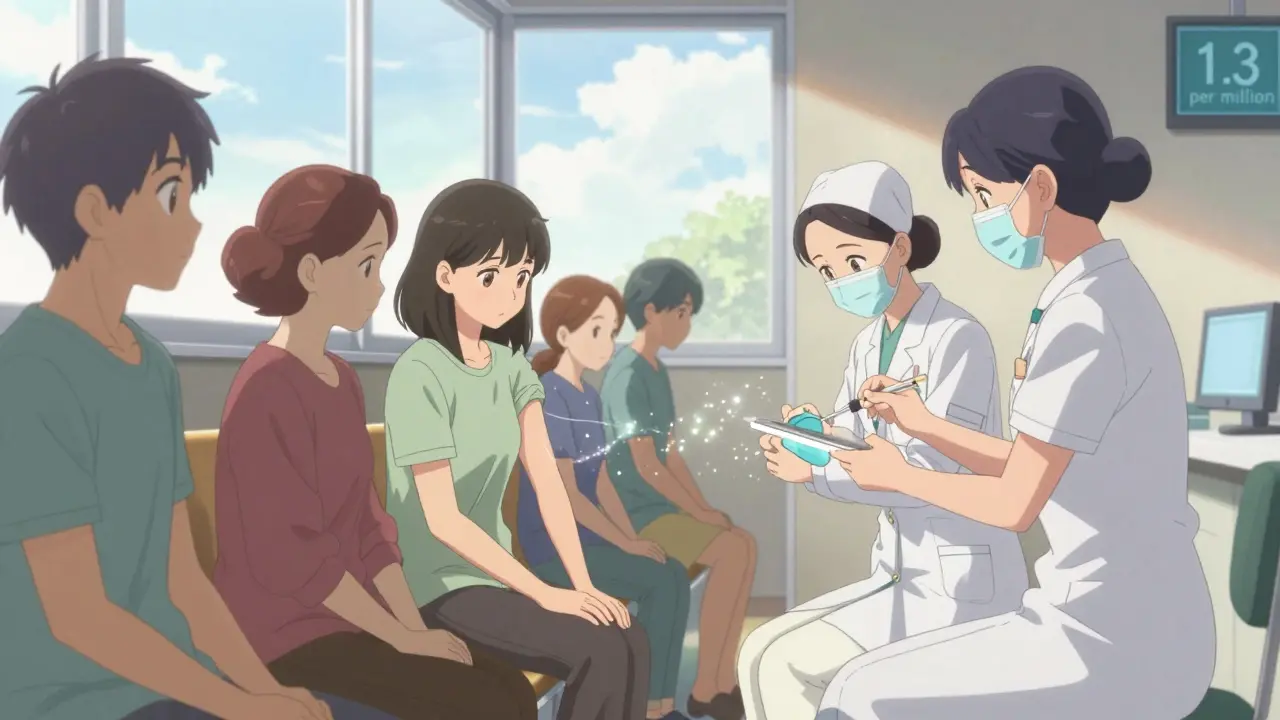
Let’s start with the numbers. Across all vaccines given in the U.S., anaphylaxis-a life-threatening allergic reaction-happens in about 1.3 out of every million doses. That’s less than one in a million. For the mRNA COVID-19 vaccines, the rate was slightly higher: about 5 to 11 cases per million doses. Even that small increase didn’t change the big picture: these reactions are still extremely uncommon.
Compare that to other risks. You have a 1 in 1,000,000 chance of dying from a bee sting. You have a 1 in 1,000,000 chance of being killed by a vending machine. Vaccine anaphylaxis sits right in that same range of rarity. Most people who get vaccinated never have any reaction at all. Even mild ones like sore arms or low-grade fevers are far more common than anything serious.
What Does a Real Allergic Reaction Look Like?
True allergic reactions to vaccines happen fast. About 86% of cases show symptoms within 30 minutes, and 71% happen within just 15 minutes. That’s why clinics ask you to wait after getting your shot.
Symptoms aren’t vague. They’re clear and urgent:
- Hives or swelling under the skin (angioedema)
- Wheezing or trouble breathing
- Swelling of the tongue or throat
- Dizziness, rapid pulse, or passing out
- Severe nausea or vomiting
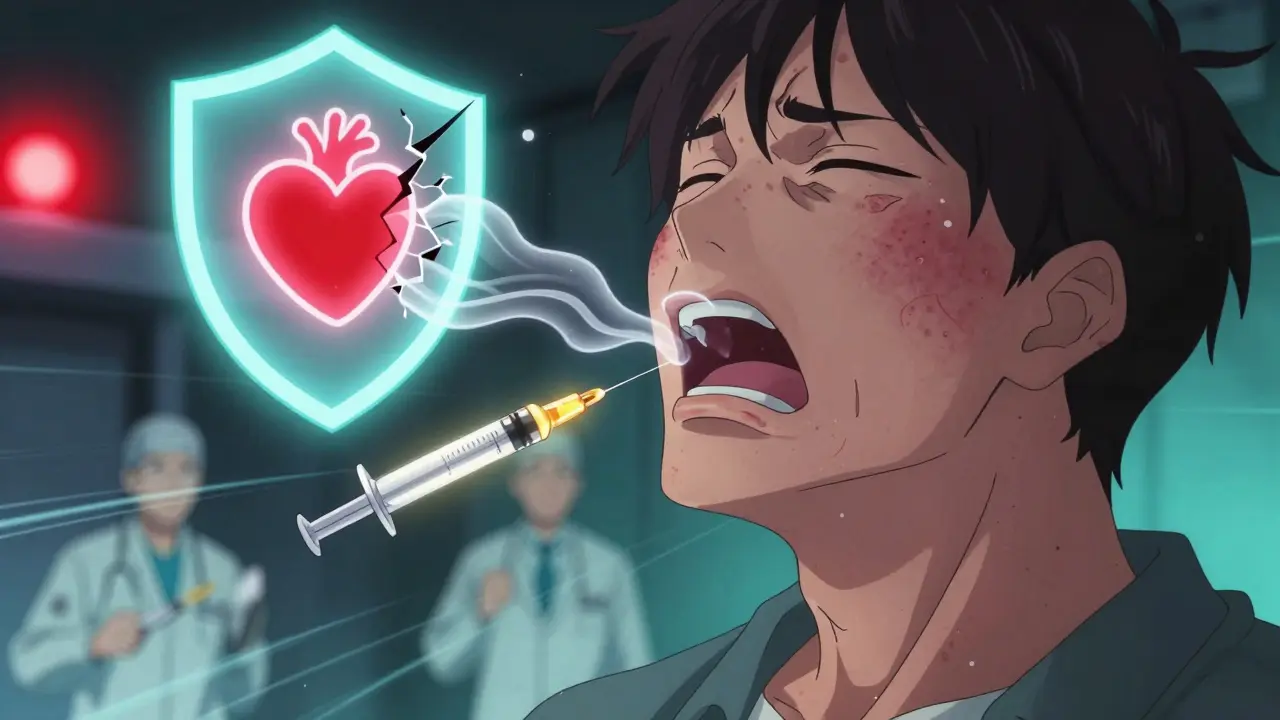
These aren’t the same as mild rashes or local redness. Those are common and usually harmless. A true allergic reaction affects your whole body. It’s not just a sore arm-it’s your airway closing or your blood pressure dropping.
Women make up 81% of reported cases, and the average age is around 40. People with a history of severe allergies-especially to things like shellfish, nuts, or previous anaphylaxis-are at slightly higher risk. But even then, the chance of reacting to a vaccine is still tiny.
What Ingredients Cause These Reactions?
For years, egg allergy was the big fear-especially with flu shots. But that changed. Studies have tracked over 4,300 people with confirmed egg allergies who got flu vaccines. Not one had a serious reaction. Today, egg-allergic people can get any flu shot without special precautions.
Now, the real culprits are more subtle. Polyethylene glycol (PEG) and polysorbate are found in some mRNA vaccines and can trigger reactions in people who are allergic to them. These are also in some medicines, cosmetics, and laxatives. If you’ve had anaphylaxis to something containing PEG before, talk to your doctor.
Yeast protein? It’s in hepatitis B and HPV vaccines. But out of 180,000 allergic reaction reports in the national database, only 15 were even suspected to be linked to yeast. And even those couldn’t be confirmed.
Aluminum? It’s in many vaccines as an adjuvant to boost immunity. It can cause hard lumps at the injection site, but that’s not an allergic reaction-it’s just local irritation. It doesn’t trigger anaphylaxis.
How Do We Know When Something Goes Wrong?
The U.S. has one of the most detailed vaccine safety systems in the world: VAERS, the Vaccine Adverse Event Reporting System. It’s run by the CDC and FDA. Anyone-doctors, patients, parents-can report a reaction. It’s not perfect. Some reports are coincidental. A person gets a shot and then has a migraine the next day? That gets reported too. But VAERS is designed to catch patterns.
When enough people report the same reaction after the same vaccine, scientists dig deeper. They check medical records, compare rates to background rates in the population, and look for signals. That’s how they caught the slight uptick in anaphylaxis with the first mRNA vaccines. That’s also how they confirmed egg allergy wasn’t a real risk.
Other countries have similar systems. The European Medicines Agency tracks over 1.5 million reports a year through EudraVigilance. Global systems are now in place in 137 countries.
What Happens If You Have a Reaction?
Every vaccination site must have epinephrine on hand. That’s the only treatment that can stop anaphylaxis in its tracks. Providers are trained to recognize the signs and act fast. The standard protocol: inject epinephrine immediately, call 911, monitor vital signs, and keep the person lying down with legs elevated.
Afterward, you’ll be asked to stay for observation-usually 15 minutes. If you’ve had a previous allergic reaction to any vaccine or injection, you’ll be asked to wait 30 minutes. That extra time catches almost all cases.
If you’ve had a confirmed allergic reaction to a vaccine, you won’t get that same vaccine again unless an allergist clears you. You might get tested for specific triggers like PEG. But even then, many people can still be vaccinated safely using different brands or formulations.
Why Don’t We Just Stop Giving Vaccines If They’re Risky?
Because the risks of not vaccinating are far greater. Measles kills. Polio paralyzes. Whooping cough can suffocate babies. The risk of dying from measles is about 1 in 500. The risk of dying from anaphylaxis after a vaccine? Less than 1 in 10 million.
And the system keeps getting better. Since the 1976 swine flu incident, when Guillain-Barré syndrome was linked to a vaccine, the U.S. built layers of safety: real-time monitoring, faster reporting, stricter manufacturing standards, and better research. Today’s vaccines are safer than ever.
The CDC’s 2023-2027 strategy puts “enhancing detection and response to rare adverse events” as a top goal. They’re investing $28 million into advanced data tools to spot patterns even faster. Researchers are even studying biomarkers that could one day predict who’s at risk before they even get the shot.
What Should You Do If You’re Worried?
If you’ve had a severe allergic reaction to any injection, medication, or food in the past, talk to your doctor or an allergist before your next vaccine. You don’t need to avoid vaccines. You just need to plan ahead.
Don’t let fear of a 1-in-a-million chance stop you from protecting yourself and your family. Vaccines prevent millions of deaths every year. The systems in place to catch rare reactions are strong, transparent, and constantly improving.
Most people who think they’re allergic to vaccines aren’t. Many reactions are mislabeled. A fever after a shot? Not allergic. A rash that fades in a day? Not anaphylaxis. Only true, rapid, multi-system reactions count-and even those are rare enough that your chance of being affected is lower than your chance of winning a small lottery prize.
Get vaccinated. Know the signs. Trust the system. And protect yourself-not just from disease, but from misinformation.
Can you have an allergic reaction to a vaccine you’ve taken before?
Yes, but it’s rare. Most people who have a reaction after the second or third dose have a history of allergies, especially to components like PEG or polysorbate. If you had a mild reaction before, like a rash, you can usually still get the next dose. If you had anaphylaxis, you’ll need an allergist’s evaluation before any further doses.
Are egg-allergic people still at risk from flu vaccines?
No. Studies involving over 4,300 egg-allergic individuals-including more than 650 with a history of severe anaphylaxis to egg-showed no serious reactions after receiving flu vaccines. Guidelines changed in 2011 and again in 2017 to reflect this. You no longer need special observation or egg-free versions.
What should I bring to my vaccine appointment if I have allergies?
If you have a history of severe allergies, bring a list of your triggers and any previous reactions. If you’ve seen an allergist, bring their notes. You don’t need to bring epinephrine-the clinic will have it. But having documentation helps them make the right call.
Why do I have to wait 15 minutes after getting a shot?
Because 71% of anaphylaxis cases happen within 15 minutes of vaccination. Waiting gives staff time to respond immediately if a reaction starts. It’s a simple, proven safety step. For people with prior allergic reactions, the wait is extended to 30 minutes.
Is VAERS a reliable source of information?
VAERS is not designed to prove causation-it’s a detection tool. Anyone can report anything, so it includes coincidental events. But when hundreds or thousands of similar reports come in after a specific vaccine, scientists investigate. It’s like a smoke alarm: it doesn’t mean there’s a fire, but if it goes off repeatedly, you check the house. That’s how it helps keep vaccines safe.
Can children have allergic reactions to vaccines?
Yes, but it’s extremely rare. Studies show about 0.22 cases per 100,000 doses in children and teens. Most reactions occur after the first dose, suggesting possible prior exposure to a trigger. The same safety rules apply: epinephrine on hand, 15-minute observation, and reporting to VAERS. The benefits of protecting kids from diseases like measles and whooping cough far outweigh the minimal risk.
Do vaccine ingredients like aluminum or formaldehyde cause allergies?
No. Aluminum is used as an adjuvant to help the immune system respond better. It can cause a hard lump at the injection site, but that’s not an allergy. Formaldehyde is used in tiny amounts to inactivate viruses and is mostly removed before packaging. The trace left behind is far less than what’s naturally in your body. Neither has been linked to IgE-mediated allergic reactions.
What’s Next for Vaccine Safety?
Researchers are working on ways to predict who might react before they even get the shot. A 2023 study in Nature Immunology found early signs of mast cell activation that could one day be detected with a simple blood test. If that works, we could screen high-risk people within the next five to seven years.
For now, the system works. Vaccines are among the safest medical products we have. The data, the monitoring, the response protocols-they’re all in place. And they’re constantly being updated.
If you’re nervous, talk to your provider. Ask questions. Get the facts. But don’t let fear of the rare stop you from protecting what matters most: your health and the health of those around you.
Terri Gladden
January 4, 2026 AT 13:49Jennifer Glass
January 6, 2026 AT 10:06en Max
January 6, 2026 AT 21:23Angie Rehe
January 7, 2026 AT 04:22josh plum
January 8, 2026 AT 05:15John Ross
January 8, 2026 AT 10:19Ashley Viñas
January 9, 2026 AT 18:59Brendan F. Cochran
January 10, 2026 AT 13:05Mandy Kowitz
January 11, 2026 AT 03:01Justin Lowans
January 12, 2026 AT 15:57Michael Rudge
January 13, 2026 AT 17:50Doreen Pachificus
January 14, 2026 AT 02:17Stephen Craig
January 15, 2026 AT 12:25Jack Wernet
January 15, 2026 AT 23:14Charlotte N
January 17, 2026 AT 17:27