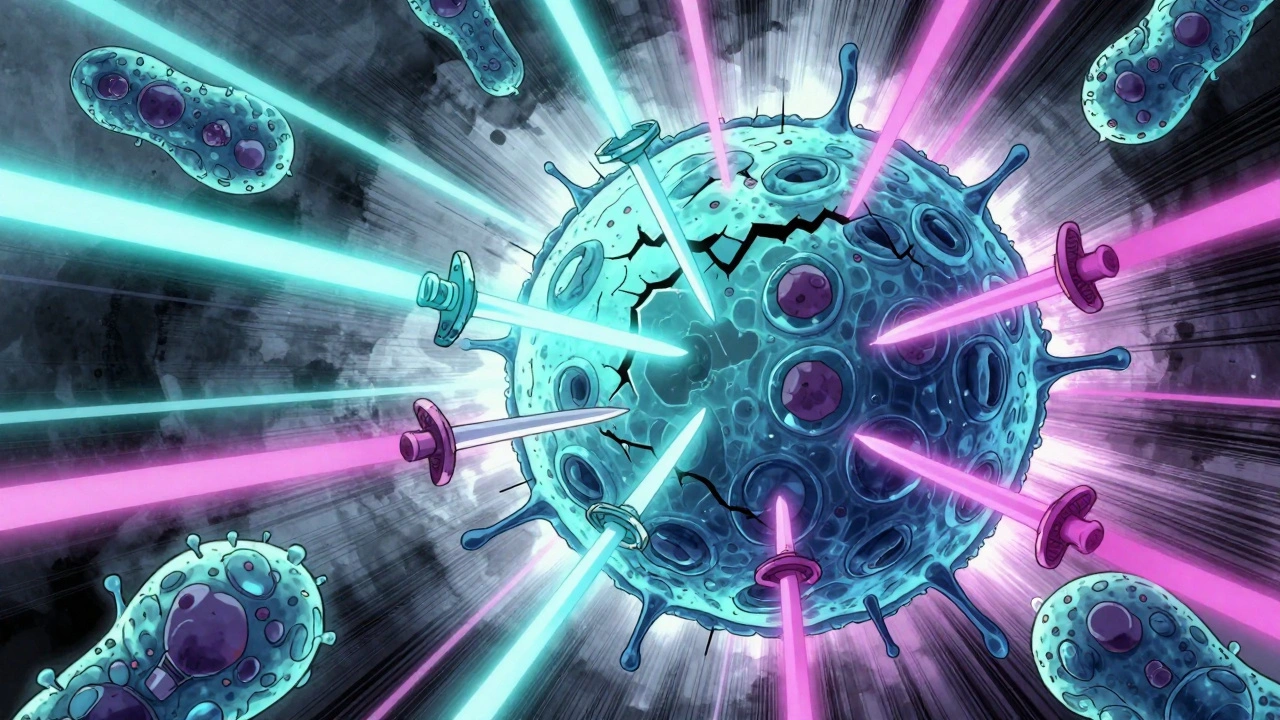
When you take an antibiotic, a type of medicine designed to kill or slow the growth of bacteria. Also known as antibacterial agents, they don’t work on viruses—only on the tiny organisms that cause infections like strep throat, urinary tract infections, or pneumonia. The real magic isn’t just that they fight infection—it’s how they do it. Different antibiotics use different strategies, and knowing these antibiotic mechanisms helps you understand why one drug works for your sinus infection while another won’t touch it.
Most antibiotics target one of three weak spots in bacteria. The first is the bacterial cell wall, a rigid outer layer that keeps bacteria from bursting. Drugs like penicillin and amoxicillin stop bacteria from building or repairing this wall, causing them to swell and pop. Humans don’t have cell walls, so these drugs are usually safe for us—but they’re deadly to the bugs. The second target is protein synthesis inhibition, the process bacteria use to build the proteins they need to survive and multiply. Antibiotics like azithromycin and doxycycline sneak into bacterial ribosomes—their protein factories—and jam the machinery. Without proteins, bacteria can’t grow, replicate, or spread. The third group attacks DNA replication or metabolic pathways. Fluoroquinolones like ciprofloxacin break bacterial DNA strands, while sulfonamides block folate production, which bacteria need to make DNA and RNA.
Not all antibiotics work the same way, and that’s why combination products exist—some drugs team up to hit multiple targets at once. But here’s the catch: bacteria evolve. Overuse and misuse of antibiotics have pushed many strains to develop antibiotic resistance, the ability of bacteria to survive exposure to drugs that once killed them. This isn’t magic—it’s natural selection. If you don’t finish your course, or take antibiotics for a cold, you’re not just helping yourself—you’re training superbugs. That’s why knowing the mechanism matters. If your doctor prescribes an antibiotic that blocks cell wall synthesis, and you’ve had a bad reaction to that class before, you need to know. If you’re on a drug that affects protein building, and you’re also taking something that interferes with liver enzymes, you might need a different option.
You’ll find posts here that dig into real-world examples: why generic antibiotic combinations aren’t always available, how Zithromax stacks up against other drugs, and what happens when you mix antibiotics with food or other meds. These aren’t theory lessons—they’re practical insights from people who’ve dealt with infections, side effects, and insurance hurdles. Whether you’re trying to understand why your last antibiotic didn’t work, or you’re just curious how these pills actually kill bacteria, this collection gives you the facts without the fluff. No jargon. No hype. Just what you need to know to ask the right questions and make smarter choices.
Learn how different classes of antibiotics work against bacterial infections, from penicillins to fluoroquinolones, and why choosing the right one matters in the age of antibiotic resistance.