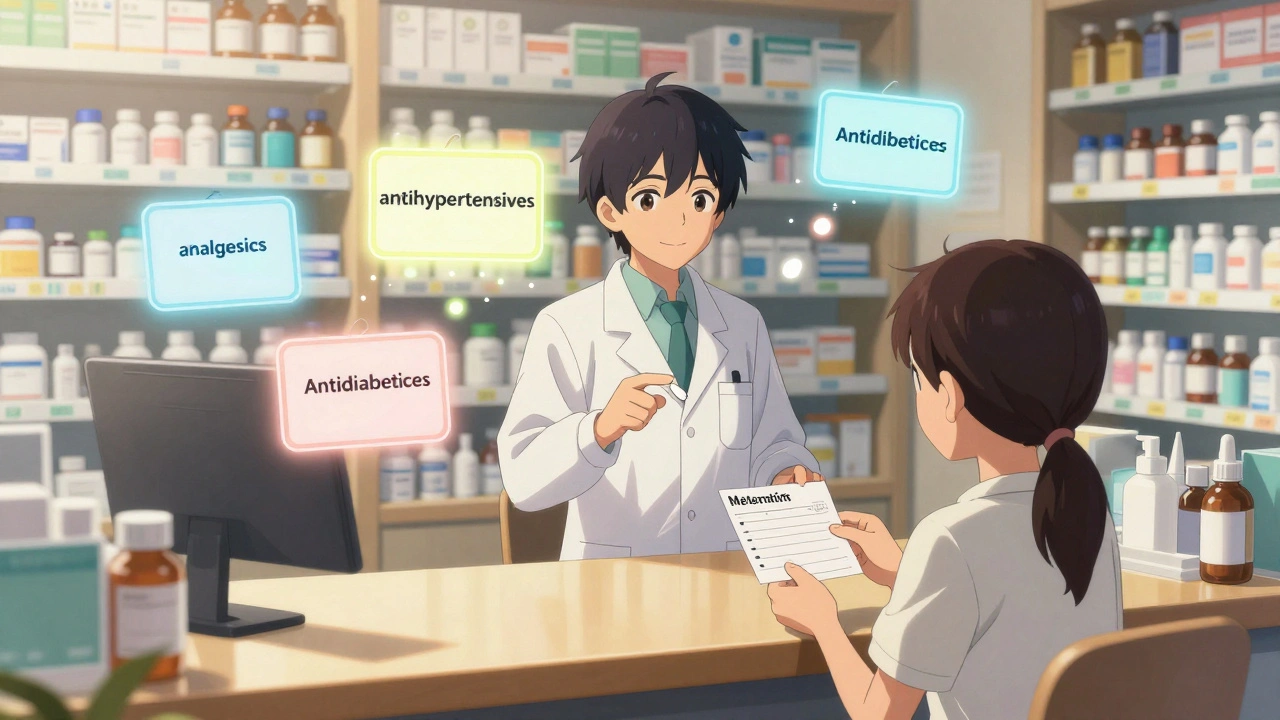
When you see a code like ATC classification, a standardized system used globally to categorize drugs by their anatomical target, therapeutic use, and chemical structure. Also known as Anatomical Therapeutic Chemical classification, it's the invisible framework behind every prescription you get and every generic swap your pharmacy makes. This isn’t just paperwork—it’s how doctors, pharmacists, insurers, and regulators know exactly what you’re taking and why. If you’ve ever wondered why your statin is grouped with heart meds and your antidepressant with brain chemicals, that’s the ATC system at work.
The ATC code breaks down drugs into five levels: starting with the organ system (like the cardiovascular system), then the therapeutic group (like blood pressure drugs), then the pharmacological subgroup (like ACE inhibitors), then the chemical subgroup, and finally the specific drug. So a drug like lisinopril has a unique code: C09AA02. That means it’s in the cardiovascular group (C), treats high blood pressure (C09), is an ACE inhibitor (C09A), and is specifically lisinopril (C09AA02). This isn’t just for scientists—it affects your out-of-pocket costs. Insurance formularies use ATC codes to group similar drugs into tiers. If two drugs share the same ATC subgroup, your plan might cover one cheaper than the other, even if they’re both generics. That’s why your doctor might switch you from one statin to another—not because it’s better, but because the ATC code puts it in a lower tier.
ATC classification also helps track side effects and interactions. If a new study finds that a certain class of antibiotics causes more tendon damage, regulators can quickly pull all drugs under that ATC subgroup for review. It’s why some medications get black box warnings while others don’t. And when you see a drug listed as "similar to" another in a patient guide, it’s often because they share the same ATC code. This system connects your meds to real-world outcomes. It’s why your pharmacist knows to warn you if you’re mixing two drugs that both affect the liver under the same metabolic pathway. It’s why research on sulfonylureas and weight gain, or statins and muscle pain, gets grouped and compared using these codes. Without ATC, we’d be guessing what each pill does.
What you’ll find below is a collection of real patient stories and clinical insights tied directly to how drugs are grouped, regulated, and prescribed under this system. From why generic antibiotics aren’t always available to how tendering systems in Europe use ATC codes to control costs, these articles show you how the code on your bottle affects your health, your wallet, and your choices. This isn’t theory—it’s the hidden logic behind every prescription you take.
Understand how generic drugs are classified by therapeutic use, mechanism of action, legal schedule, insurance tier, and global standards. Learn why these systems matter for your prescriptions and costs.