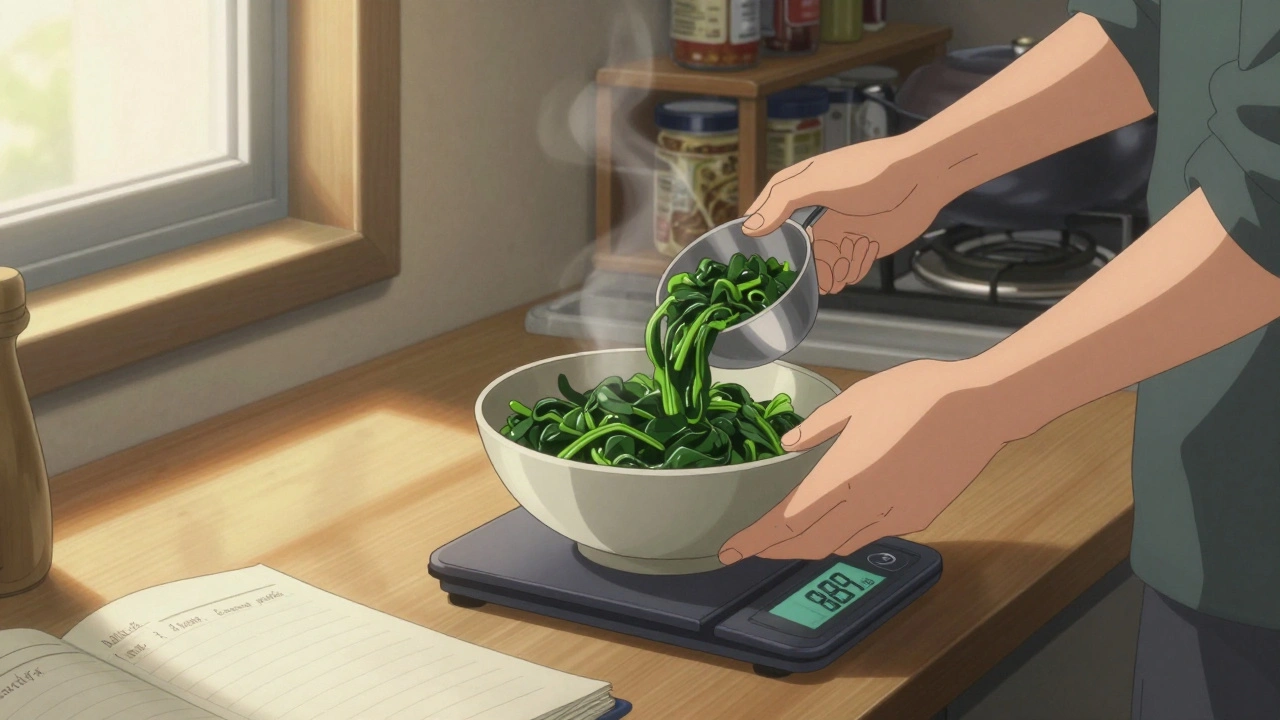
When you're on a blood thinner, a medication that prevents dangerous clots by slowing down your blood's ability to clot. Also known as anticoagulants, it's not just about taking your pill—it's about what you eat every day. Many people think they need to cut out entire food groups, but that’s not true. The real issue is consistency. Your body reacts to steady intake, not sudden changes. If you eat a lot of leafy greens one week and almost none the next, your medication dose might not match your body’s needs anymore. That’s when risks go up—too much clotting, or too much bleeding.
The biggest player in this game is vitamin K, a nutrient your liver uses to make clotting factors. It’s found in leafy green vegetables like spinach, kale, broccoli, and Brussels sprouts. If you’re on warfarin, your doctor checks your INR levels to see how well your blood is thinning. Too much vitamin K can make warfarin less effective. Too little can make it too strong. The fix? Don’t avoid these foods—just eat about the same amount every day. Same with green tea, cranberry juice, and alcohol. They don’t need to be banned, but drinking a bottle of cranberry juice daily while taking your pill is asking for trouble.
Other things matter too. garlic, a natural substance that can mildly thin blood. Also known as a blood-thinning herb, it’s fine in cooking, but popping garlic supplements while on anticoagulants? That’s a red flag. Same with fish oil, ginkgo, and even some over-the-counter pain relievers like ibuprofen. They can stack up with your medication and increase bleeding risk. And don’t forget protein. If you’re on levodopa for Parkinson’s, high-protein meals can block absorption—but that’s a separate issue. For blood thinners, it’s mostly about vitamin K and consistency.
You don’t need a perfect diet. You need a predictable one. Eat your spinach every Tuesday and Thursday, not just when it’s on sale. Keep your alcohol intake steady. Skip the mega-dose supplements. Talk to your doctor before starting any new vitamin or herbal product. Most people on blood thinners do fine when they keep their habits stable. It’s not about fear—it’s about control. Below, you’ll find real stories and science-backed tips on how to manage your diet without giving up the foods you love, how to spot warning signs when your diet clashes with your meds, and what to do if you accidentally eat a huge bowl of kale.
Maintaining consistent vitamin K intake is critical when taking warfarin. Learn which foods affect your blood thinning, how to track your intake, and why consistency matters more than restriction for stable INR levels.