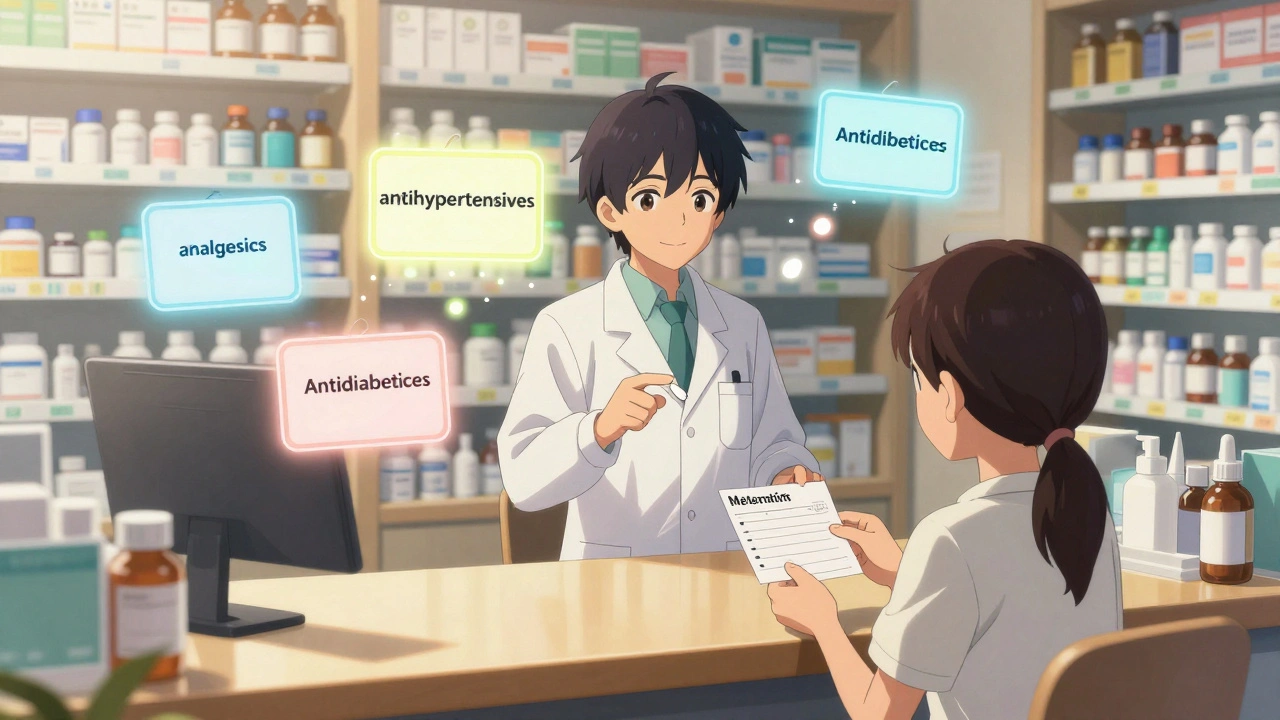
When you hear generic drug classifications, the system that groups generic medications by therapeutic use, chemical structure, and biological effect. Also known as drug classes, it helps doctors and pharmacists predict how a drug will work in your body and how it compares to others. This isn’t just paperwork—it’s the reason your doctor might switch you from one pill to another without changing your outcome. These classifications aren’t random. They’re based on how the drug acts, what condition it treats, and how your body processes it. If two drugs are in the same class, they usually do the same thing, even if one is brand-name and the other is generic.
Take statins, a class of drugs used to lower cholesterol by blocking an enzyme in the liver. Also known as HMG-CoA reductase inhibitors, they include simvastatin, atorvastatin, and pravastatin. Even though they’re all statins, not all are equal. One might cause more muscle pain than another. That’s why insurance formulary tiers, the system pharmacies and insurers use to organize drugs by cost and effectiveness. Also known as tiered formularies, they matter. Tier 1 drugs are usually the cheapest generics in their class. Tier 3? Often brand-name or newer generics with higher prices. Your plan pushes you toward the safest, most cost-effective option—usually a generic in the same class as the brand. But not all generics are created equal. Some work better for you because of your genes, like how the CYP2D6 gene, a liver enzyme gene that affects how fast you break down certain drugs. Also known as pharmacogenetics, it determines whether a medication will help or hurt you. That’s why family history can change which generic you should take.
Generic drug classifications also shape how drugs are bought and used across countries. In Europe, public hospitals use tendering systems, transparent bidding processes that select generic drugs based on quality, price, and reliability. Also known as MEAT evaluation, they ensure the cheapest option isn’t always the worst. The goal isn’t just to save money—it’s to make sure the generic you get works just like the brand. And when it comes to safety, classifications help spot risks. For example, some antiemetics, drugs used to prevent nausea and vomiting. Also known as nausea medications, they can stretch your heart’s rhythm. That’s why doctors avoid certain ones if you’re on other meds. These aren’t just labels—they’re warnings, shortcuts, and safety nets built into the system.
What you’ll find below isn’t a list of drug names. It’s a look at how these classifications affect real people: why some generics cause muscle pain while others don’t, how insurance decides which ones you pay less for, and why your thyroid med might not work if you eat soy. These are the hidden rules behind your prescription—and how to use them to your advantage.
Understand how generic drugs are classified by therapeutic use, mechanism of action, legal schedule, insurance tier, and global standards. Learn why these systems matter for your prescriptions and costs.