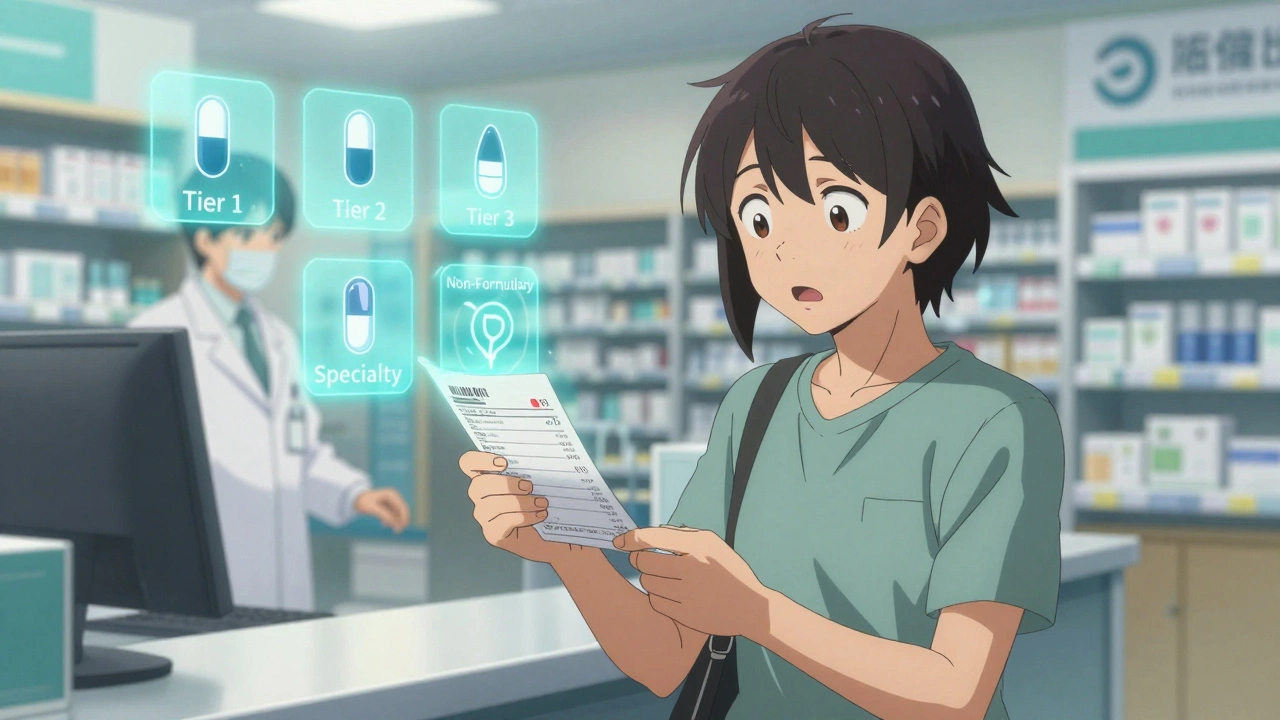
When you pick up a prescription, the price you pay isn’t just set by the drug company—it’s controlled by your insurance formulary tiers, a system used by health plans to group medications by cost and coverage. Also known as drug tiers, this structure tells you exactly how much you’ll pay out of pocket for each medicine, whether it’s a cheap generic or a brand-name pill. It’s not random. Your plan puts drugs into categories based on price, effectiveness, and whether there’s a cheaper alternative available. Tier 1 usually means the lowest cost, often generic versions of common drugs like metformin or lisinopril. Tier 4 or 5? That’s where the expensive stuff lives—like specialty cancer drugs or newer biologics—and that’s where your coinsurance can jump to 30%, 40%, or even more.
Behind every tier is a pharmacy benefit manager, a middleman hired by insurers to negotiate drug prices and build formularies. Also known as PBM, these companies decide which drugs make it onto your plan’s list and at what cost. They don’t always pick the cheapest drug—they pick the one they get the biggest rebate on. That’s why a slightly more expensive generic might be on Tier 1 while a cheaper one sits on Tier 2. It’s not about what’s best for you—it’s about what the PBM gets paid to promote. This system affects everything: whether your doctor can prescribe what they want, whether you stick with your meds, and even whether you skip doses because the co-pay is too high. A 2022 study in JAMA found that nearly 1 in 4 Americans skipped meds due to cost, and formulary tiers were the biggest reason why.
Not all drugs are treated equally. Generic versions of antibiotics, statins, or blood pressure pills often land in Tier 1 because they’re proven, safe, and cheap to make. But even within generics, placement matters. Two identical pills—one on Tier 1, one on Tier 3—can cost you $5 vs. $40. Your plan might cover a brand-name version only if you try the generic first (called step therapy). Or, they might require prior authorization for anything beyond Tier 2. And if your drug isn’t on the formulary at all? You pay full price, unless you appeal. The good news? You can check your plan’s formulary online, ask your pharmacist to suggest a lower-tier alternative, or request a tier exception if your current med is medically necessary.
What you’ll find in the posts below are real stories and facts about how this system plays out in everyday life: why some generic drugs are hard to get, how insurance rules affect your choice of statins or antidepressants, and what to do when your meds suddenly jump in price. You’ll learn how drug classifications, tendering systems, and even genetic responses tie into what’s on your formulary—and how to fight back when the system doesn’t work for you.
Understand how insurance formulary tiers work - Tier 1 to non-formulary - and how they affect your prescription costs. Learn what each tier means, why drugs move between them, and how to save money.