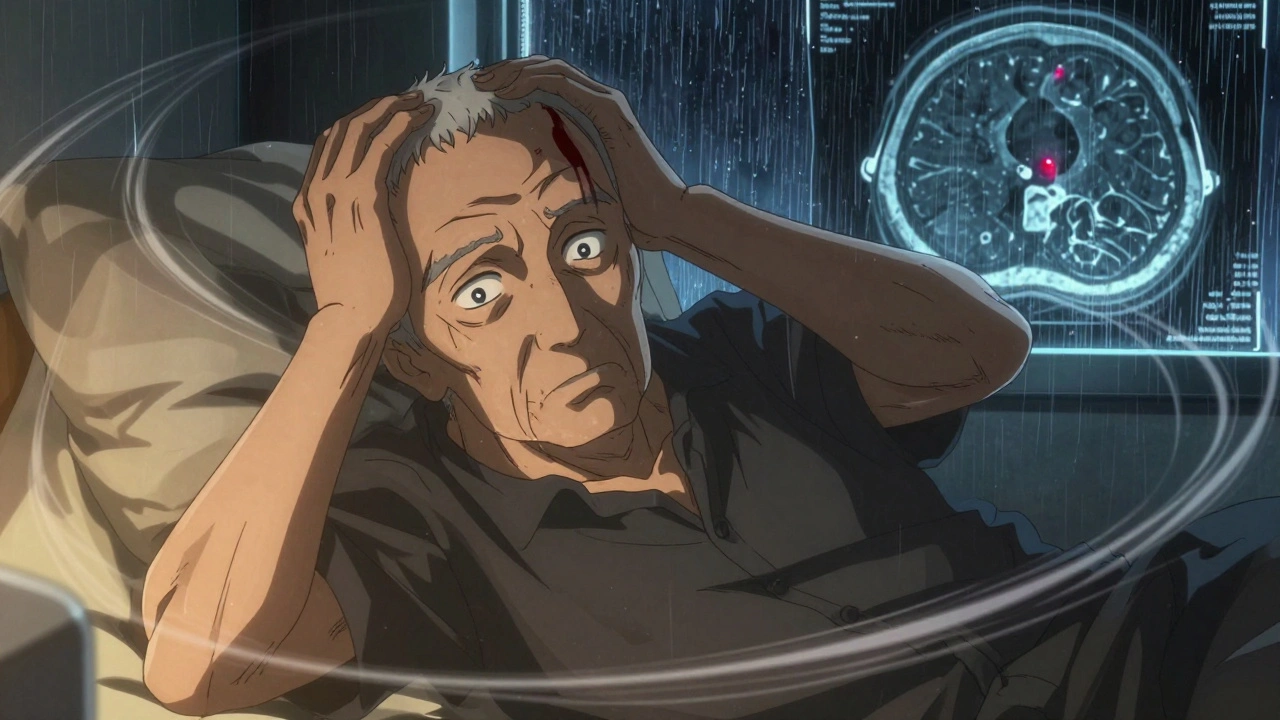
When you hear intracranial hemorrhage, a type of bleeding inside the skull that can press on the brain. Also known as brain bleed, it doesn’t always come with warning signs—sometimes it hits without notice, and every minute counts. This isn’t just a stroke subtype—it’s a medical emergency that can stem from high blood pressure, trauma, or even something as simple as taking the wrong combination of meds.
High blood pressure is the biggest culprit behind most intracranial hemorrhages. Over time, it weakens small arteries in the brain, making them more likely to burst. But medications can tip the scale too. anticoagulants, drugs like warfarin or newer blood thinners that prevent clots are lifesavers for people with atrial fibrillation or artificial heart valves—but if not managed carefully, they can turn a minor bump into a life-threatening bleed. Even common OTC painkillers like aspirin, when taken long-term, can increase bleeding risk, especially in older adults.
It’s not just about what you take—it’s about what’s going on inside your body. Conditions like hypertension, chronic high blood pressure that damages blood vessel walls are silent killers. Many people don’t know they have it until it’s too late. And if you’re on meds for diabetes, depression, or seizures, some of them can indirectly raise your risk by affecting blood pressure, clotting, or brain chemistry. It’s why doctors often ask about every pill you swallow—not just the prescription ones.
Recovery from an intracranial hemorrhage depends on where the bleed happened, how fast treatment started, and whether other health problems were already in play. Some people bounce back with rehab. Others face lasting changes in movement, speech, or memory. The key is prevention: know your numbers, talk to your doctor about every medication you use, and don’t ignore symptoms like sudden headaches, dizziness, or confusion.
Below, you’ll find real-world insights from people who’ve dealt with medication interactions, side effects, and the hidden risks of everyday drugs. These aren’t theoretical discussions—they’re lessons from patients, caregivers, and clinicians who’ve seen how a simple pill can change everything.
If you're on blood thinners and hit your head, don't wait for symptoms-get a CT scan immediately. Even minor injuries can lead to dangerous brain bleeds that develop hours later. Here's what you need to know about when imaging is required and what to do next.