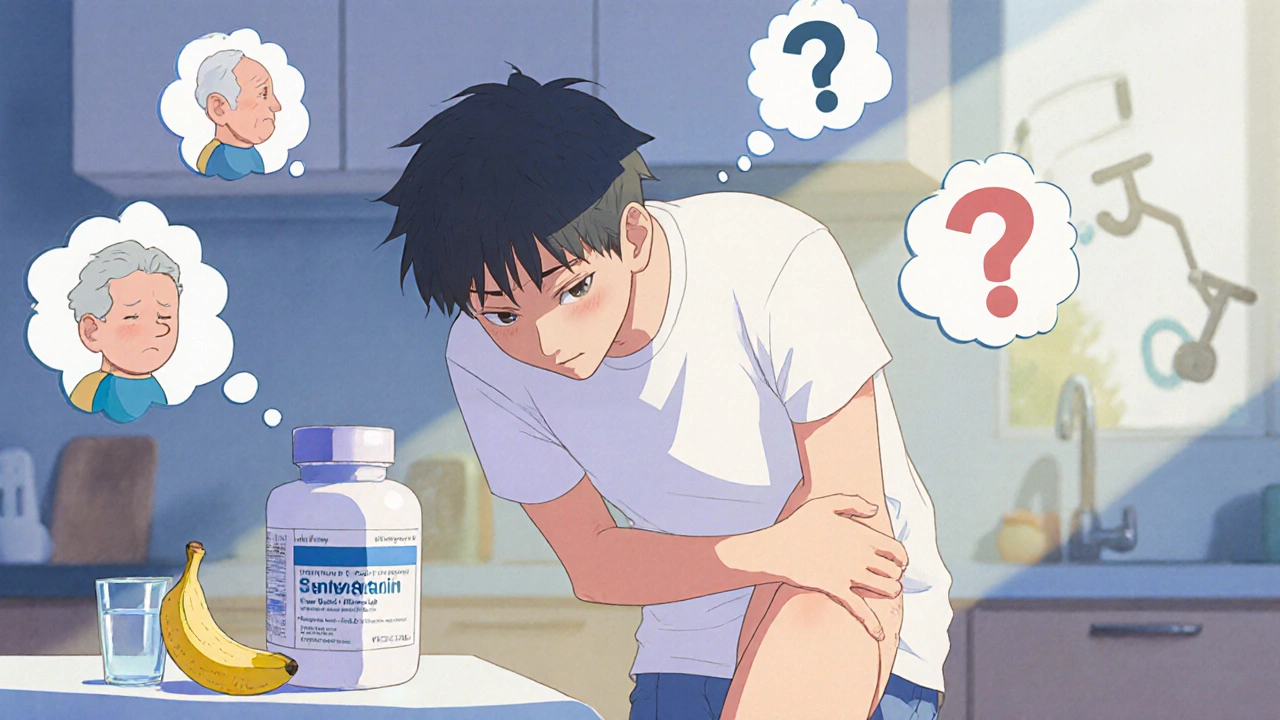
When you take pravastatin, a cholesterol-lowering statin medication used to reduce the risk of heart attack and stroke. Also known as Pravachol, it works by blocking an enzyme your liver needs to make cholesterol. But for some people, this same mechanism triggers unwanted side effects—especially muscle pain, a common complaint among statin users that ranges from mild soreness to debilitating weakness.
Not all muscle pain from pravastatin is the same. Some feel a dull ache in their thighs or shoulders after a walk. Others get sharp cramps or feel too weak to climb stairs. This isn’t just "getting older"—it’s a known reaction tied to how statins affect muscle cells. Studies show that up to 10% of people on statins report muscle symptoms, and while most cases are mild, a small number develop something called statin-induced myopathy, a condition where muscle tissue breaks down, sometimes leading to dangerous kidney damage. The risk is higher in older adults, people with thyroid issues, or those taking other medications like fibrates or certain antibiotics.
What makes pravastatin different from other statins? It’s one of the least likely to cause muscle problems because it’s cleared by the kidneys, not the liver. That means fewer drug interactions and lower buildup in muscle tissue. But if you’re still feeling pain, it doesn’t mean you’re imagining it. Many doctors dismiss it as coincidence—but if the pain started after you began pravastatin and fades when you stop, it’s likely connected. You don’t have to live with it. Blood tests for creatine kinase (CK) can check for muscle damage, and switching to a different statin or lowering the dose often helps. Some people find relief by adding coenzyme Q10, though evidence is mixed.
Don’t quit pravastatin on your own. Stopping without medical guidance can raise your risk of heart attack. Instead, talk to your doctor about timing, dosage, and alternatives. You might need a different statin like rosuvastatin or even non-statin options like ezetimibe or PCSK9 inhibitors. The goal isn’t just to avoid pain—it’s to protect your heart without sacrificing your mobility.
Below, you’ll find real patient experiences and clinical insights on how pravastatin muscle pain connects to other drug reactions, liver function, and long-term health. These posts help you separate myths from facts—so you can decide what’s right for your body.
Simvastatin has the highest risk of muscle pain among statins, but most muscle discomfort isn't caused by the drug. Learn which statins are safest and what to do if you're experiencing pain.