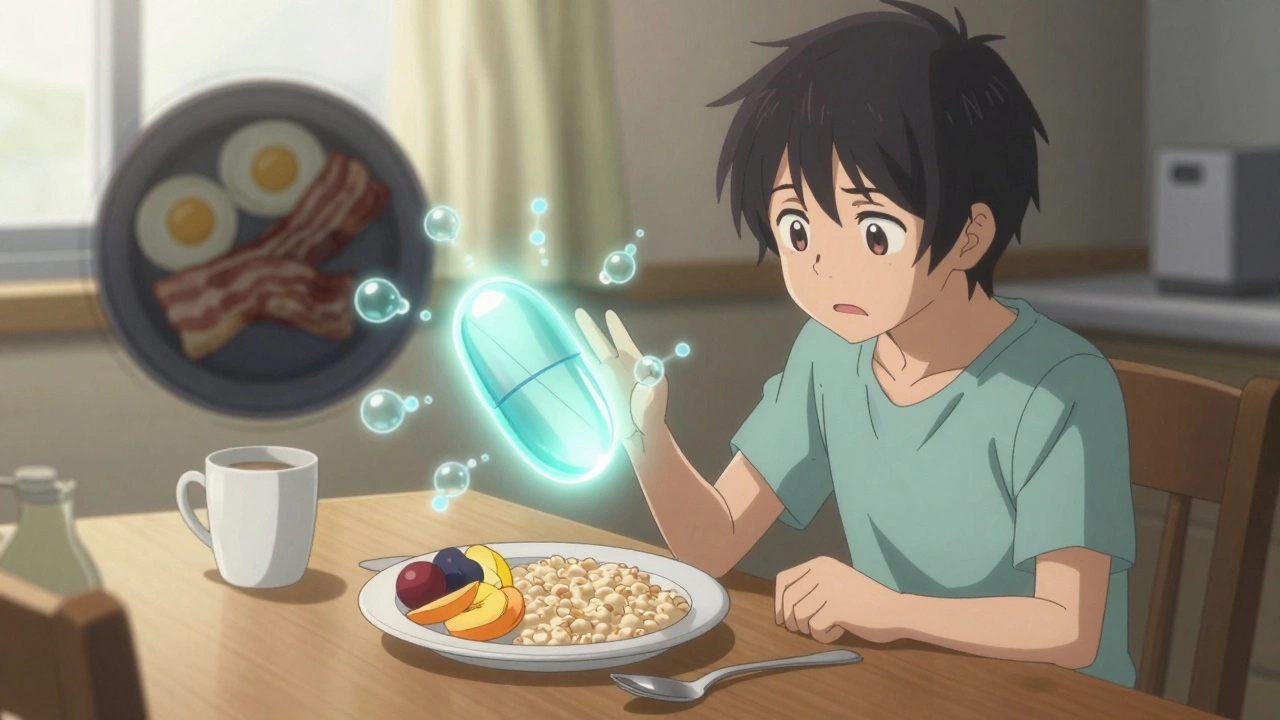
When you eat protein-rich foods, foods high in amino acids like meat, eggs, dairy, and legumes that support muscle repair and hormone production, you’re not just feeding your body—you might be changing how your drugs, medications prescribed or taken to treat or prevent disease, including generics and brand-name pills work. It’s not magic. It’s chemistry. Some drugs need an empty stomach. Others need food—especially protein—to be absorbed properly. But too much protein? That can block absorption, delay effects, or even make your medicine less effective. And if you’re on blood thinners, thyroid meds, or antibiotics, this isn’t just a minor detail—it’s a safety issue.
Take levothyroxine, a synthetic thyroid hormone used to treat hypothyroidism, often taken on an empty stomach for consistent absorption. Studies show soy protein, found in tofu, soy milk, and edamame, can reduce its absorption by up to 40%. That means your thyroid levels stay low, you feel tired, and your doctor might keep increasing your dose—thinking the medicine isn’t working—when all you needed was to wait two hours after eating. Same goes for some antibiotics. Tetracycline and ciprofloxacin bind to calcium in dairy, forming a compound your body can’t absorb. Drink milk with your pill? You might as well throw it away. Even protein shakes can interfere with drugs like levodopa for Parkinson’s, because amino acids compete for the same transporters in your gut. It’s not that protein is bad—it’s that timing and balance matter.
And here’s the real problem: most people don’t know this. Doctors don’t always explain it. Labels don’t spell it out. You take your pill with breakfast, grab a protein bar after your workout, and wonder why you’re not feeling better. The good news? You don’t need to stop eating protein. You just need to space it out. Take your meds at least two hours before or after high-protein meals. Keep a simple log: what you ate, when you took your pills, how you felt. If you’re on multiple drugs—like statins, SSRIs, or diabetes meds—this becomes even more critical. Some interactions are subtle. Others can lead to falls, confusion, or hospital visits. You’re not just managing a pill schedule. You’re managing your body’s chemistry.
Below, you’ll find real-world guides that break down exactly how common medications interact with food, what to watch for, and how to adjust your routine without giving up your diet. Whether you’re on blood thinners, thyroid meds, or antibiotics, these posts give you the facts—not guesses. No fluff. No jargon. Just what works.
Protein-rich meals can reduce medication absorption by up to 50%, especially for drugs like levodopa. Learn how timing your protein intake-instead of cutting it-can improve drug effectiveness and daily symptom control.