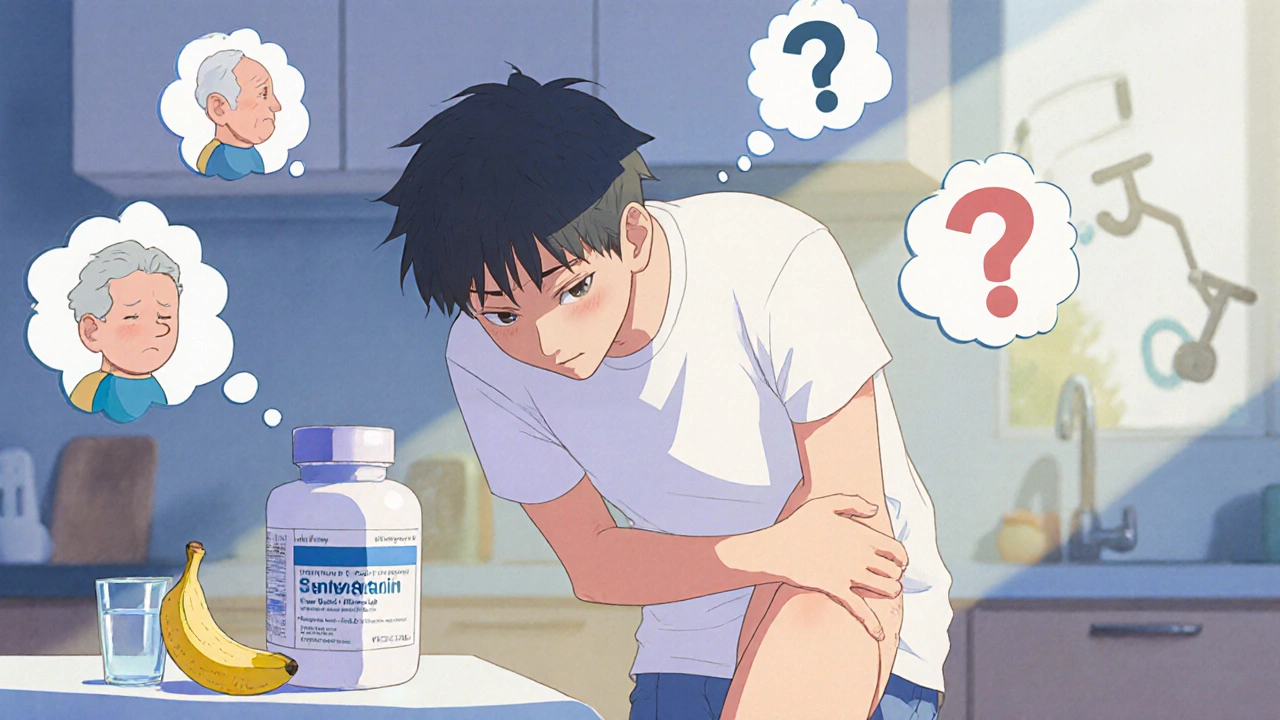
When you take a statin, a class of cholesterol-lowering drugs that block an enzyme your liver uses to make cholesterol. Also known as HMG-CoA reductase inhibitors, they’re among the most prescribed medications worldwide because they cut heart attack risk by up to 30% in high-risk people. But for many, that benefit comes with a trade-off: statin muscle pain. It’s not just soreness after a workout—it’s deep, persistent aching, cramping, or weakness, often in the thighs, shoulders, or back. And it’s not always easy to spot because it doesn’t show up on blood tests the way liver damage might.
Not everyone gets it. About 5-10% of people on statins report muscle symptoms, but some studies suggest the real number could be higher because many people stop taking the drug without telling their doctor, thinking it’s normal aging. The pain usually starts within weeks or months of starting the statin, and it often gets worse with activity. What’s tricky is that some of the same symptoms—like tired legs or stiff joints—can come from other things: vitamin D deficiency, thyroid problems, or even just getting older. That’s why it’s not enough to assume it’s the statin. You need to rule out other causes first. Coenzyme Q10, a compound your body makes naturally and that statins can lower. Also known as CoQ10, it’s often suggested as a supplement to help with muscle pain, though evidence is mixed. And creatine kinase, a muscle enzyme that rises when muscle tissue breaks down. Also known as CK, it’s the blood test doctors check to rule out a rare but dangerous condition called rhabdomyolysis. Most people with statin muscle pain have normal CK levels. That means the pain isn’t from muscle damage—it’s from something else, maybe inflammation or nerve irritation triggered by the drug.
Here’s the good news: you don’t have to live with it or quit your statin. Many people find relief by switching to a different statin—rosuvastatin or pravastatin tend to cause fewer muscle issues than simvastatin or atorvastatin. Others do better on a lower dose, or by taking it every other day instead of daily. Some even find that timing the dose (like taking it at night) helps. And if none of that works, there are non-statin options like ezetimibe or PCSK9 inhibitors that lower cholesterol without touching your muscles. The key is not to give up on your heart health just because your legs hurt. Talk to your doctor, get the right tests, and explore your options. Below, you’ll find real stories and science-backed advice from people who’ve been there—from how they identified the problem to what finally helped them move without pain.
Simvastatin has the highest risk of muscle pain among statins, but most muscle discomfort isn't caused by the drug. Learn which statins are safest and what to do if you're experiencing pain.