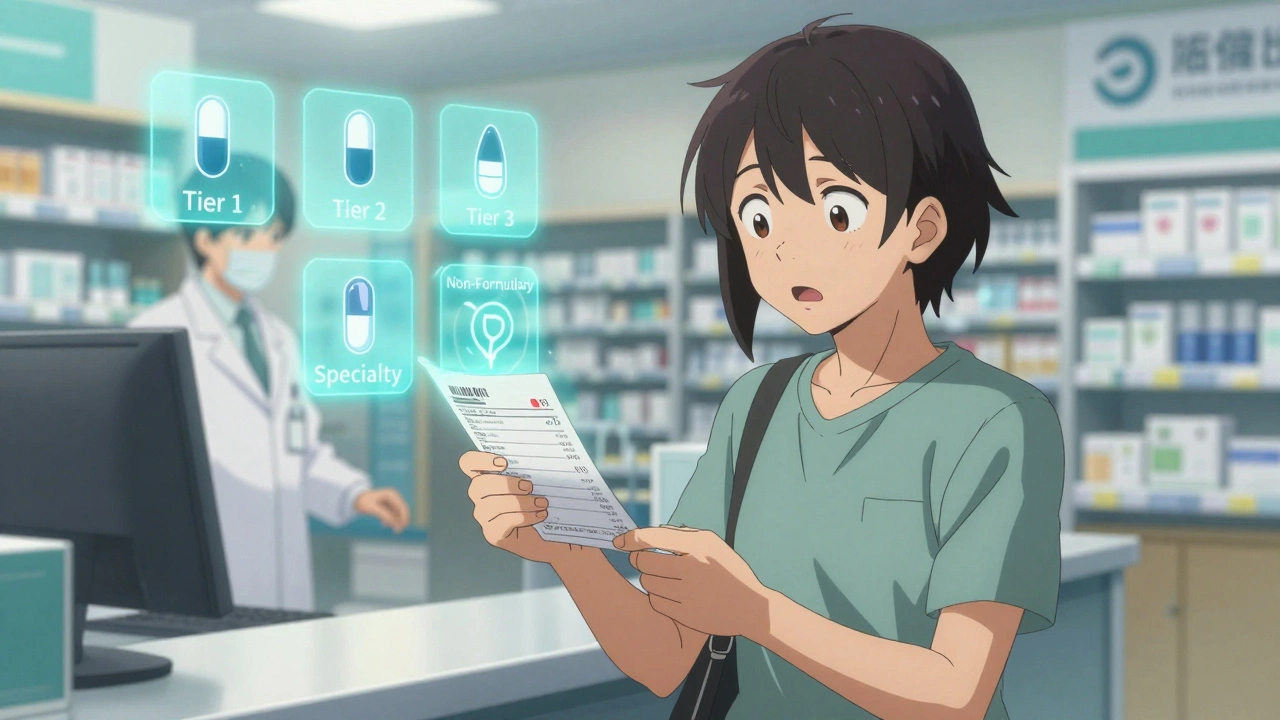
When your insurance plan puts your medication in Tier 3 drugs, a category of prescription medications with moderate cost-sharing requirements, typically including brand-name drugs without generic equivalents or higher-cost generics. Also known as mid-tier prescriptions, these drugs sit between the cheapest options and the most expensive specialty meds, and they’re where many common treatments end up. You might not realize it, but if you’ve paid more than $10 for a pill that isn’t covered at 90%, you’ve likely dealt with a Tier 3 drug.
Tier 3 drugs aren’t inherently worse than Tier 1 or 2—they just cost more to produce, market, or distribute. Many are brand-name versions of drugs that have cheaper generics available, but the brand still holds patent protection or market exclusivity. Others are newer generics that haven’t yet dropped in price due to limited competition. Your doctor might prescribe one because it works better for your condition, or because your insurer’s formulary lists it as preferred over higher-tier options. But here’s the catch: insurance drug tiers, the system insurers use to group medications by cost and coverage level. Also known as formulary tiers, this structure directly affects how much you pay out of pocket. Tier 3 usually means a higher copay—often $30 to $60—compared to $5–$15 for Tier 1. That difference adds up fast if you’re on multiple meds.
What makes this even trickier is that generic drugs, medications approved by the FDA as bioequivalent to brand-name drugs but sold at lower prices. Also known as non-brand medications, these are the backbone of affordable care can still end up in Tier 3. Why? Sometimes because the generic isn’t the first one on the market, or because your insurer has a deal with the brand-name maker. And if you’re switching from a Tier 2 drug to a Tier 3 generic, you might be surprised by the price jump. It’s not always about the drug—it’s about who owns the patent, who negotiated the deal, and which pharmacy benefits manager is running the show.
But you’re not powerless. Many Tier 3 drugs have cheaper alternatives—sometimes another generic, sometimes a different drug in the same class. A quick call to your pharmacist or a look at your insurer’s formulary can reveal if a similar medication is in Tier 2. Some plans even let you request a tier exception if your doctor says a Tier 3 drug is medically necessary. And if you’re paying full price without insurance, using a discount card or buying in bulk can slash costs by 50% or more. Don’t assume the price tag is fixed.
The posts below dig into real-world cases where Tier 3 drugs show up—like statins that cause muscle pain, sulfonylureas that lead to weight gain, or antibiotics that cost more than they should. You’ll find out why some meds land in Tier 3, how to spot when you’re being overcharged, and what alternatives actually work. Whether you’re managing diabetes, heart disease, or just trying to keep your prescriptions affordable, this collection gives you the tools to ask the right questions—and pay less without sacrificing care.
Understand how insurance formulary tiers work - Tier 1 to non-formulary - and how they affect your prescription costs. Learn what each tier means, why drugs move between them, and how to save money.